Science Notes / 2026 ・ No.01
What is a gene?
Not a cell, not an atom, but information
Published
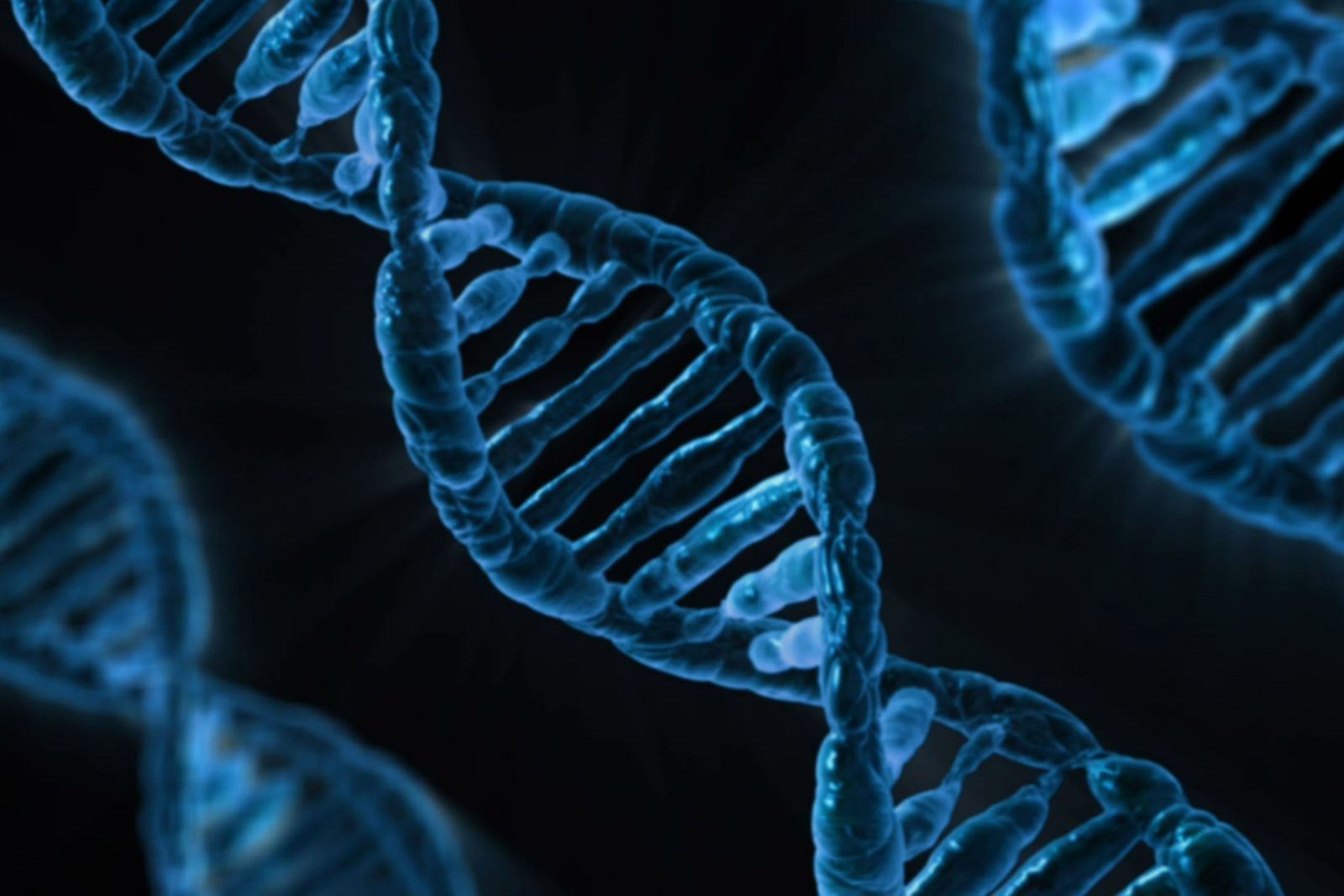
We hear the word “gene” almost every day, yet picturing one is surprisingly hard.
Is it a unit of life, like a cell, or a tiny particle, like an atom?
And why is it linked to everything from hair colour and the risk of illness to ageing and even death?
Let's zoom into the body and work through it step by step, with diagrams and photos.
The short answer: a gene is information
A gene is neither a unit of life like a cell nor a particle of matter like an atom. The closest thing is information: a piece of text.
Inside our cells is a very long, thin molecule called DNA. Along it run four kinds of “letter”, A, T, G and C, and their order carries information. A gene is one stretch of that long string of letters that spells out how to make one of the body's parts.
DNA is an enormous cookbook, and a gene is one recipe in it. The book is made of paper and ink (atoms), but what matters is not the paper, it is what is written. Genes are the same: physically they are part of a DNA molecule, but their essence is what they say.
Zooming from the body to the atom
Where are genes, and what form do they take? Let's zoom in, starting from the whole body.
Where genes live, step by step
The cell count is a 2013 estimate (about 37 trillion). The DNA length is a rough figure for the roughly 6 billion letters (base pairs) in one cell, stretched out straight
The human body is made of about 37 trillion cells. In the middle of most of them is a small sac called the nucleus, and that is where DNA is kept.
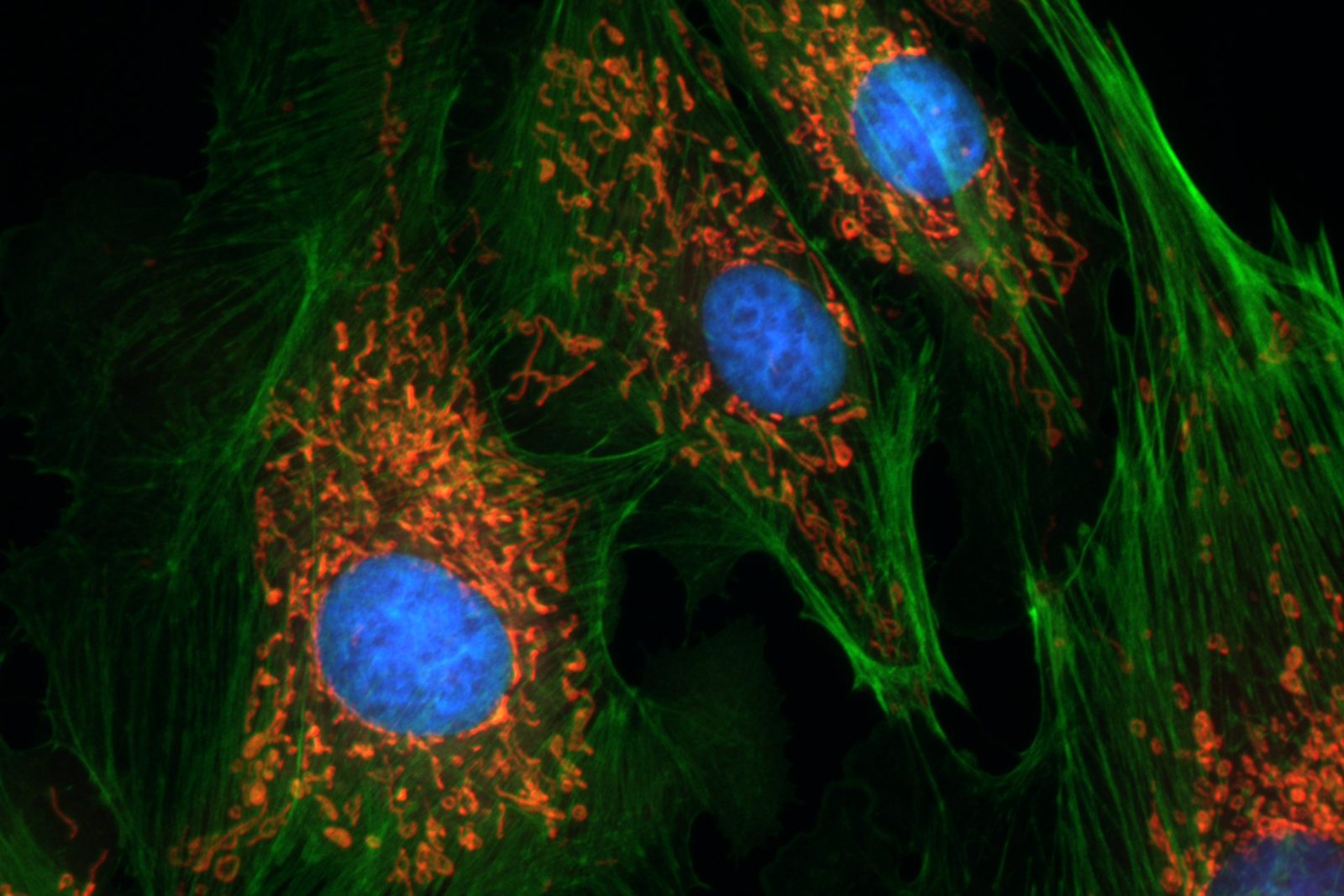
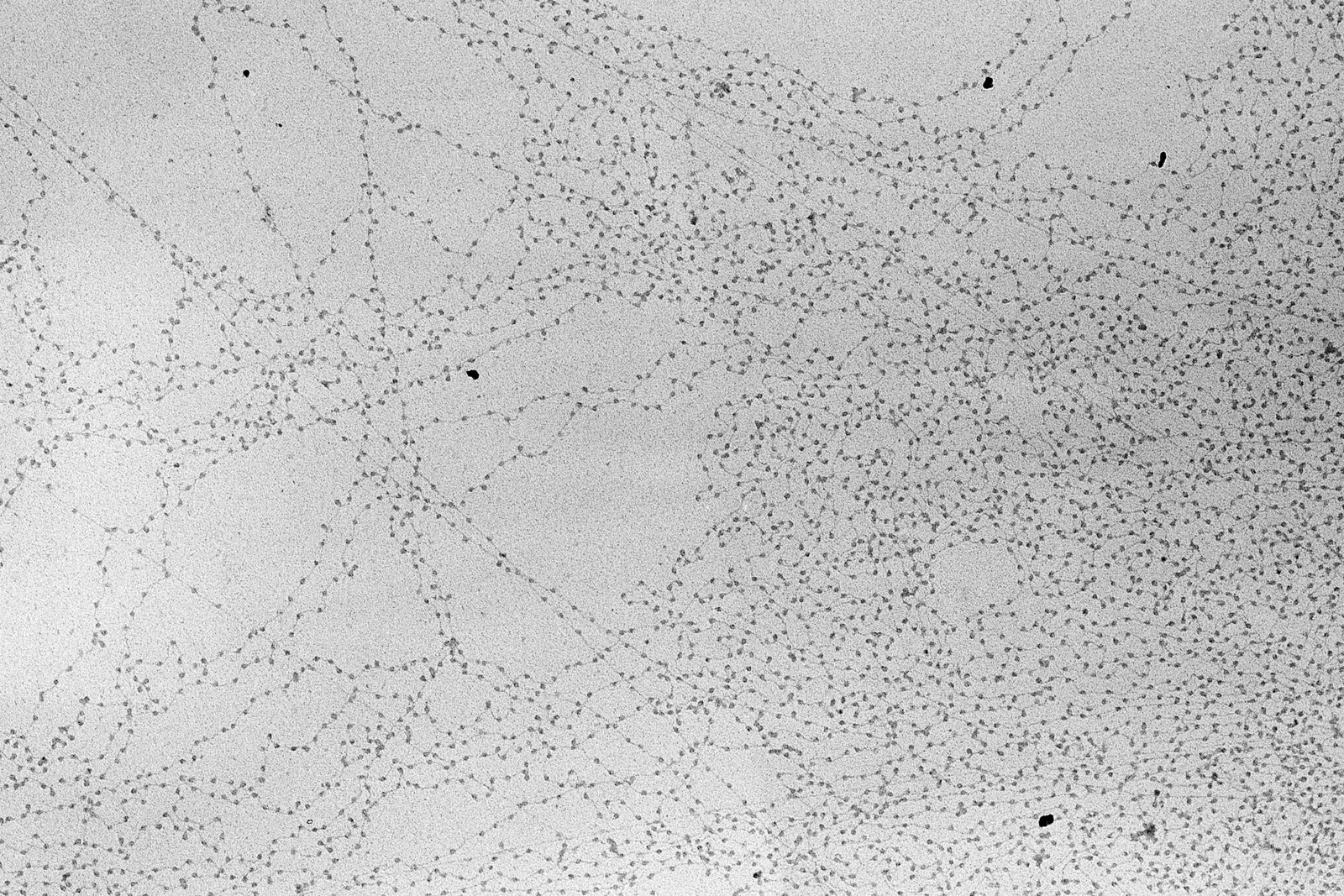
The amazing part is the length. Stretch out the DNA in a single cell and it comes to about two metres, packed into a nucleus less than a hundredth of a millimetre across. The trick is spooling: DNA wraps around proteins called histones, which are folded again and again into a compact bundle.
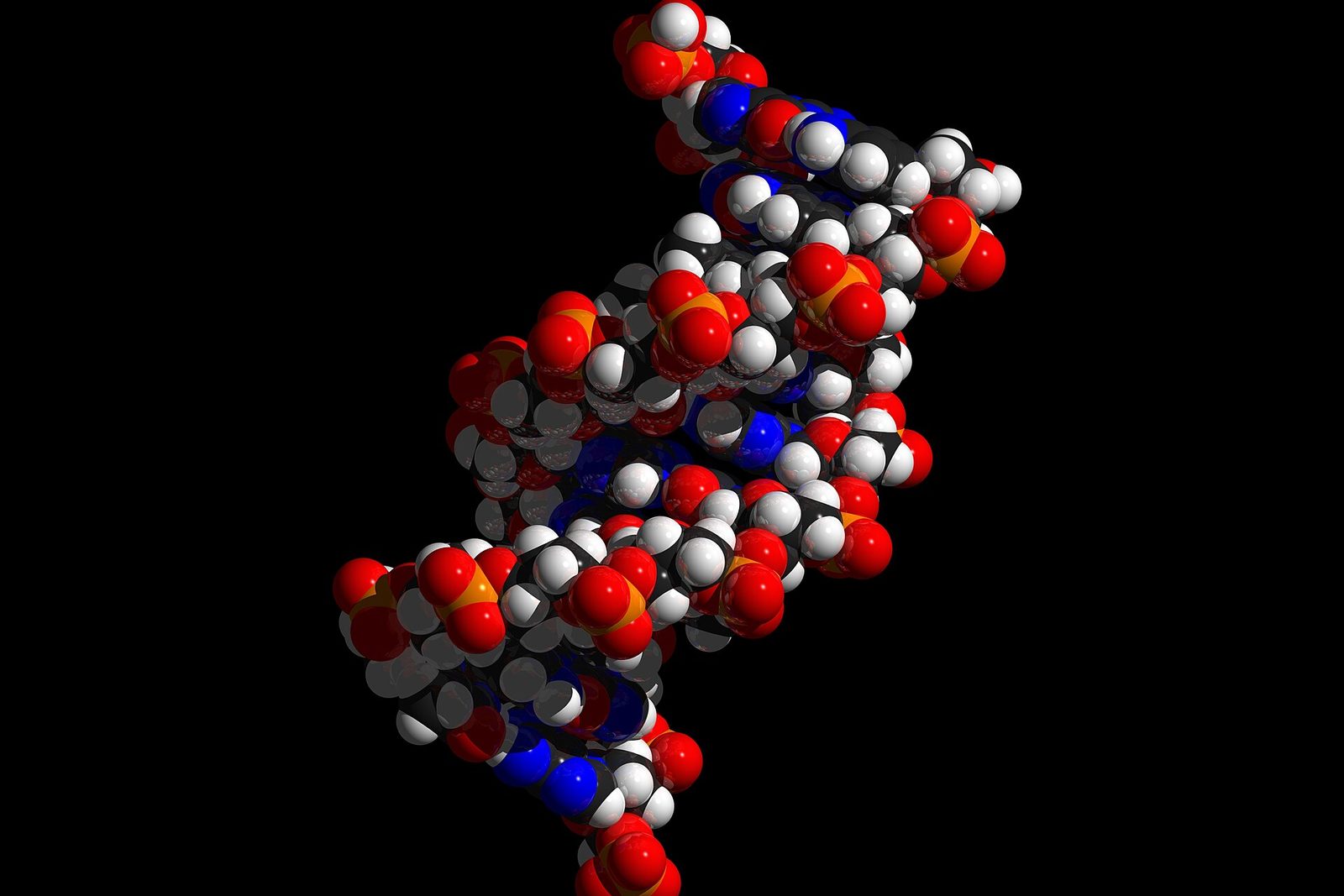
Zoom in further and DNA turns out to be two strands twisted into a double helix, built from perfectly ordinary atoms: carbon, hydrogen, oxygen, nitrogen and phosphorus. So, seen as a thing, a gene is part of a molecule of neatly joined atoms. But its value lies not in the atoms but in the order of A, T, G and C.
Cells, atoms and genes compared
“Is a gene more like a cell, or an atom?” Here is the answer as a table.
| Cell | Atom | Gene | |
|---|---|---|---|
| A unit of… | life (the smallest living thing) | matter | hereditary information |
| What it is | a small sac wrapped in membrane | a nucleus and electrons | a stretch of DNA letters |
| Size | mostly under 0.1 mm | about 0.1 nanometres | from a few hundred to over 2 million letters |
| In a human | about 37 trillion | countless | about 20,000 protein recipes |
| Alive on its own? | yes | no | no (it only works when read) |
So how are genes laid out along the string of DNA letters? A tiny piece, magnified, looks something like this.
DNA's string of letters, and a gene as a “stretch” (illustration)
Real genes are hundreds to millions of letters long; this is a shortened illustration
Using the book analogy, the pieces fit together like this:
- Genome — all of one person's information: a collected works of about 3 billion letters
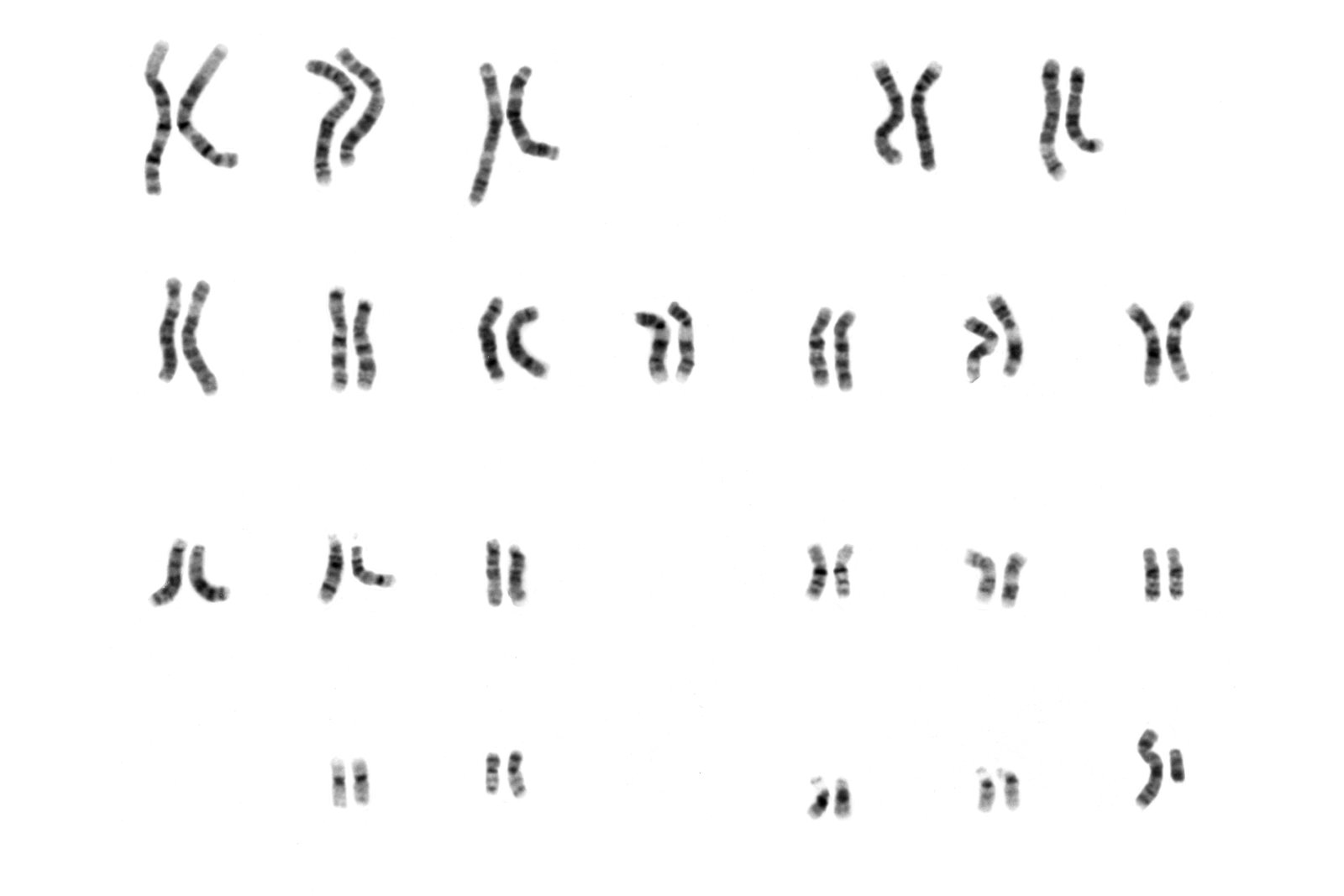
- Chromosome — a volume of that collection. Humans have 23 volumes, one set from each parent, 46 books in all
- Gene — one recipe. About 20,000 are recipes for proteins
- Codon — a three-letter “word”; each word stands for one amino acid
- Base — the four “letters”, A, T, G and C
In fact, the parts read as protein recipes make up only about 1.5% of the genome. The rest includes gene switches (which decide when and how much a gene is used), recipes for another kind of molecule called RNA, and stretches whose roles are still not well understood.
How genes were found
The history of their discovery shows clearly that genes are information. Long before anyone saw them, genes were proposed as units that could not be seen but had to exist.
| Year | Event |
|---|---|
| 1865 | From crosses of pea plants, Mendel reports that traits pass to offspring as particle-like “factors” |
| 1909 | Johannsen names these factors genes, though what they are is still unknown |
| 1944 | Avery and colleagues show that hereditary information is carried not by protein but by DNA |
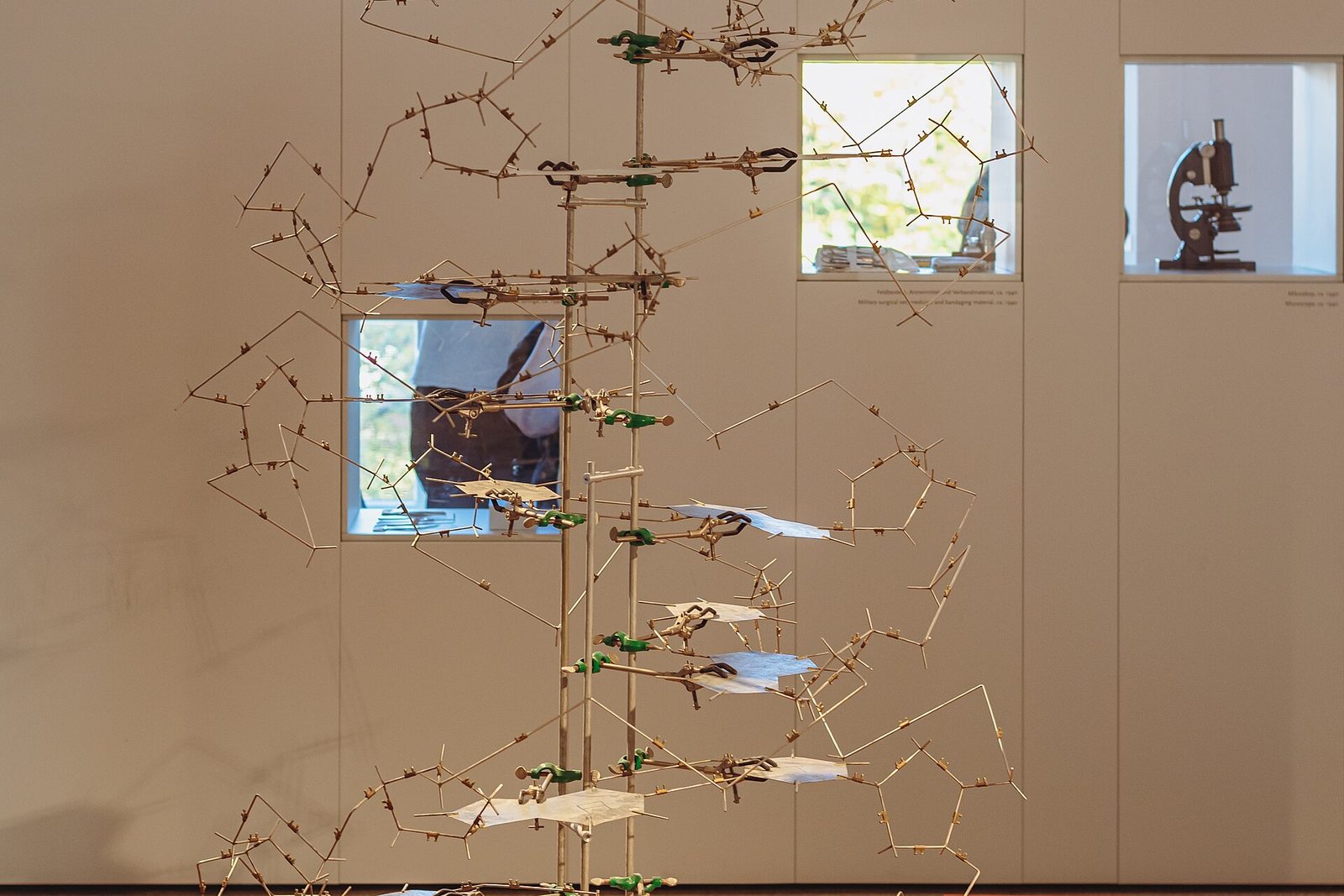
| 1953 | Watson and Crick describe the DNA double helix; the way the letters pair up also explains how DNA is copied |
| 2003 | The Human Genome Project reads almost all of the letters in human DNA |
In Mendel's day, the gene was a theoretical entity. It took about 90 years to learn that it is a sequence of letters written on a molecule called DNA.
From recipe to protein
A gene does nothing just by being written down. It only goes to work when it is read and turned into a protein, a process shared by almost all living things.
Two steps from gene to protein (transcription and translation)
ATG (AUG in mRNA) is also the “start reading here” signal in many genes
- Transcription — inside the nucleus, just the needed gene is copied into a molecule called mRNA. The precious original (DNA) stays in the nucleus; only the copy goes out
- Translation — outside the nucleus, a “factory” called the ribosome reads the mRNA three letters at a time, linking the matching amino acids one by one
- Folding — the chain of amino acids folds into a particular shape, and the protein is complete
Four letters in groups of three give 64 combinations, enough to specify 20 amino acids plus a “stop” signal. The proteins made this way are the body's real workers.
| What proteins do | Examples |
|---|---|
| Speed up chemical reactions (enzymes) | digestive enzymes that break down food; the enzymes that break down alcohol |
| Build the body | collagen in skin and bone, keratin in hair and nails, muscle fibres |
| Carry things | haemoglobin, which carries oxygen in red blood cells |
| Send signals | insulin, the hormone that lowers blood sugar |
| Defend the body | antibodies that latch onto viruses and bacteria |
Why genes matter so much
Genes are just strings of letters. Why do they have so much influence over living things? There are four main reasons.
1. Every cell carries the same collection
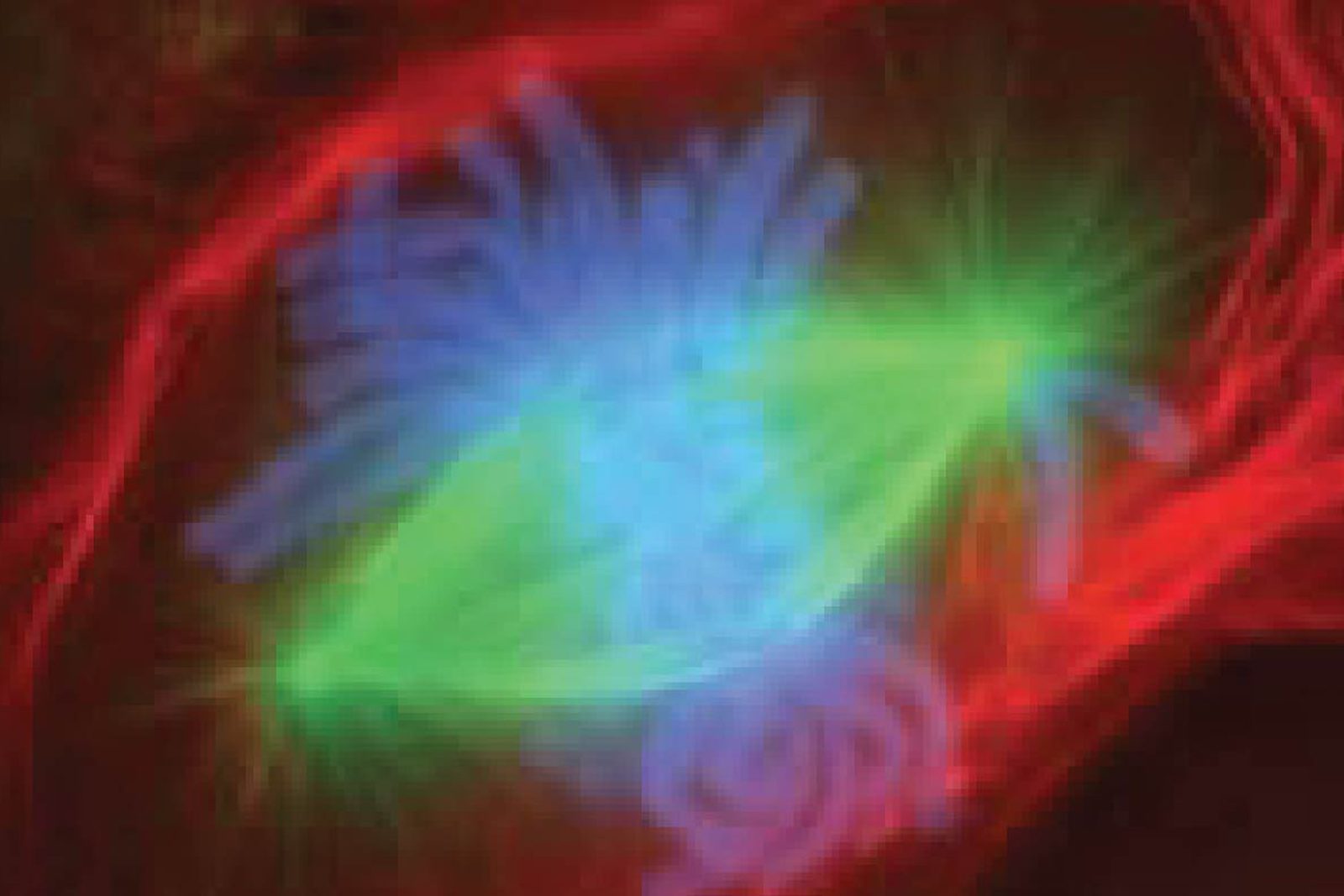
We each start as a single fertilised egg. Every time it divides, DNA unzips its two strands and uses each as a template for an exact copy (A pairs with T and G with C, so one strand is enough to rebuild the other). That is how almost all of our 37 trillion cells end up with their own copy of the same collection.
2. They are the recipes for the body's tools
As we saw, proteins do the actual work: building materials, chemical reactions, signals, defence. All of their recipes are written in genes, so a change in a gene can ripple out to any part of the body.
3. Switches decide which pages are open
A nerve cell and a muscle cell carry the same collection; the difference is which pages are open. Cells switch genes on and off, using only the ones they need. That is how one set of plans produces cells with completely different shapes and jobs.
Same collection, different pages (illustration)
In reality, thousands of genes in each cell are finely tuned to the situation
4. They pass from parents to children
We have two copies of most genes, one from our father and one from our mother. More than 99% of the letters are the same from person to person; the tiny remainder shapes our individual looks and constitution. Sometimes a single letter changes a protein's shape enough to cause disease (sickle cell disease is one example).
Do genes decide birth, ageing, illness and death?
This is probably the question that matters most. The answer: some things genes decide, and some things genes alone cannot.
Birth: a program for building a body from one cell
The order in which the fertilised egg divides, which part becomes the head and which the hands: these building steps follow a program written in our genes. Remarkably, the program even includes steps where cells deliberately die. A baby's hands start out webbed in the womb, and the five fingers separate when the cells between them die on schedule. The discovery of how this “programmed cell death” works won the 2002 Nobel Prize in Physiology or Medicine. Even in adults, more than a trillion cells are replaced this way every day.
Ageing: a limited ticket, and slowly mounting damage
Each end of a chromosome has a protective cap called a telomere, which gets a little shorter every time the cell divides. It works like a ticket with a fixed number of rides: even cells from a foetus stop multiplying after about 50 divisions and become “senescent” cells. DNA is also damaged almost daily by ultraviolet light, radiation and reactive oxygen, and the damage that is never repaired piles up with age.
So is lifespan itself inherited? A 2018 study of family trees covering more than 400 million people estimated that genes explain less than 10% of the differences in lifespan (7% or less). Families that seem long-lived often simply share similar lifestyles and surroundings.
Illness: diseases that are nearly certain, and diseases where genes shift the odds
The links between genes and disease fall into two broad groups:
- Diseases almost entirely decided by one gene — Huntington's disease, for example, is caused when a three-letter repeat, “CAG”, inside the HTT gene becomes too long. With 40 or more repeats the disease almost always develops, usually showing in a person's thirties or forties. Inheriting a single altered copy from one parent is enough
- Diseases where many genes and the environment intertwine — most common conditions, such as type 2 diabetes and high blood pressure. Hundreds of gene variants, each with a small effect, add up to shift a person's risk, and diet, exercise and sleep do the rest
Cancer is a genetic disease too, but most cancers are not inherited. They arise when damage builds up in the DNA of body cells over a lifetime and breaks the brakes on cell growth. Changes like these in body cells are not passed on to children.
Death: cell death is programmed, a human lifespan is not scripted
At the level of cells, death really is part of the genetic program. But there is no “death gene” that sets the age at which a person dies. Ageing involves many genes, including those for telomeres, DNA damage and the body's repair capacity, along with the environment and plain chance.
Mostly genes, mostly environment
Height: about 80% of the differences between people are attributed to genetic differences (US National Library of Medicine, MedlinePlus). Lifespan: the 2018 large-scale study
This article explains how genes work and is not medical advice. If you have concerns about inherited disease or genetic testing, talk to a doctor or a genetic counsellor.
Summary
- A gene is neither a cell nor an atom but information: physically, a stretch of the A, T, G, C letters along a DNA molecule.
- DNA is spooled up inside the nucleus and divided among 46 chromosomes; one cell's worth stretches to about 2 m.
- Genes are read by transcription and translation and turned into proteins, the body's workers.
- They matter so much because every cell carries the same collection, uses it selectively through switches, and passes it from parent to child.
- Body-building and some diseases are largely set by genes, but most of lifespan and many diseases depend on environment and lifestyle. Genes are less a script of our fate than a score that sounds different depending on how it is played.
References
- NHGRI: A Brief Guide to Genomics
- NHGRI: Exome (about 1.5% of the genome)
- NHGRI: Genetic Timeline
- MedlinePlus Genetics: What is DNA?
- MedlinePlus Genetics: What is a gene?
- MSD Manual, Japanese consumer edition: Genes and chromosomes (Japanese)
- MEXT “A Human Genome Map for Every Home”: on the number of genes (Japanese)
- Bianconi et al. (2013): an estimation of the number of cells in the human body
- The Physics Factbook: Length of a Human DNA Molecule
- MedlinePlus Genetics: Is height determined by genetics?
- MedlinePlus Genetics: Huntington disease
- Ruby et al. (2018, GENETICS): heritability of human longevity
- Nobel Prize: 2002 Physiology or Medicine (programmed cell death)
- Kenko Chouju Net: ageing of cells and individuals (Japanese)
Figures are estimates from material available in October 2026, when this was written; counts such as the number of genes change as research advances and depending on how things are counted. The photos are public domain or reusable under licence from Wikimedia Commons, with the photographer and licence under each one. The diagrams are my own.
Science Notes No. 1 — What is a gene? / 2026.10