Food Notes / 2026 ・ No.02
Sushi for beginners
A guide to the classic toppings, and how to enjoy them
Published
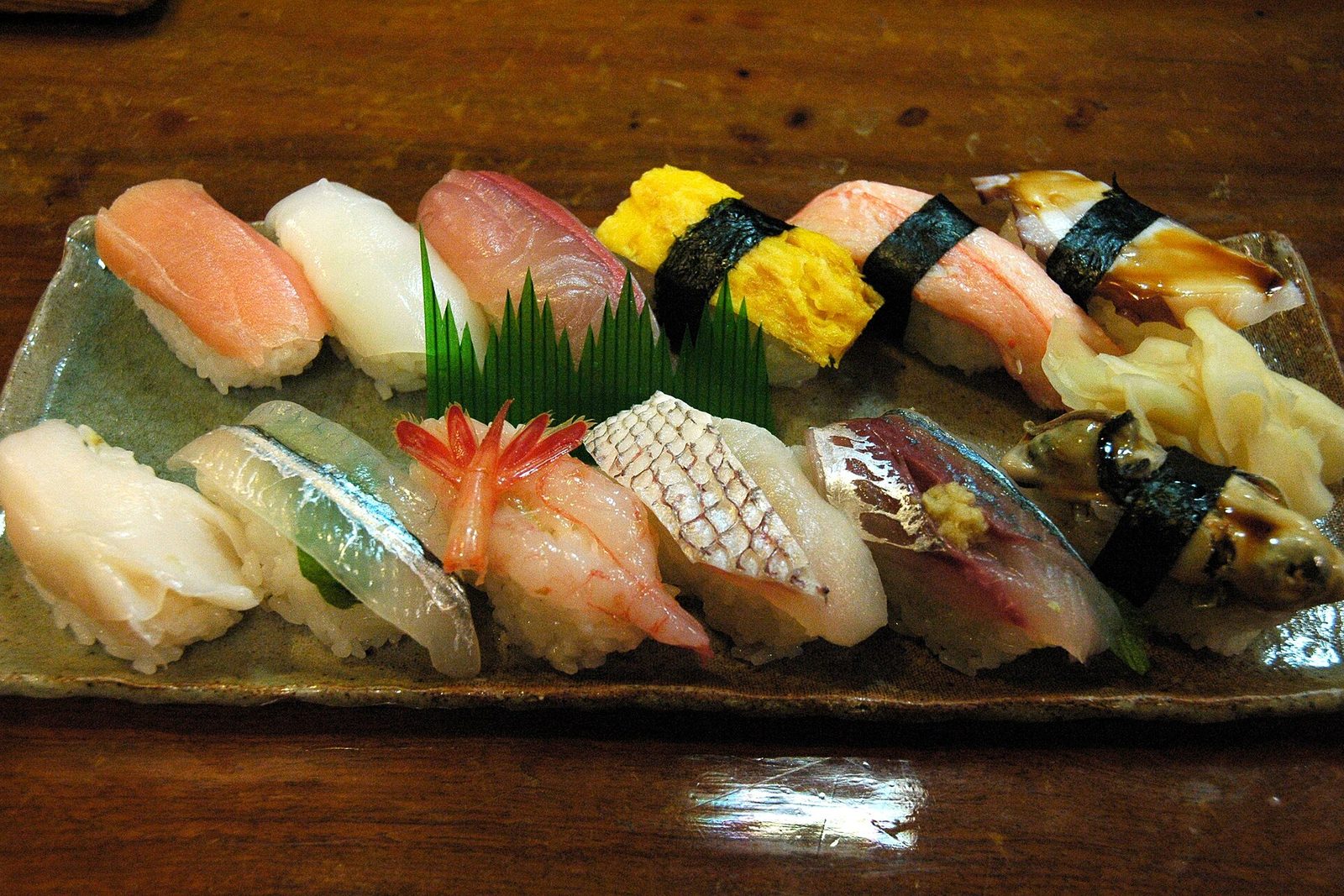
Bite-sized works of art, shaped one piece at a time by a chef: that is sushi.
But the first time, it is easy to feel unsure. What is that topping called? Which should I eat first? Can I use my hands?
This guide introduces the classic toppings in photos, explains what each tastes like,
and then, with illustrations, walks through the eating order, soy sauce, and hands versus chopsticks.
How to read this
The first half is a field guide to toppings: tuna, salmon, white fish, shiny fish, shellfish, uni and ikura, group by group, with photos and notes on how they differ. The second half is about eating: a rough order, how to use soy sauce, and whether to use hands or chopsticks, with illustrations.
First, a few words you will hear at any sushi bar.
| Word | Meaning |
|---|---|
| Shari | Vinegared sushi rice, shaped into a bite-sized block |
| Neta | The topping: fish, shellfish and so on. A reversed reading of tane, “seed” |
| Kan | The counter word for nigiri: one kan, two kan |
| Gari | Thin slices of ginger pickled in sweet vinegar, for cleansing the palate |
| Gunkan-maki | Rice wrapped in a band of nori with the topping piled on top |
Gari, agari (tea) and oaiso (the bill) began as staff slang. As a customer, “ginger”, “tea” and “the bill, please” (okaikei) are all you need.
The shapes of sushi
The nigiri most of us picture when we hear “sushi” goes back to Edomae sushi, which took off in Edo (today's Tokyo) in the 1820s. Chefs at street stalls shaped each piece in front of the customer to be eaten straight away. With no refrigeration, they cured fish in vinegar or salt, simmered it, or marinated it in soy sauce, work that made the fish both tastier and longer-lasting. That is the wisdom of Edomae.
Four shapes of sushi worth knowing
There is also chirashi, with sashimi scattered over rice, and the pressed sushi of the Kansai region
Classic and popular toppings
First, the big picture. A 2026 survey asked 3,000 conveyor-belt sushi customers which toppings they often eat, and salmon came first for the 15th year in a row.
| Rank | Topping | Share who often eat it |
|---|---|---|
| 1 | Salmon | 47.7% |
| 2 | Tuna (akami) | 36.4% |
| 3 | Prawn | 27.8% |
| 4 | Tuna (chutoro) | 27.4% |
| 5 | Yellowtail (hamachi, buri) | 27.2% |
Maruha Nichiro, Conveyor-Belt Sushi Consumer Survey 2026: 3,000 people aged 15 to 59 who eat at conveyor-belt sushi at least once a month; multiple answers allowed.
Here are the classic toppings in this guide, by group. A ◎ under “For first-timers” means it is easy to enjoy even if you are not used to raw fish.
| Group | Topping | Taste | For first-timers |
|---|---|---|---|
| Tuna | Akami | clean, savoury | ◎ |
| Chutoro, otoro | melting fat | ◎ | |
| Salmon etc. | Salmon | mellow fat | ◎ |
| Hamachi, buri | rich, oily fish | ○ | |
| White fish | Sea bream, flounder, striped jack | delicate, elegant | ○ |
| Shiny fish | Kohada, aji, saba | cured tang, oily-fish aroma | △ (once you are used to it) |
| Shellfish | Scallop | soft and sweet | ◎ |
| Ark shell | sea scent, crisp bite | ○ | |
| Gunkan | Uni, ikura | rich sweetness, popping roe | ○ |
| Others | Prawn, squid | sweet, sticky | ◎ |
| Eel, egg | sweet sauce, sweet omelette | ◎ (cooked) | |
| Tuna roll, cucumber roll | thin rolls | ◎ |
Tuna: akami, chutoro, otoro
Tuna is the star of sushi, and the fun part is that each part of the same fish tastes completely different.
Tuna cuts and how they taste (simplified)
The boundaries are approximate; how a fish is cut depends on the species, its size and the shop
Akami: tuna at its purest
The clear red meat from the centre of the body up towards the back. With little fat, it has a clean, savoury flavour and aroma. In fact, in the Edo period tuna spoiled easily and was considered a lowly fish; sushi chefs mostly used lean meat marinated in soy sauce, known as zuke.
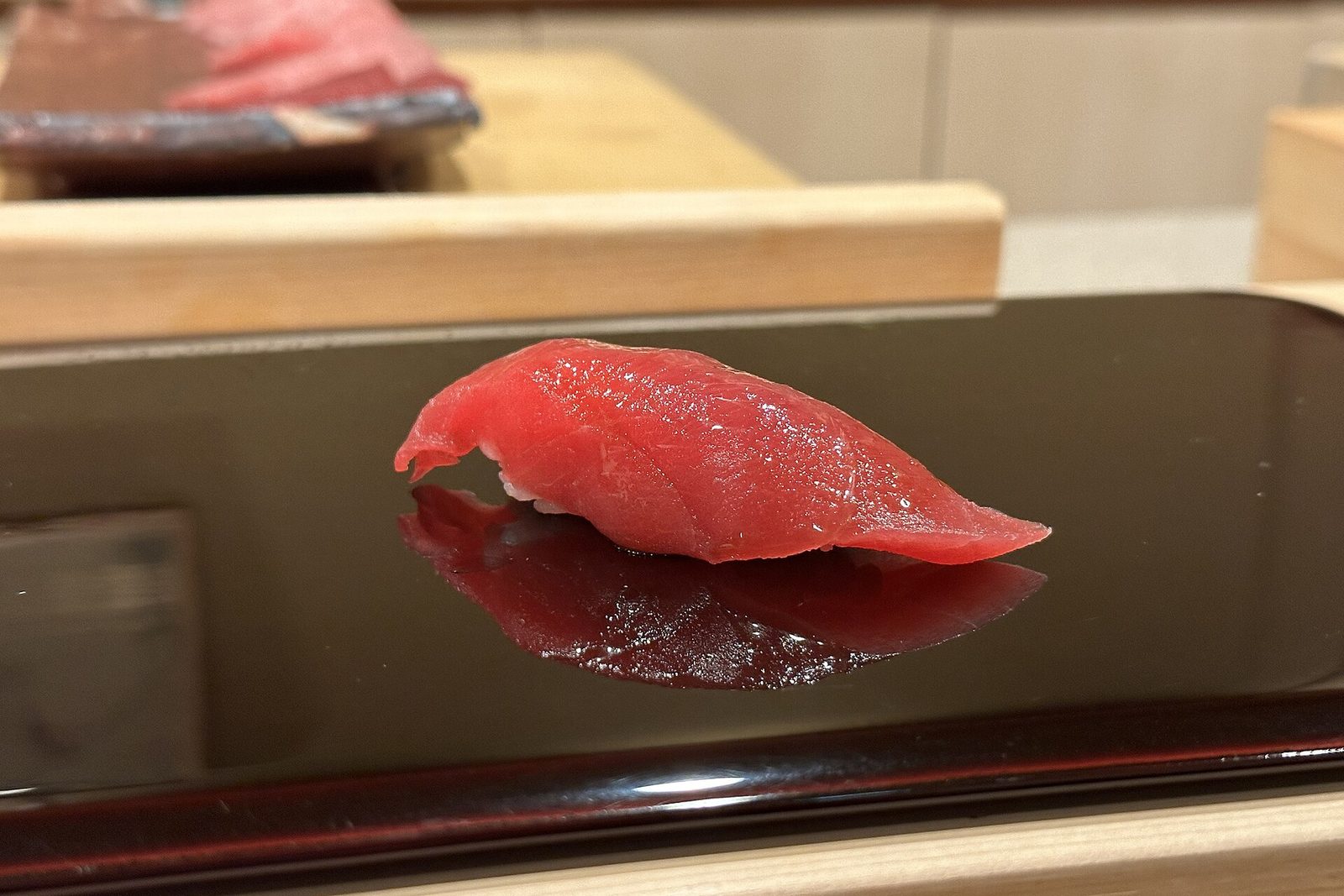
Chutoro and otoro: fat that melts
Chutoro balances lean flavour and fat; it comes from the rear of the belly and from just under the skin of the back. Otoro is the belly near the head, so full of white fat that it seems to melt at body temperature. Fatty tuna has only been widely eaten for about 50 years, but today it is the headline act of any sushi bar.
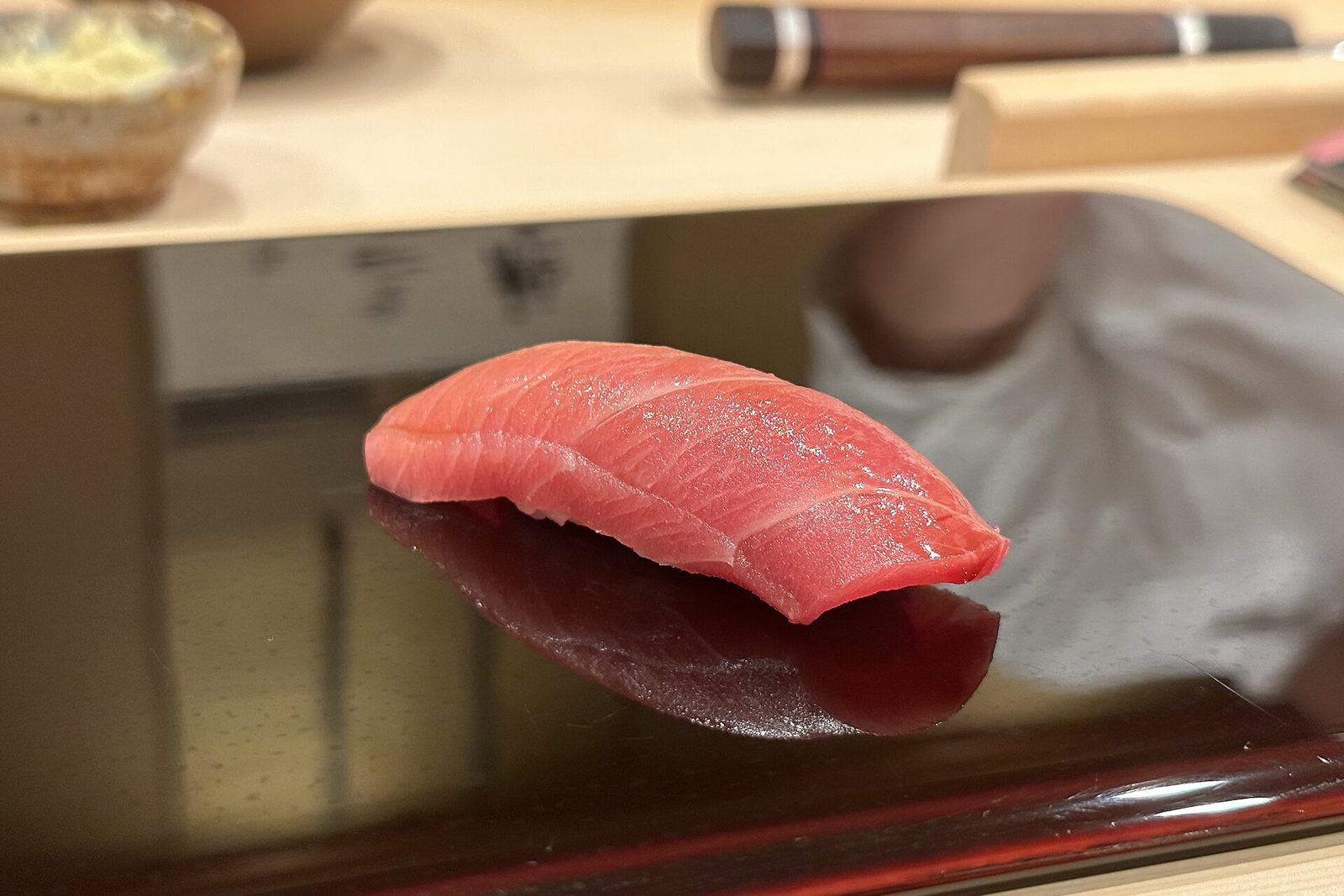
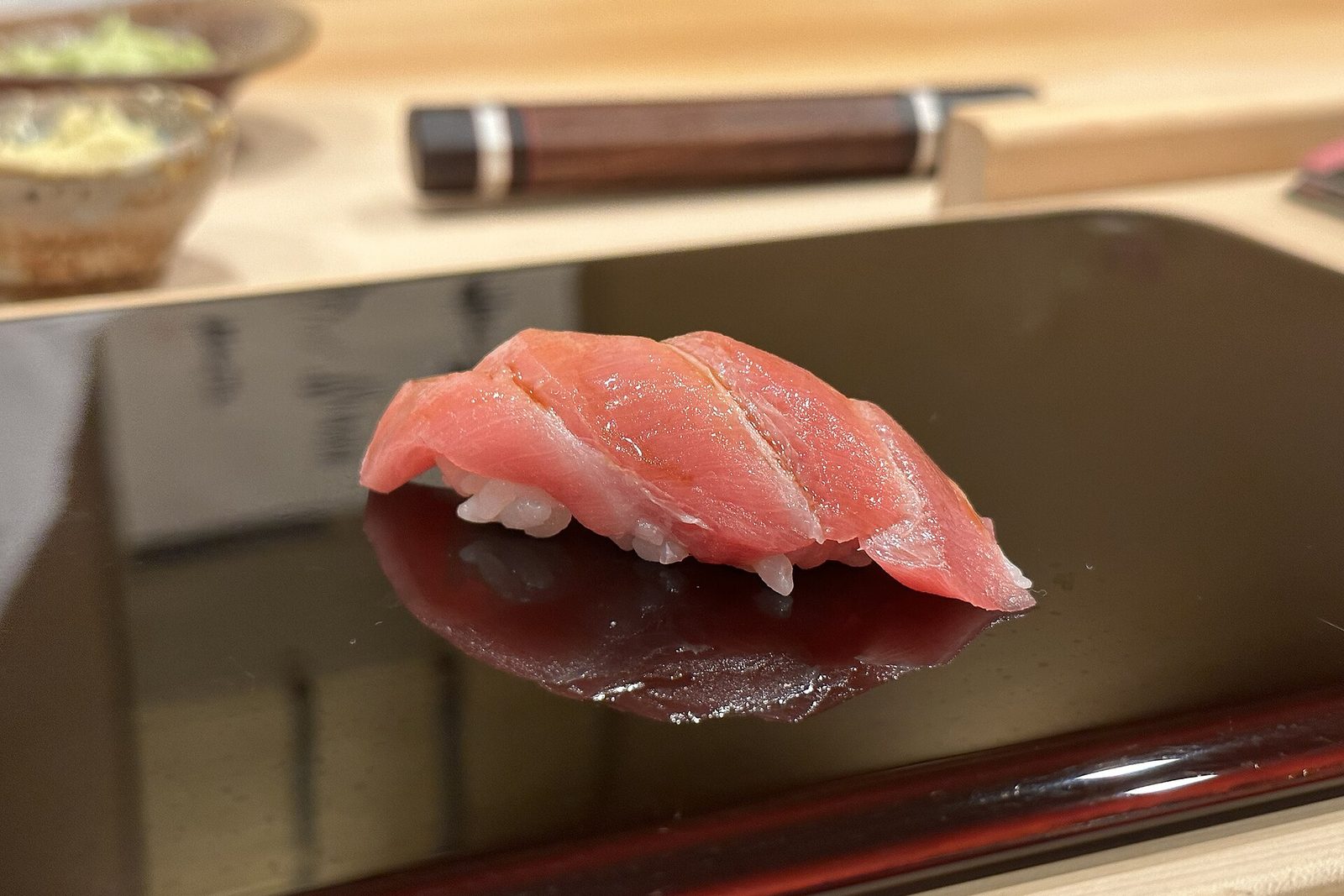
If you can't decide, try akami, then chutoro, then otoro. You will clearly taste the fat increasing step by step.
Salmon and yellowtail
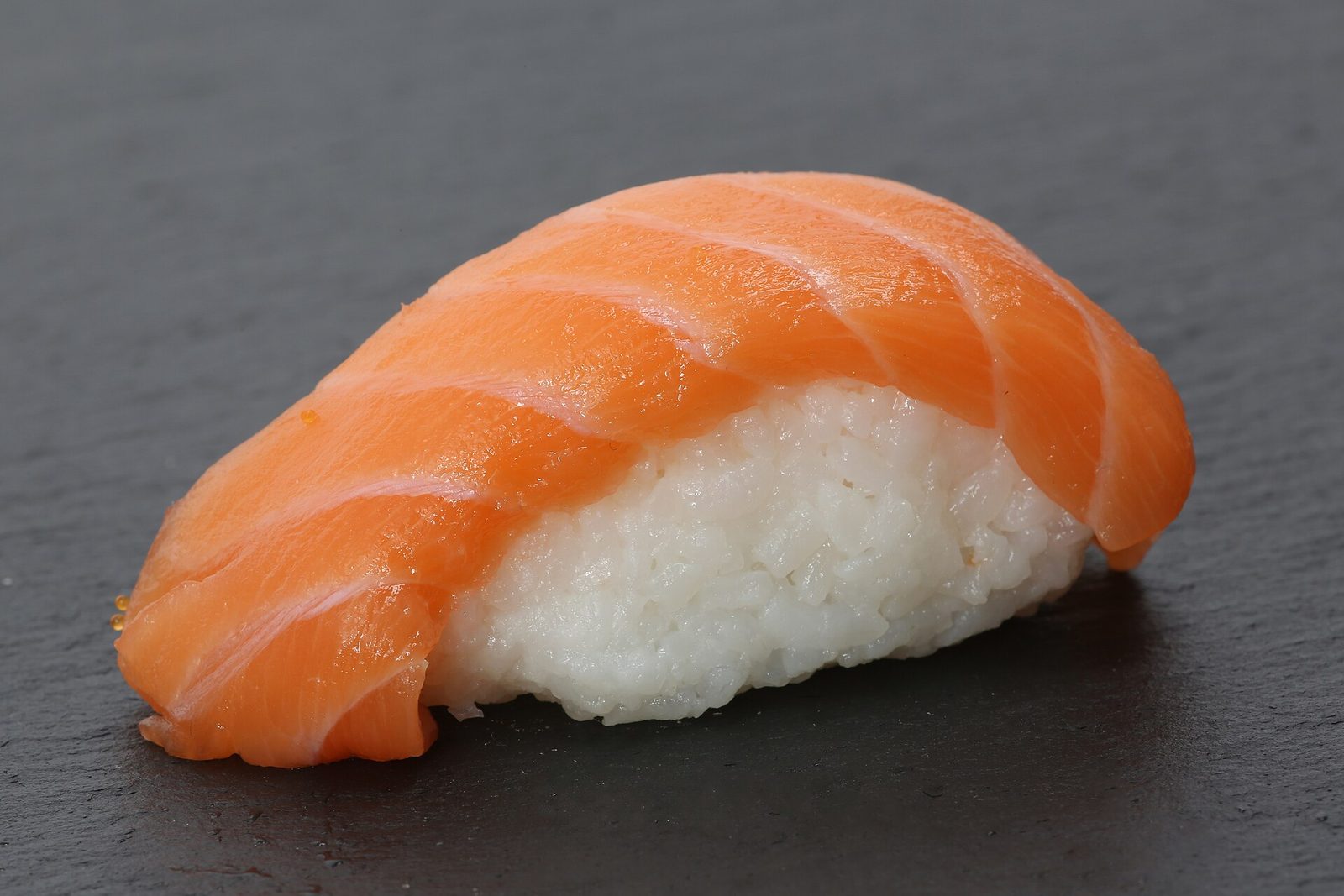
Salmon: the conveyor-belt favourite
Orange flesh with white stripes of fat, mild and mellow, loved by children and adults alike. Surprisingly, raw salmon sushi is fairly new in Japan. In the 1980s, Norway promoted farmed salmon to Japan under “Project Japan”, and salmon that could be eaten raw caught on. Before that, Japanese salmon was always cooked, grilled or salted.
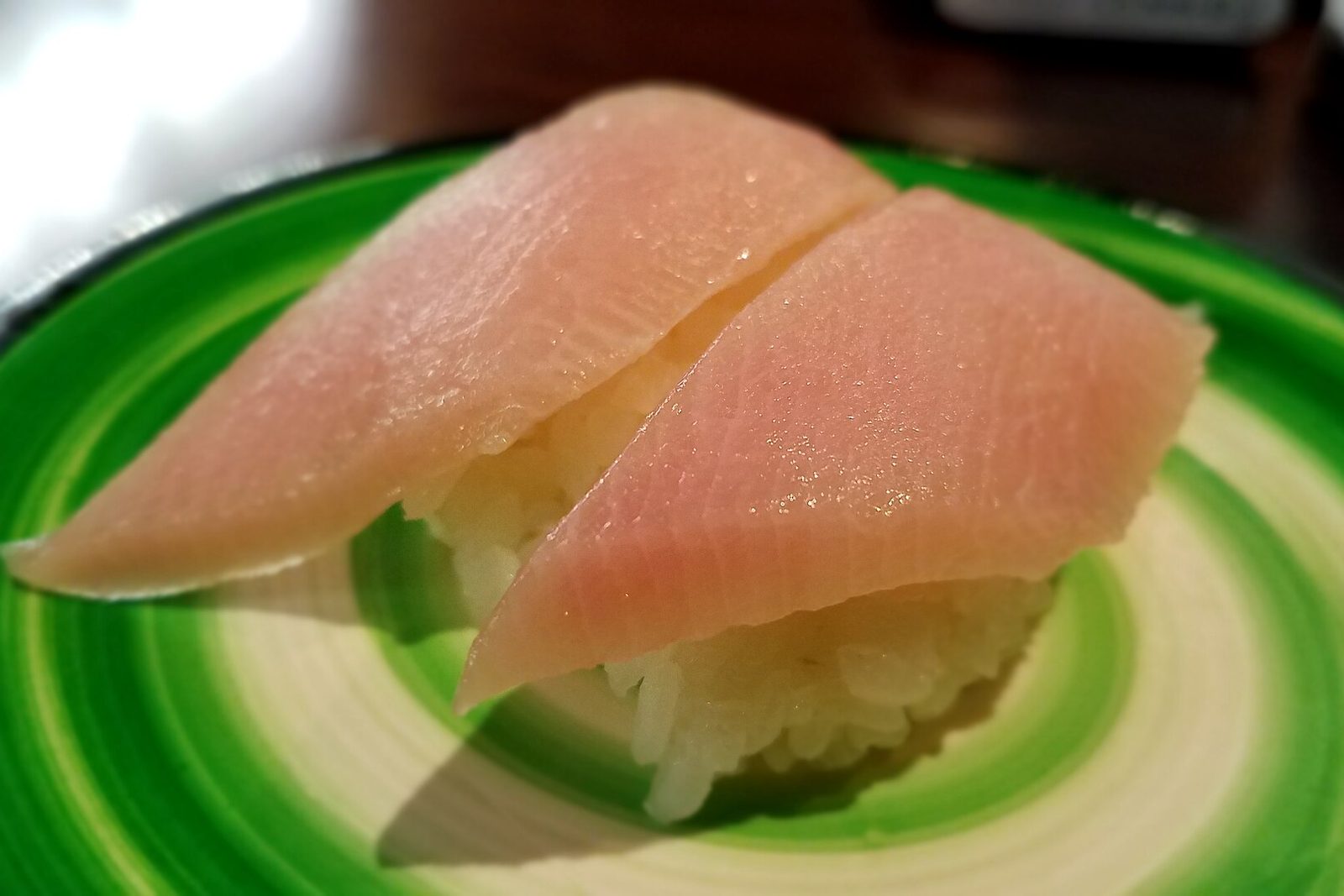
Hamachi and buri: rich yellowtail
Hamachi and buri are the same fish. Yellowtail is a shusse-uo, a “promotion fish” whose name changes as it grows, and the big ones are called buri. Silky fat and a pleasant firmness; winter kan-buri is especially good.
White fish: an elegant first piece
Fish with almost translucent white flesh are light and refined. Their flavour is delicate, which makes them a perfect first piece.
- Tai (sea bream) — the classic white fish: a hint of sweetness and a firm texture
- Hirame (flounder) — mild and springy. Engawa, the muscle at the base of the fins, is rich and crunchy
- Shimaaji (striped jack) — translucent flesh with elegant fat; the best of white fish and oily fish together
Some shops serve white fish with salt and a squeeze of sudachi citrus. In that case, skip the soy sauce and eat it as it is.
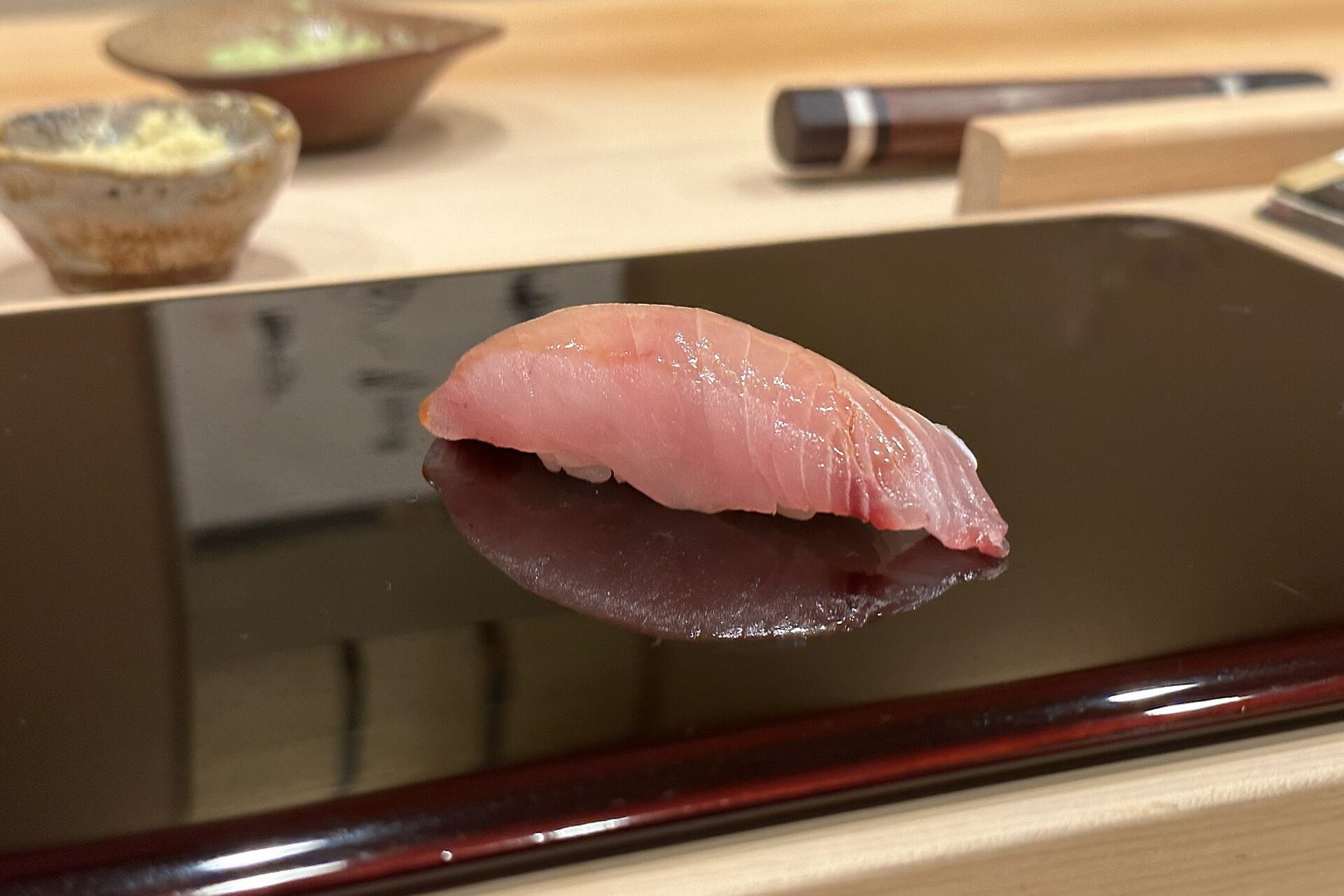
Shiny fish: the spirit of Edomae
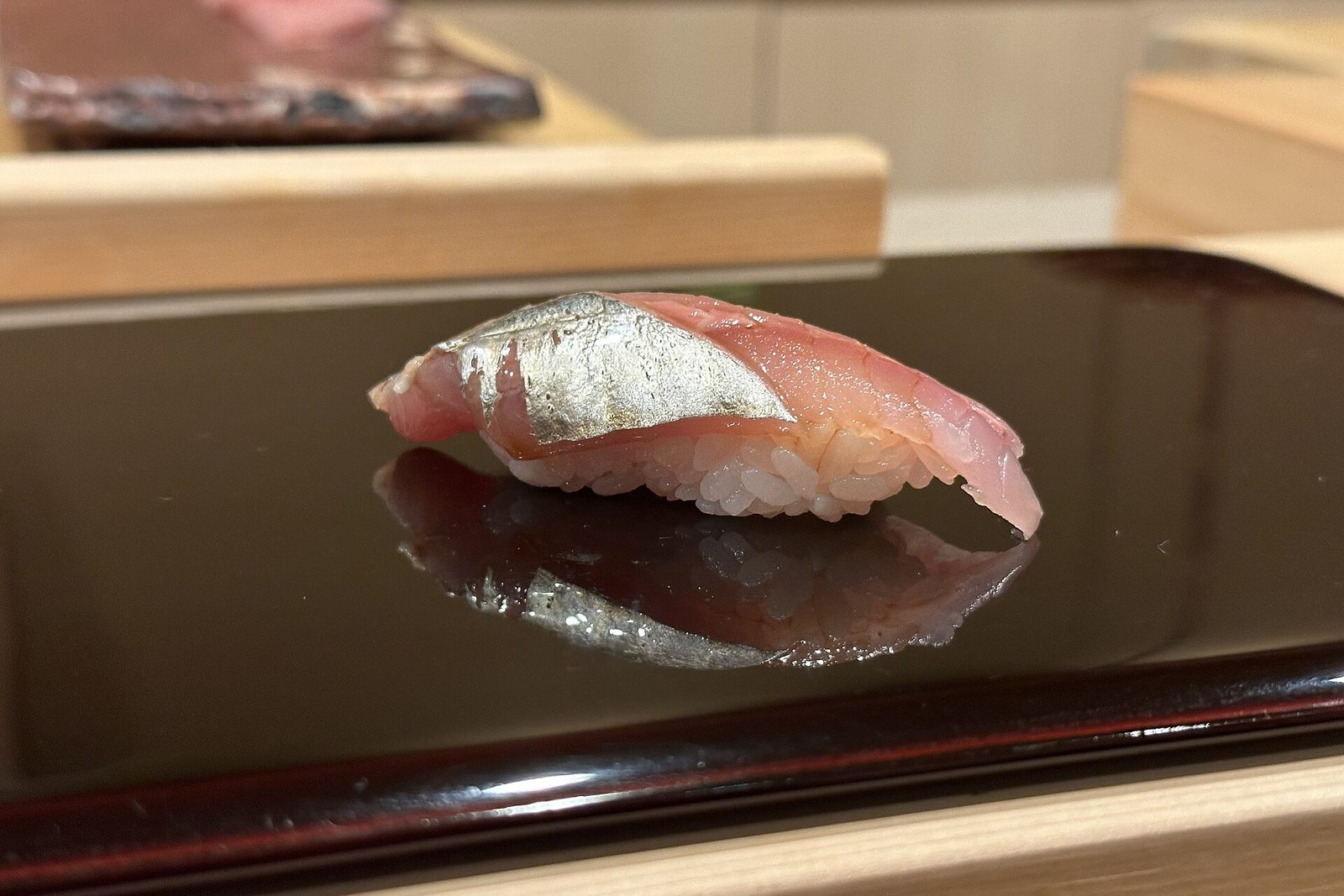
In sushi, fish with gleaming silver skin, such as kohada, aji, saba and iwashi, are called hikarimono, “shiny things”. They are full of umami, and curing them in vinegar gives a lovely balance of tartness and sweetness.
Kohada is the emblem of Edomae sushi. It is a young gizzard shad, and because it spoils quickly, chefs began curing it in vinegar. The flesh is soft and full of small bones, so it tests a chef's skill; people say kohada is the heart of an Edomae sushi bar.
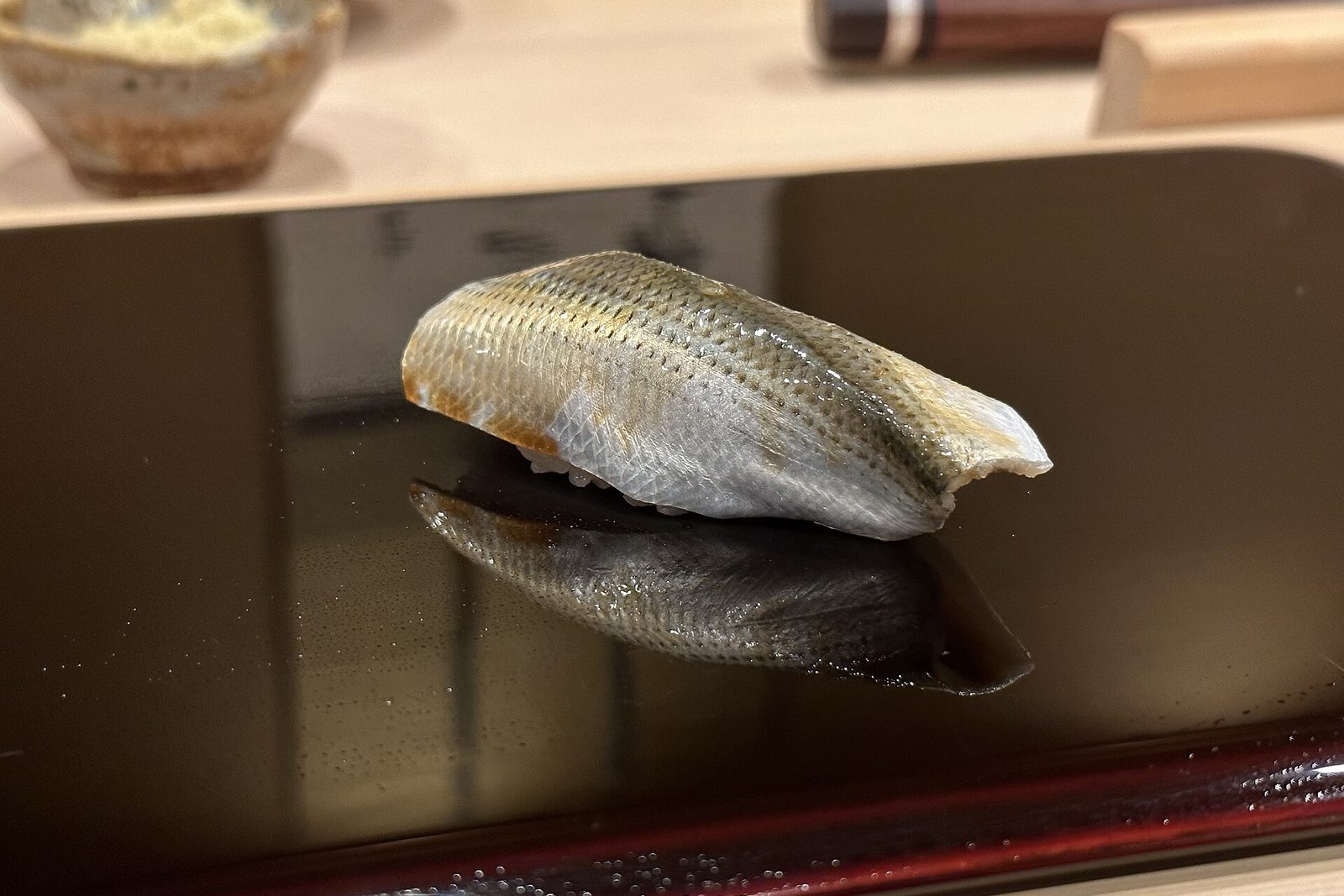
Aji (horse mackerel) is usually served raw, topped with ginger or spring onion: rich flesh with a fresh aroma. Saba (mackerel) comes vinegar-cured as shime-saba. Try shiny fish once you are comfortable with sushi, and you will discover how deep it goes.
Shellfish: sweetness and texture
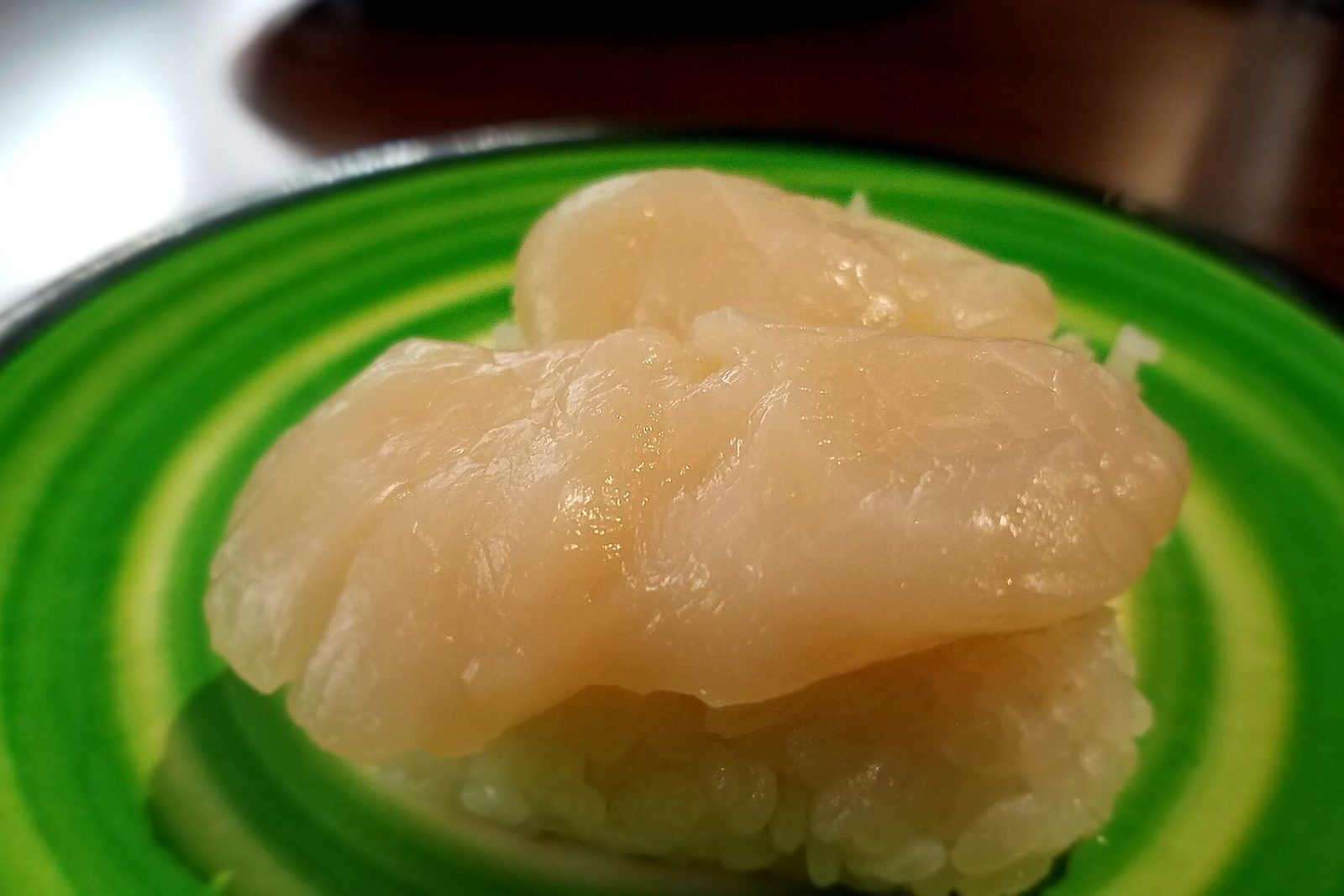
Hotate (scallop) is plump and tender, and gets sweeter as you chew. It has no strong flavour, so it is a good choice if raw fish is new to you.
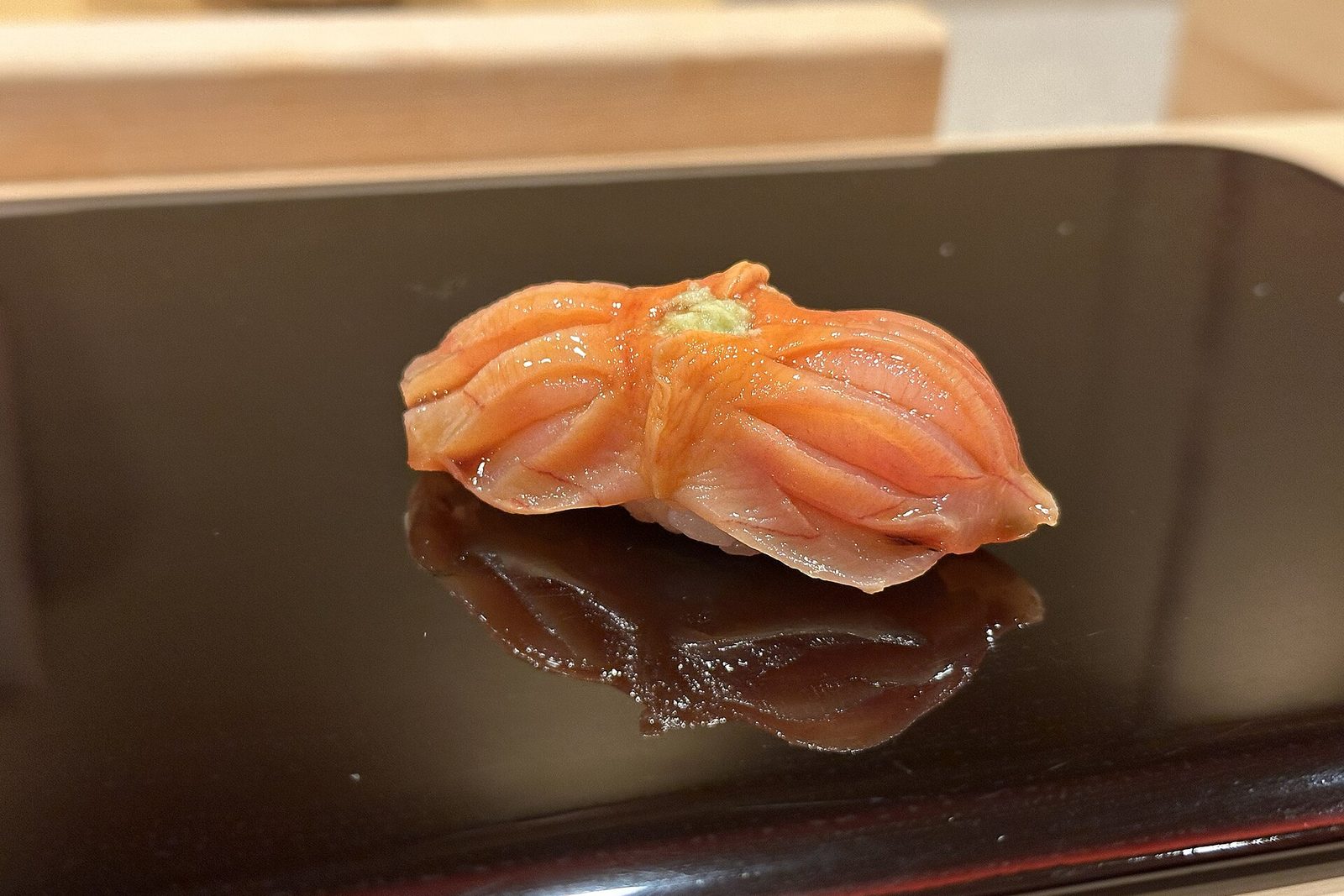
Akagai (ark shell) lives up to its name, “red shell”, with eye-catching colour, and is the classic Edomae shellfish. Its charms are a scent of the sea and a crisp bite. Surf clam, whelk and geoduck each bring a different texture too.
Uni, ikura and gunkan-maki
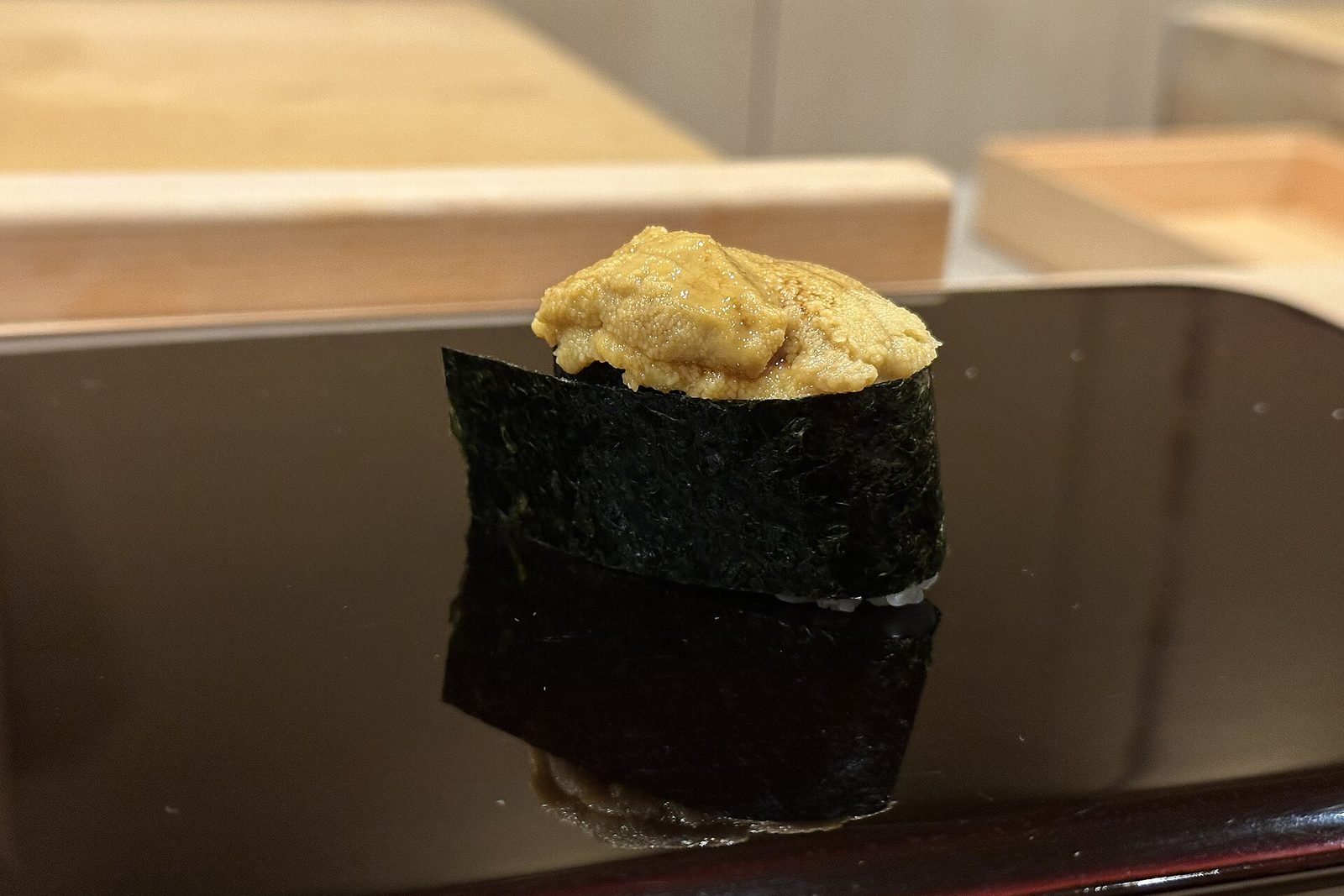
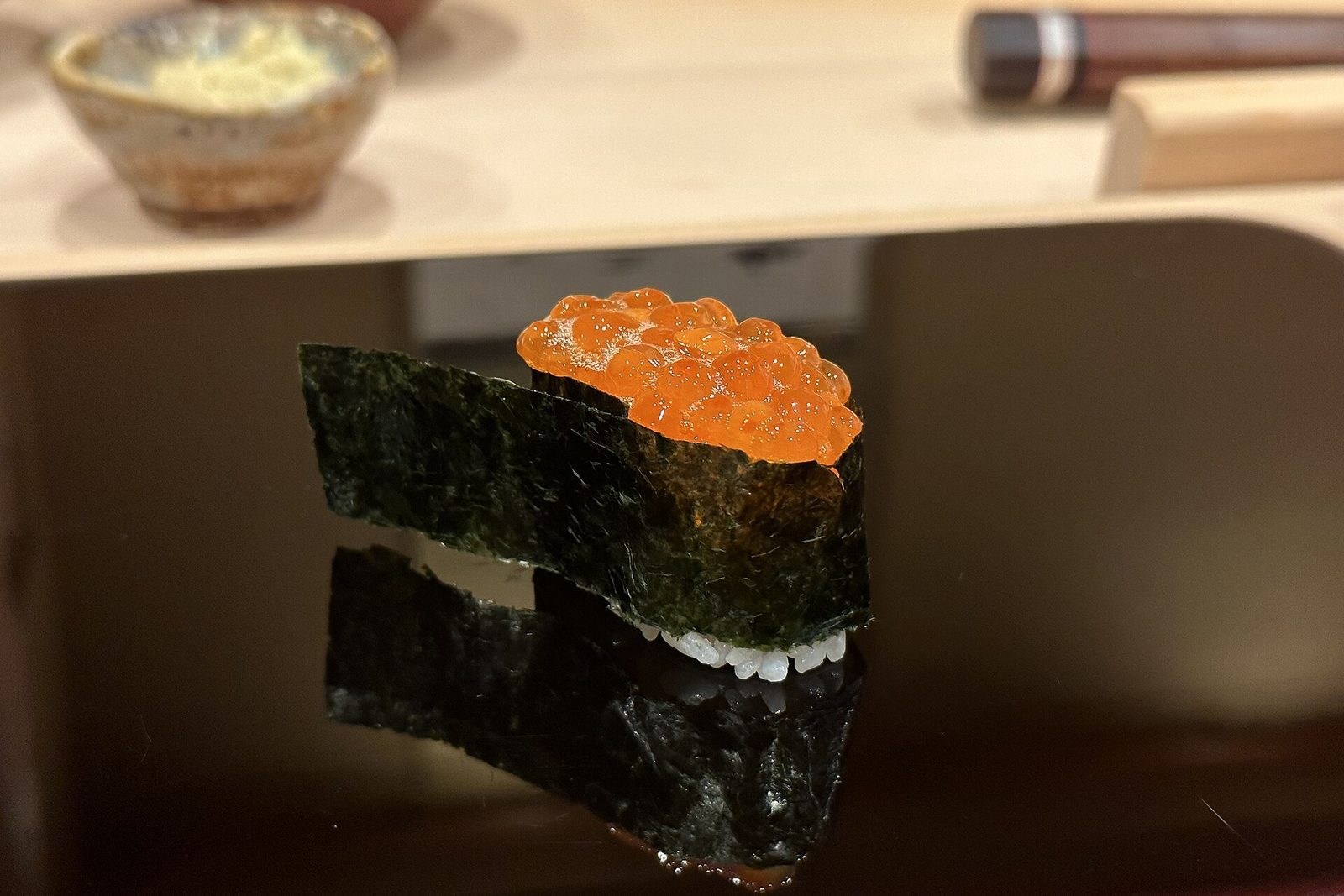
How do you make sushi from uni and ikura, which are too soft to shape? The answer is gunkan-maki: rice wrapped in a band of nori to hold the topping. It is said to have been invented by the first owner of Kyubey, a famous sushi bar in Ginza, and it is named after its side view, which looks like a battleship (gunkan).
Uni: melting sweetness, the taste of the sea
Sea urchin melts on the tongue and spreads its sweetness, with the scent of the sea rising behind it. Deep orange bafun-uni and paler yellow murasaki-uni differ in both colour and taste.
Ikura: jewels that pop
Salmon roe, separated bead by bead and marinated in soy sauce or similar. The name comes from the Russian word for fish roe. Each bead pops and releases its flavour, and it looks gorgeous in photos.
Prawn, squid, eel, egg and rolls
Not sure about raw fish? No problem: plenty of toppings are cooked or very easy to enjoy.
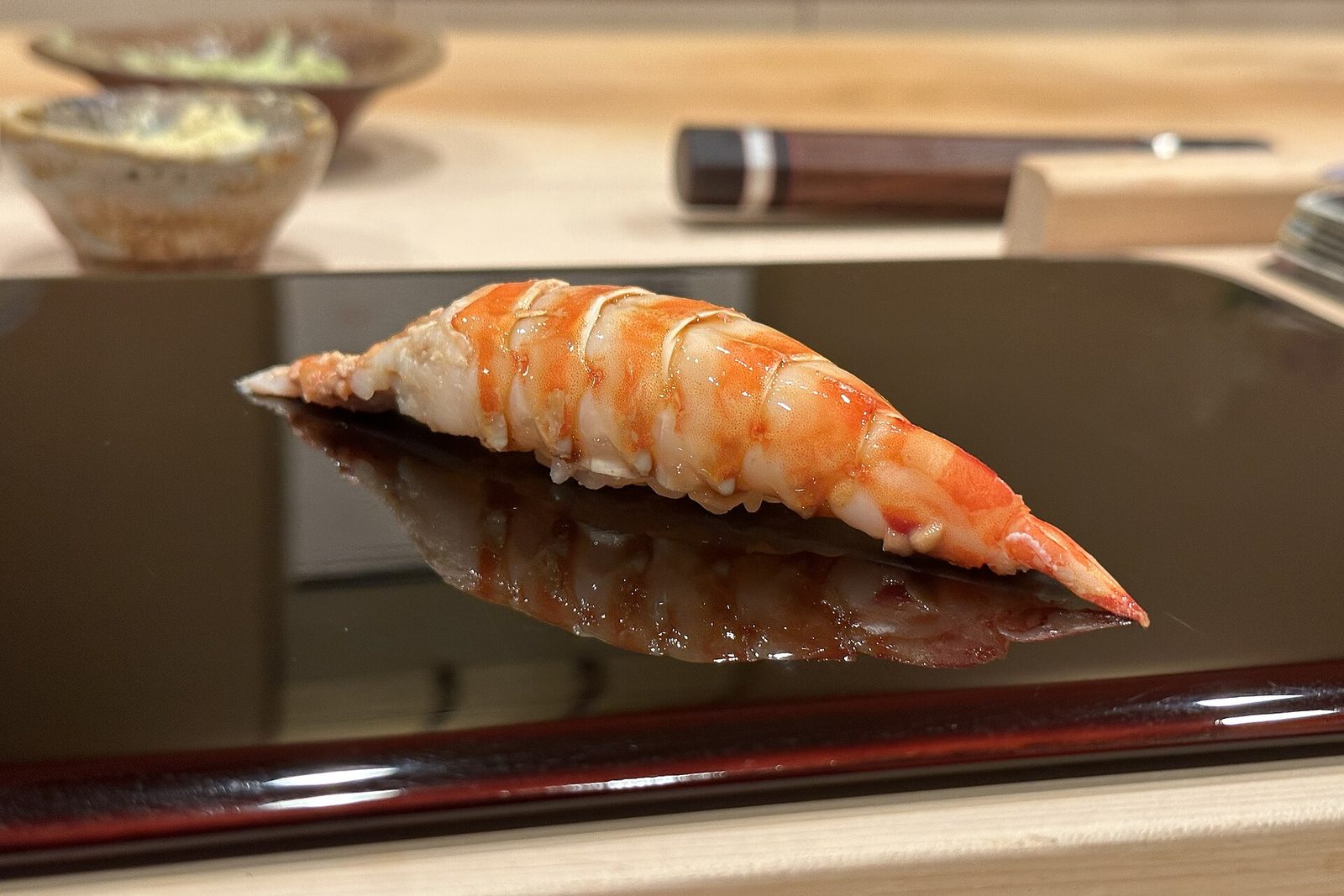
Prawn
The Edomae classic is boiled kuruma prawn, with pretty red and white stripes, a springy bite and gentle sweetness. Raw amaebi (sweet shrimp) is soft and sweet.
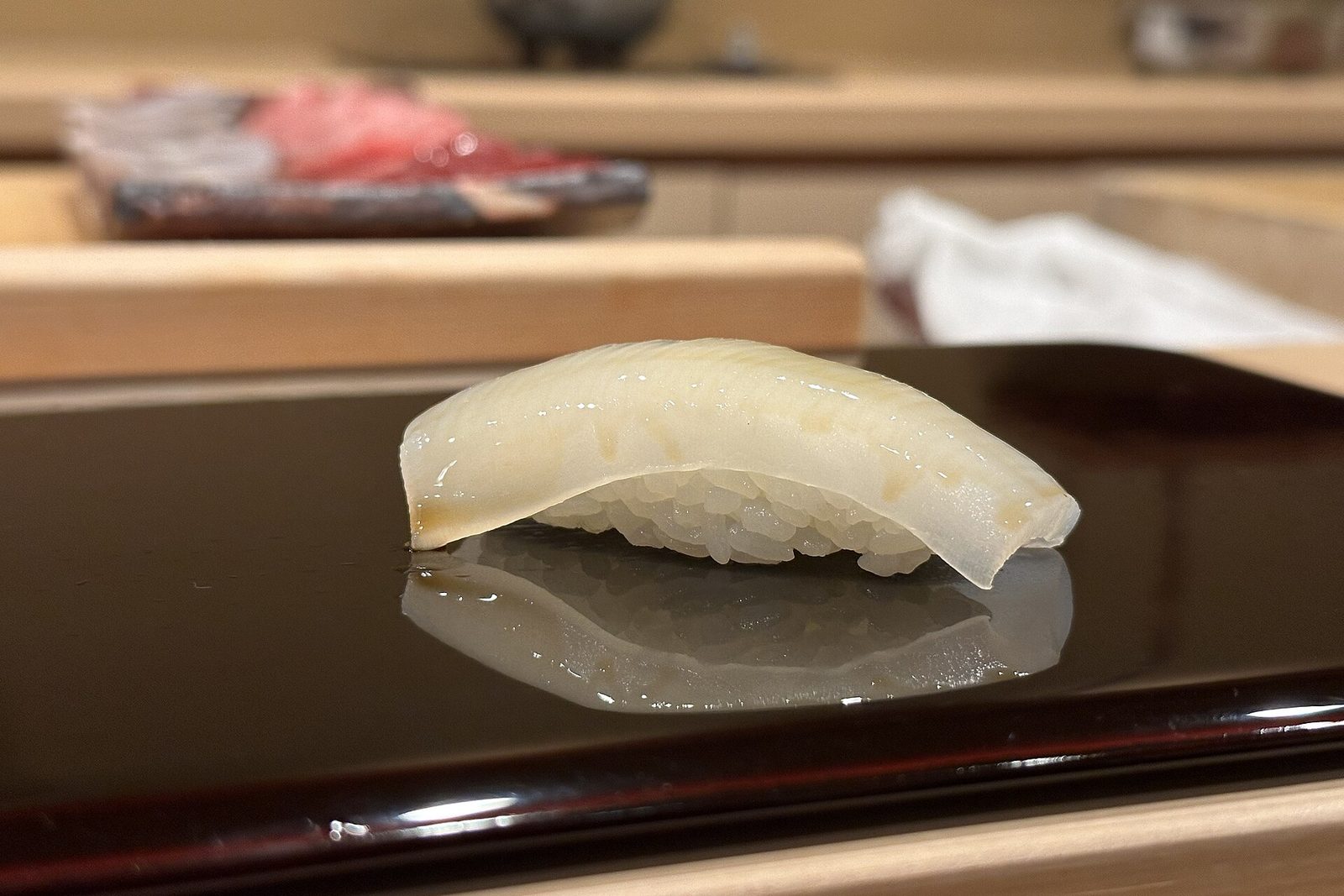
Squid
White, translucent squid has a sticky sweetness; aori-ika is called the king of squid. Many shops score the surface finely with a knife to make it easier to eat.
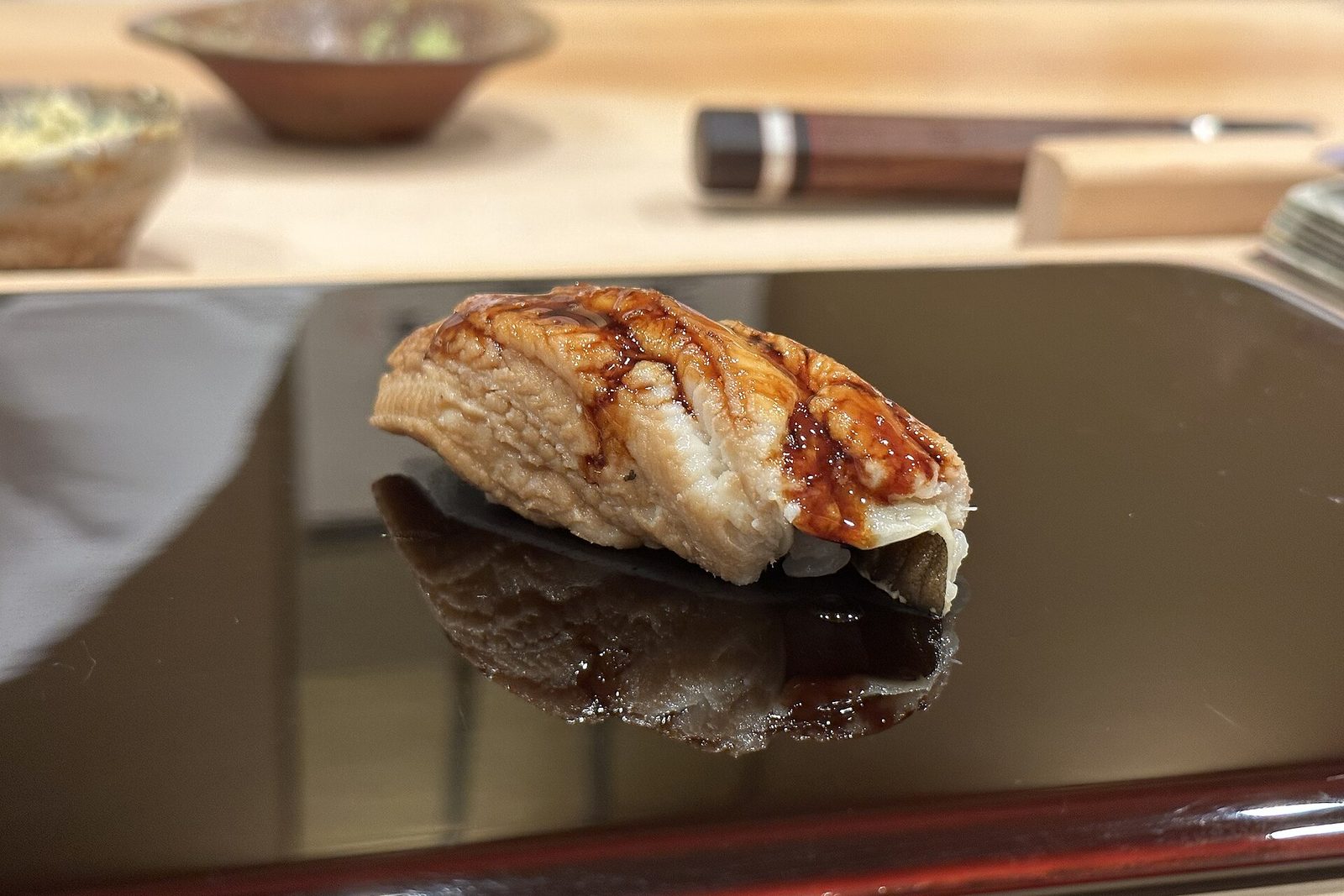
Anago (sea eel)
Simmered until tender and brushed with tsume, a sweet sauce made by reducing the cooking liquid. The fluffy eel and the sweet-salty glaze are irresistible. It already has sauce, so no soy sauce.
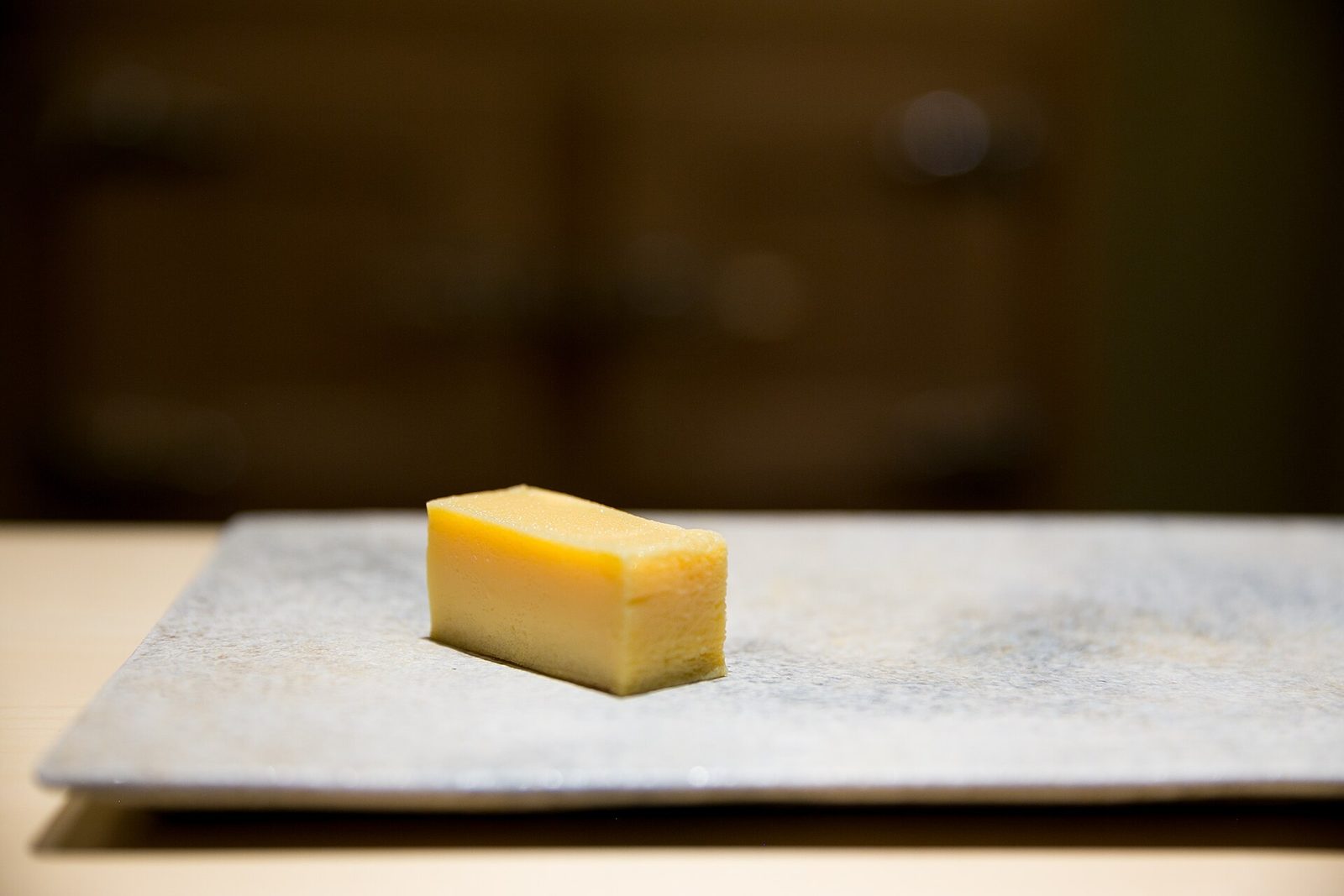
Tamago (egg)
The sweet, thick omelette is a hit with children. Every shop makes it differently, and some say you can judge a sushi chef by the tamago. It often comes last, almost like dessert.
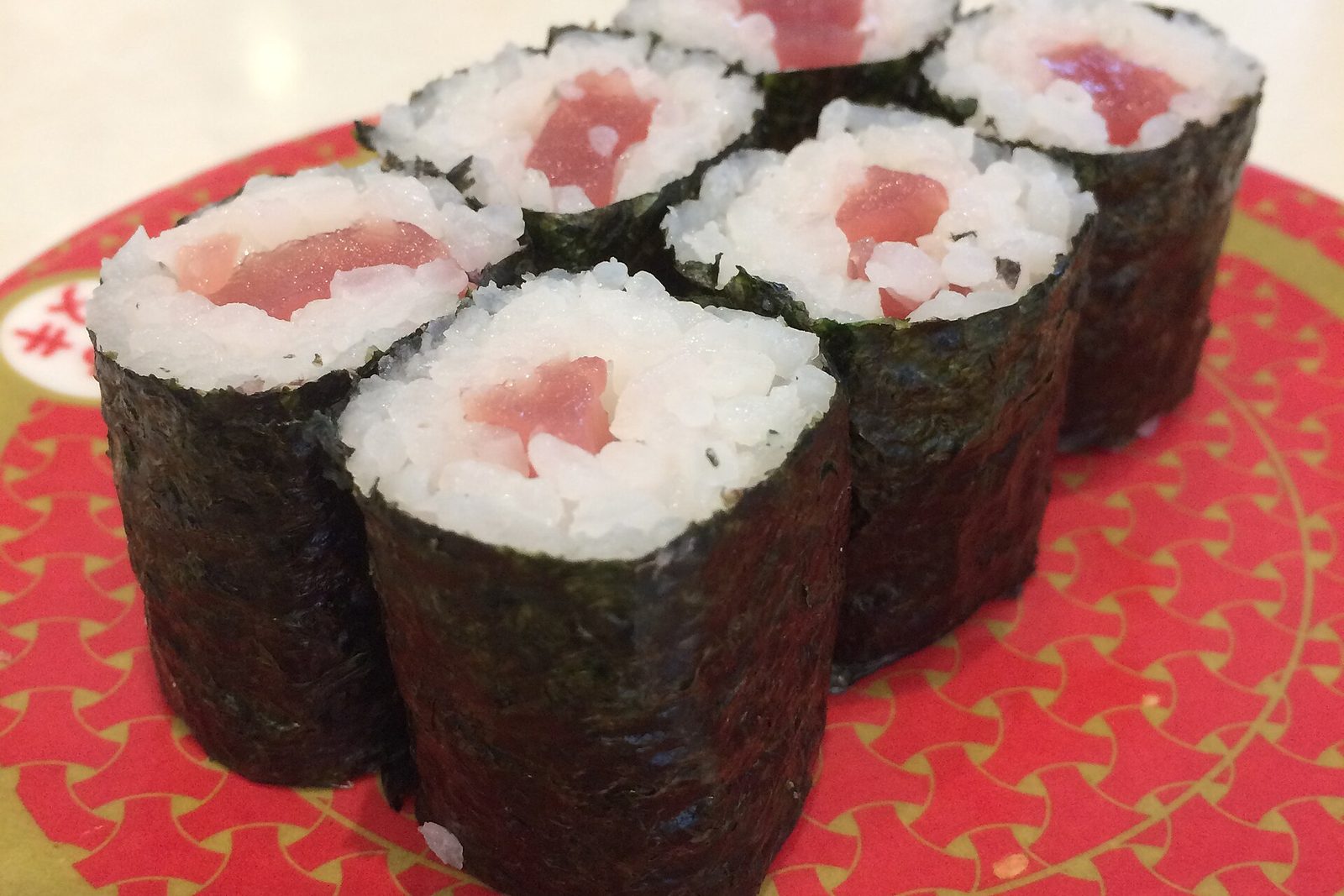
Rolls
The classics are tekka-maki (lean tuna), kappa-maki (cucumber) and negitoro-maki (minced tuna with spring onion). They are also a refreshing way to finish a meal.
A rough eating order
There is no rule that you must eat sushi in a fixed order. Still, going from light toppings to richer, fattier and stronger ones lets you enjoy each delicate flavour to the end.
From light to rich
Just a guide. Ordering what you love, as much as you like, is the real treat
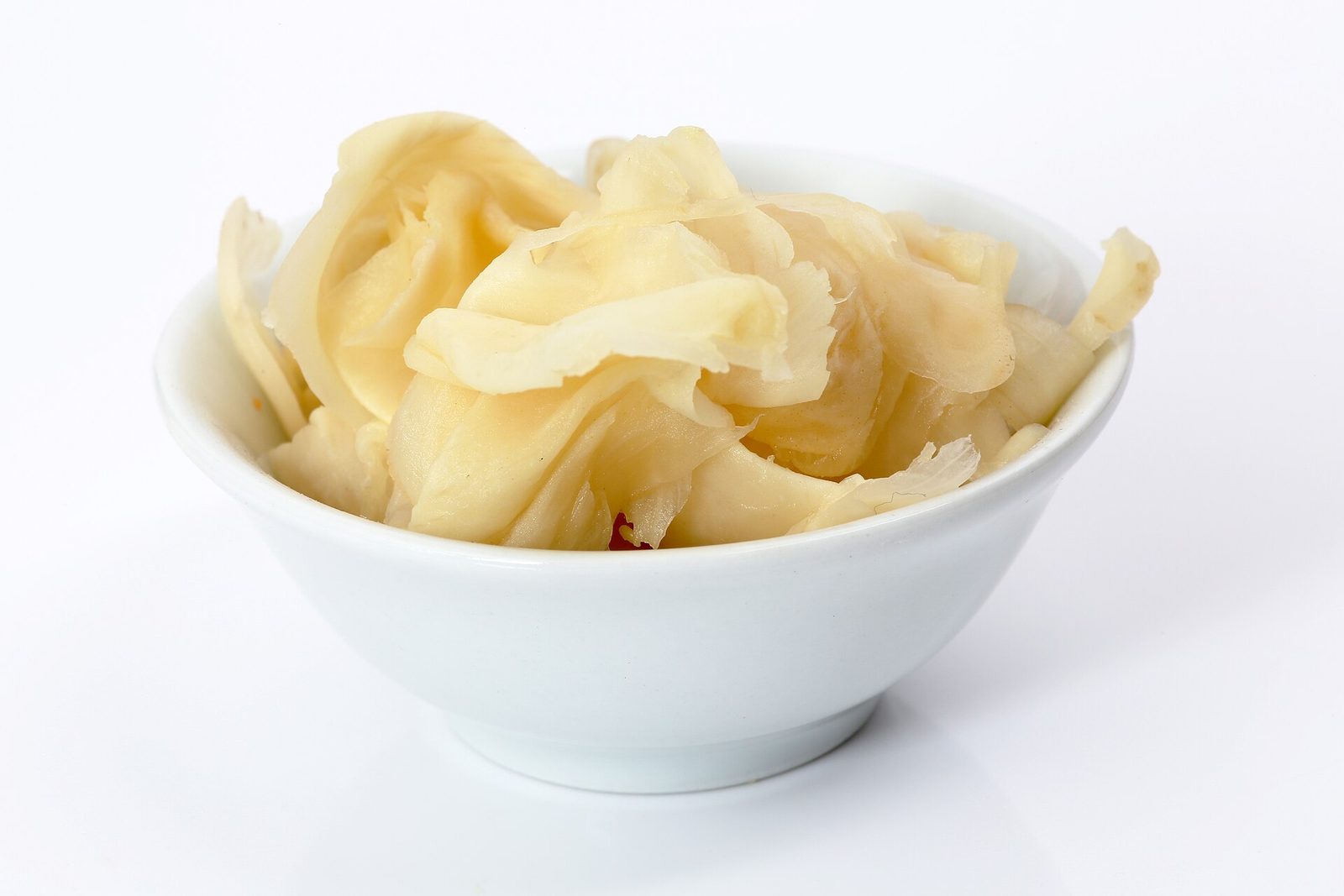
Eat white fish after otoro and its delicate flavour gets lost in the fat. Before changing direction, have a slice of gari: your mouth resets and the next piece tastes fresh again.
How to eat it
What first-timers wonder about most is soy sauce, and hands or chopsticks. The answers are simple.
How to eat nigiri and gunkan
- Hands or chopsticks: both are fine — eating nigiri with your fingers is perfectly polite. Wipe your fingers on the oshibori towel first. No knives and forks
- A little soy on the fish — rice soaks up too much and falls apart. Turn the piece over and touch the edge of the fish to the soy
- One bite — nigiri is made to be eaten in one mouthful; try not to bite it in half and put it back
- No need for extra wasabi — there is already some between the fish and the rice. If you don't like it, ask for sabi-nuki
- Glazed or salted pieces as they are — eel with tsume, or pieces the chef has brushed with soy (nikiri), need no extra soy
- Gunkan with ginger — tipping it over spills the topping, so dip a slice of ginger in soy and brush it on top
Sushi bar etiquette and conveyor belts
At a sushi counter
- Eat each piece as soon as it arrives — at the counter, pieces come one at a time. Freshly made is the best moment
- Omakase or okonomi — omakase means the chef serves the day's best in order; okonomi means ordering piece by piece yourself. For a first visit, omakase is the easy choice
- Go light on perfume — strong scents drown out the delicate aroma of the fish
- Ask before taking photos — rules vary from shop to shop
At conveyor-belt sushi
Relaxed conveyor-belt sushi (kaiten-zushi) is great for travellers. These days most shops let you order on a touch screen and send your plates to your seat on an express lane.
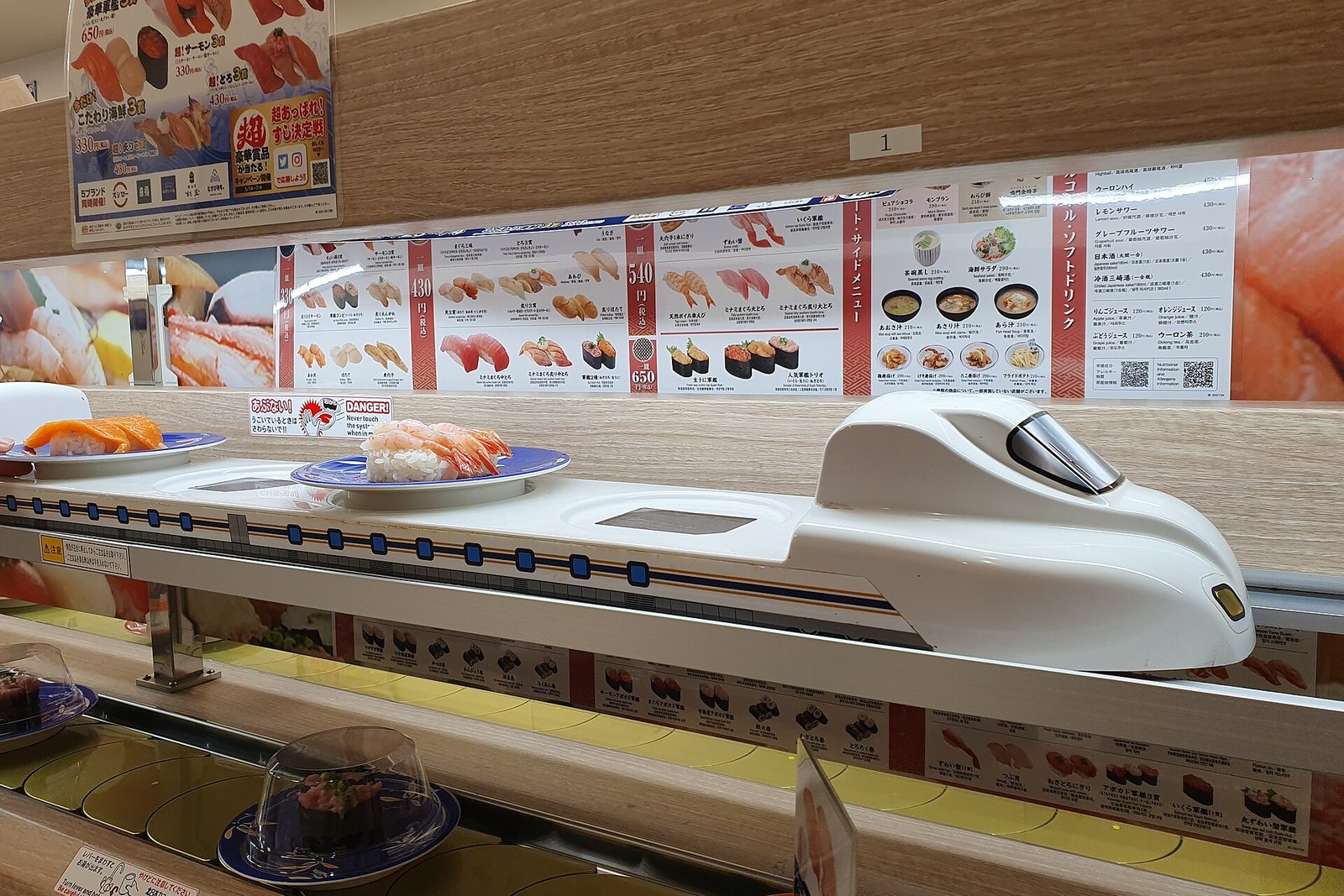
- Never put a plate back on the belt — only take what you will eat
- Stack your empty plates — the bill is calculated from their colours and number (some shops have a slot to drop them in)
- Ginger, tea and soy sauce are self-service — they are at your seat. Many shops have powdered green tea and a hot-water tap
Summary
- Nigiri goes back to Edo-period Edomae sushi. Know four shapes: nigiri, gunkan, hosomaki and temaki.
- Salmon is the most popular. With tuna, compare the fat from akami to chutoro to otoro.
- White fish is refined, shiny fish is the spirit of Edomae, shellfish brings sweetness and bite, and uni and ikura come as gunkan.
- A rough order: light, then rich, then something sweet, with gari in between.
- Hands or chopsticks, a little soy on the fish, one bite. Brush soy on gunkan with ginger.
References
- @DIME: Maruha Nichiro conveyor-belt sushi survey 2026 (Japanese)
- nippon.com: the most popular conveyor-belt sushi toppings, 2026 (Japanese)
- nippon.com: the history and techniques of Edomae sushi (Japanese)
- Ryoko Yomiuri: the classic Edomae toppings (Japanese)
- FUN! JAPAN: cuts of tuna (Japanese)
- Norwegian Seafood Council: 40 years of salmon sushi (Japanese)
- Sushi-pedia: Hikarimono
- TV Tokyo, Adomachi Tengoku: Kyubey, Ginza (Japanese)
- TKG Japanese-English Learner's Dictionary: gunkan-maki
- LIVE JAPAN: how to eat sushi (Japanese)
- Waraku web: Japanese table manners (Japanese)
- Kanpai: Sushi etiquette
Popularity rankings are from the 2026 survey. Seasons and preparation vary by region and shop. The photos come from Wikimedia Commons under licences that allow reuse; the photographer and licence are under each one. The diagrams and illustrations are my own.
Food Notes No. 2 — Sushi for beginners / 2026.10