Food Notes / 2026 ・ No.03
The story of tempura
From a Portuguese-era fry to an Edo street-stall favourite
Published
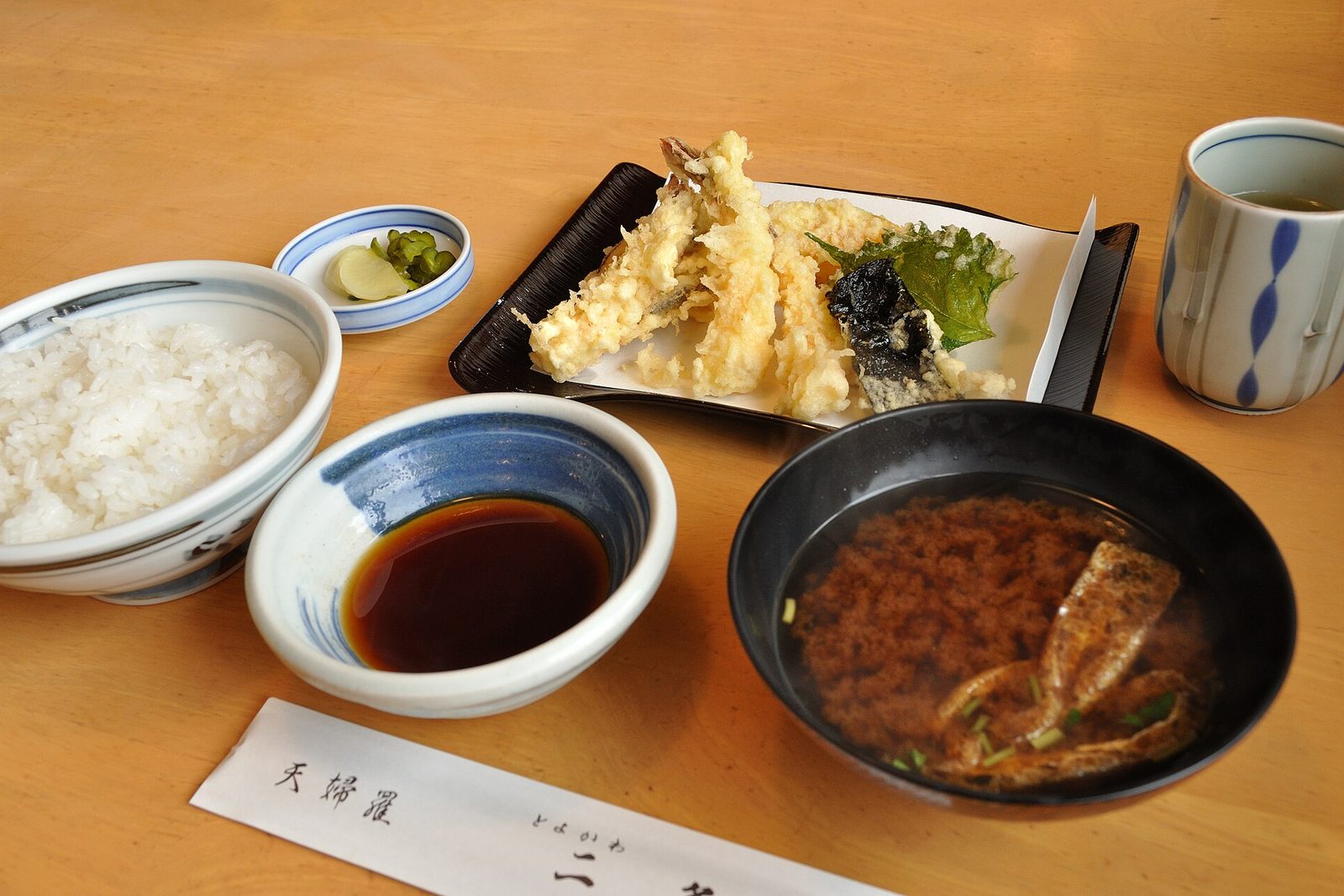
Inside a light, crisp batter: a springy prawn, a fluffy fillet of whiting, a sweet slice of vegetable.
Tempura stands with sushi, soba and eel as a face of Japanese cuisine, yet its roots lie overseas.
This post follows tempura's history with a timeline and illustrations, then looks at east–west differences, the classic pieces,
what makes it crisp, and the long-established tempura houses worth a visit.
What is tempura?
Tempura is seafood or vegetables coated in a batter of flour mixed with water (and egg) and deep-fried. Unlike karaage, which seasons the meat first, tempura seals in the ingredient's own flavour under a thin coat. Inside the batter the food is almost steamed, so fish stays moist and vegetables turn sweet.
The kanji 天麩羅 or 天婦羅 are phonetic borrowings. There are several theories about the word; a leading one traces it to the Portuguese tempero, “seasoning” or “cooking” (others point to têmporas, Christian fast days). No conclusive evidence has been found.
From Portuguese ships to Edo stalls
A “southern barbarian” dish in Nagasaki
In the 16th century, when Portuguese ships opened the so-called Nanban trade, the Western technique of frying food in batter is thought to have reached Japan. Nagasaki developed Nagasaki tempura, with a thick batter containing sugar and sake, fried in lard, and it is seen as one root of Japanese tempura.
A famous story says that Tokugawa Ieyasu died from eating sea bream tempura. It is recorded that in 1616, on a hawking trip, Ieyasu ate a dish then fashionable in Kyoto, sea bream fried in kaya-nut oil with grated garlic chives, and fell ill with stomach pains that night. But he died about three months later, stomach cancer is now the favoured explanation, and it is not even clear the dish was tempura as we know it. “Killed by tempura” is best treated as folklore.
Street food for the people of Edo
The word appears as “tenfurari” in a 1669 cookbook. Edo-style batter-frying is clearly described in a 1748 book, which says that “any fish can be dusted with wheat flour and fried in oil”.
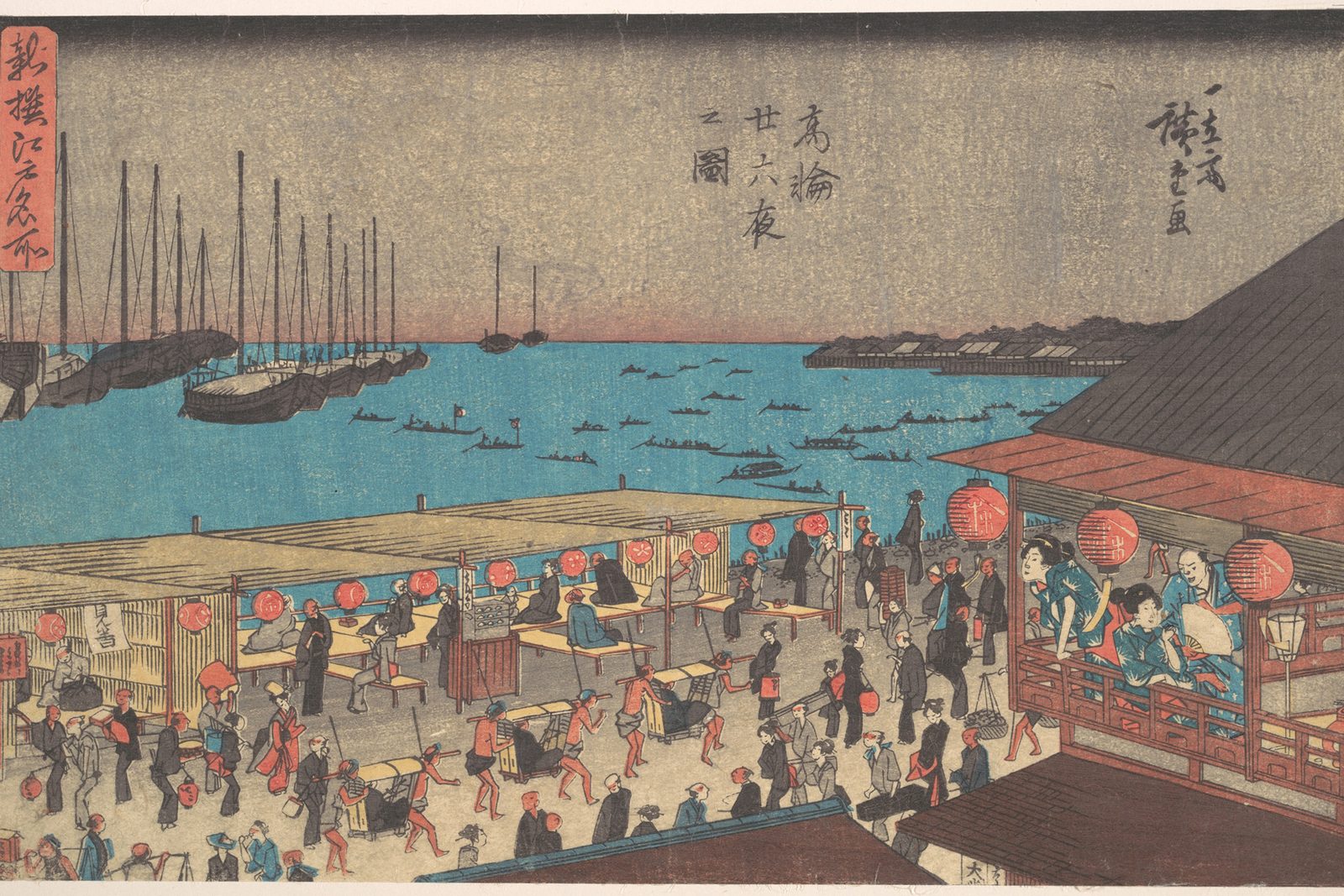
Tempura's big break came in the late 18th century at Edo street stalls. Seafood from the bay was battered, fried in sesame oil and served on skewers, to be dipped in sauce with grated daikon and eaten standing up. Cheap and quick, it became Edo fast food alongside soba and sushi.
An Edo tempura stall (impression)
Skewers were laid out on a platter and customers helped themselves. The drawing is my impression based on accounts of the period
From stalls to shops to private rooms
By the late Edo period, tempura soba and tempura with rice and tea had appeared. From around 1848–54, tempura shops with fixed premises joined the stalls, and in the Meiji era houses such as Tenkin in Ginza and Hashizen in Shinbashi became famous.
Around 1874–75, a shop called Nakano in Kanda is said to have invented tendon, tempura on rice. In the Taishō era (1912–26), ozashiki tempura, fried in front of guests in a private room, turned tempura from a street snack into a feast.
Then came the Great Kantō Earthquake of 1923. Many Tokyo tempura cooks moved to the Kansai region, which is said to have raised the level of tempura in Osaka and Kobe. Edo's tempura spread across the country.
Tempura through the centuries
Some dates are disputed. Ieyasu's meal is on record, but the idea that tempura killed him is folklore
East, west, and the other “tempura”
Tempura is eaten all over Japan, but styles differ by region. The best-known contrast is between Kantō (Tokyo) and Kansai (Osaka and Kyoto).
Kantō tempura, raised in Edo, uses fragrant sesame oil to mask any fishiness, with an egg batter fried hot and fast to a deep golden colour, eaten with dipping sauce and daikon. Kansai tempura grew partly from the region's vegetable-based shōjin-age: a milder oil and an eggless batter fried lower and slower, pale and light, and often eaten with salt to bring out the ingredient.
Kantō and Kansai tempura (broad tendencies)
Ask for “tempura” in western Japan and…
There is also a difference in words. In parts of western Japan, such as Kyushu, Chūgoku and Shikoku, “tempura” means fried fish-paste cakes, the kind otherwise called satsuma-age. A late-Edo record of customs, the Morisada Mankō, notes in effect that in Kyoto and Osaka fried fish paste was called tempura, while Edo's tempura was called tsukeage there. If someone in western Japan asks you to pick up some tempura, they may mean fish cakes.
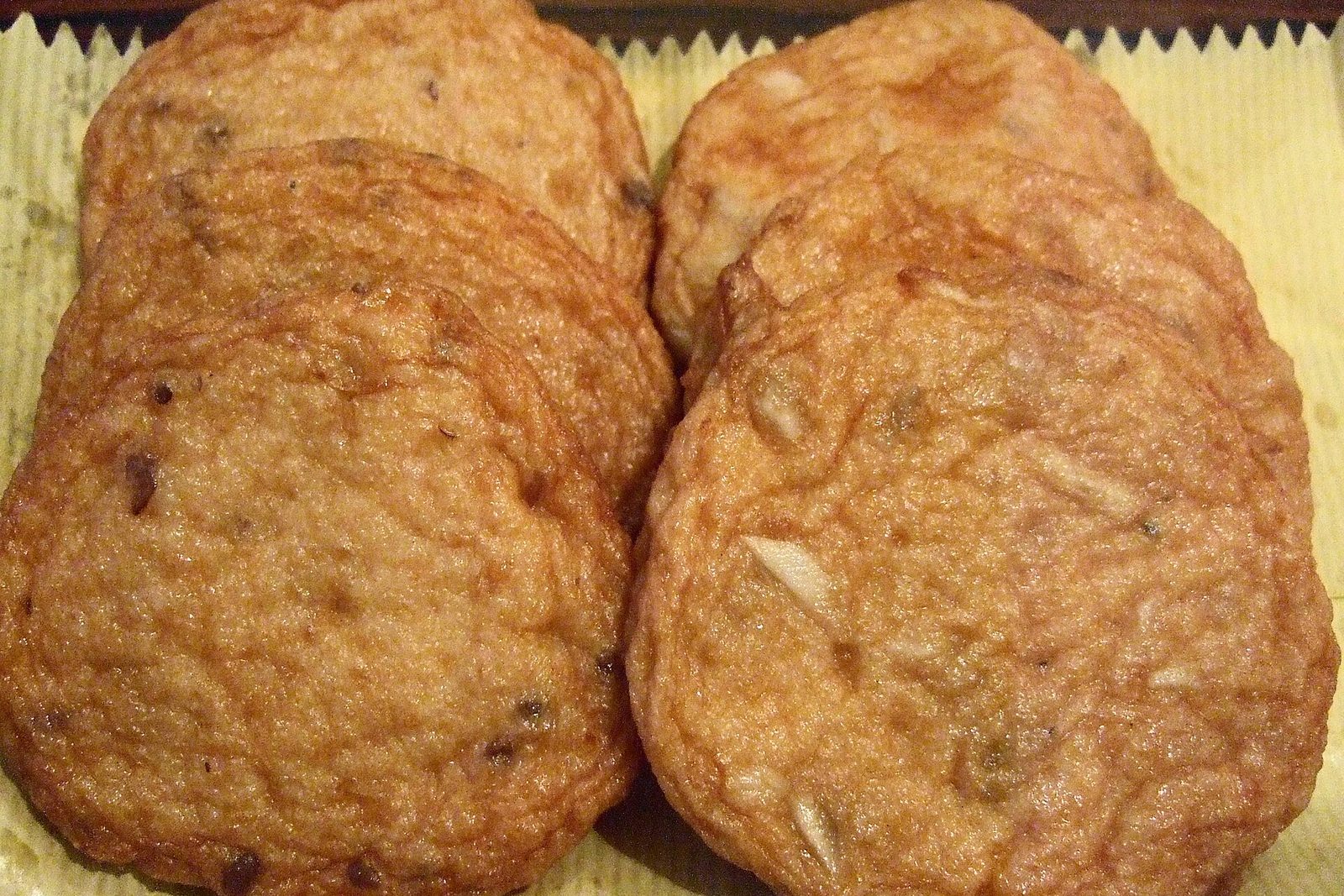
Nagasaki tempura, seen as the origin, uses a thick batter with sugar and sake, fried in lard. The batter itself is seasoned, which is the big difference from Edo tempura.
The classic pieces
The ingredients for tempura are called tane. Almost anything that can be fried can become tempura, but start with the classics.
What is on a tempura platter
At a counter, the chef may bring seafood and vegetables one piece at a time, straight from the oil
| Piece | What it is like |
|---|---|
| Prawn | The star. Fried straight right to the tail, springy and sweet |
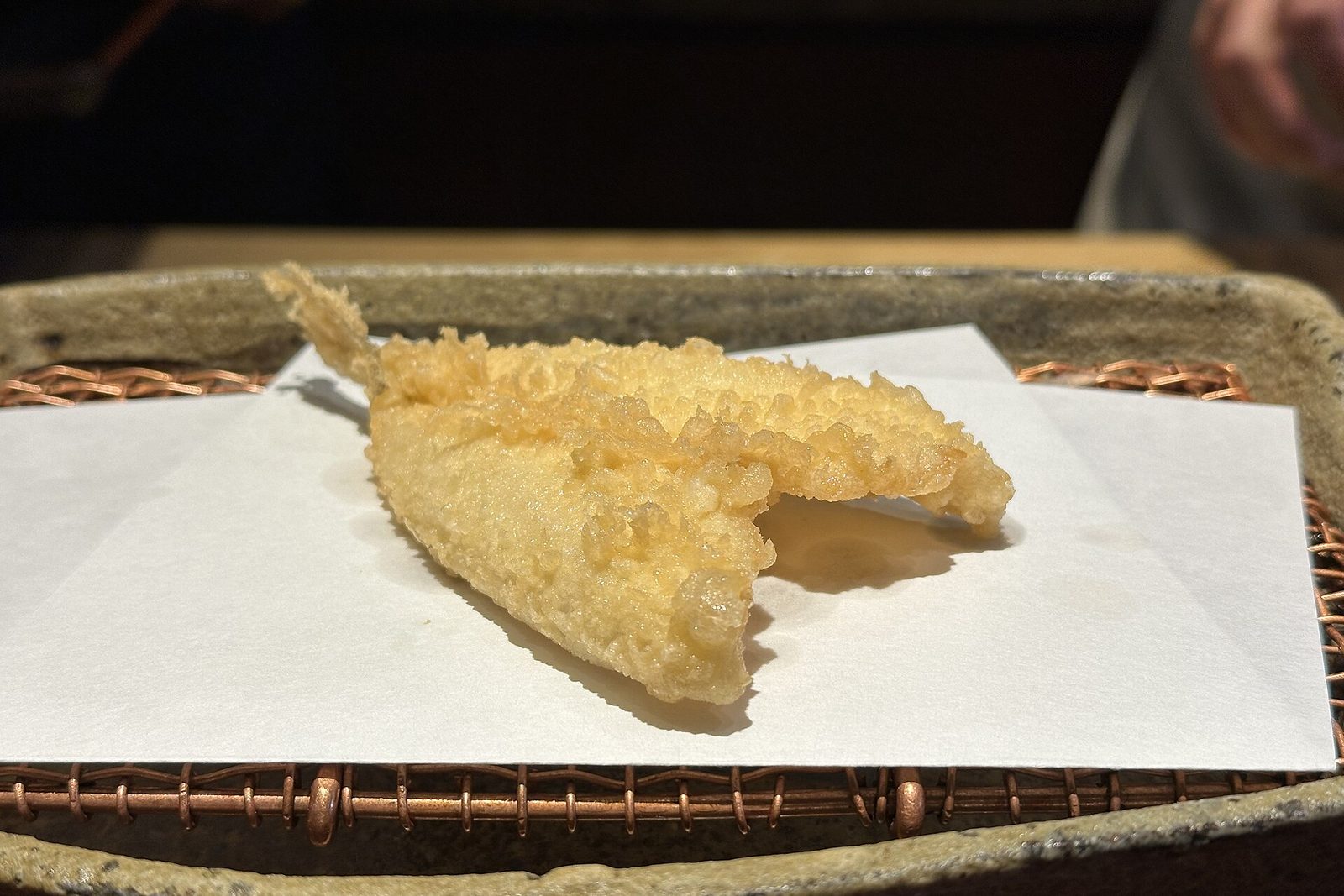
| Kisu | A small white fish (whiting), butterflied. Light, fluffy and gently sweet |
| Anago | Conger eel, often fried whole: a highlight of Edomae tempura. Crisp outside, soft inside |
| Squid | Tender bite and sweetness; also good in kakiage |
| Vegetables | Aubergine, pumpkin, sweet potato, shiitake, shishito, lotus root, shiso and more. Steamed in the batter, they turn sweeter |
| Kakiage | Chopped seafood and vegetables fried in a cluster: small scallops, small prawns, onion, carrot |
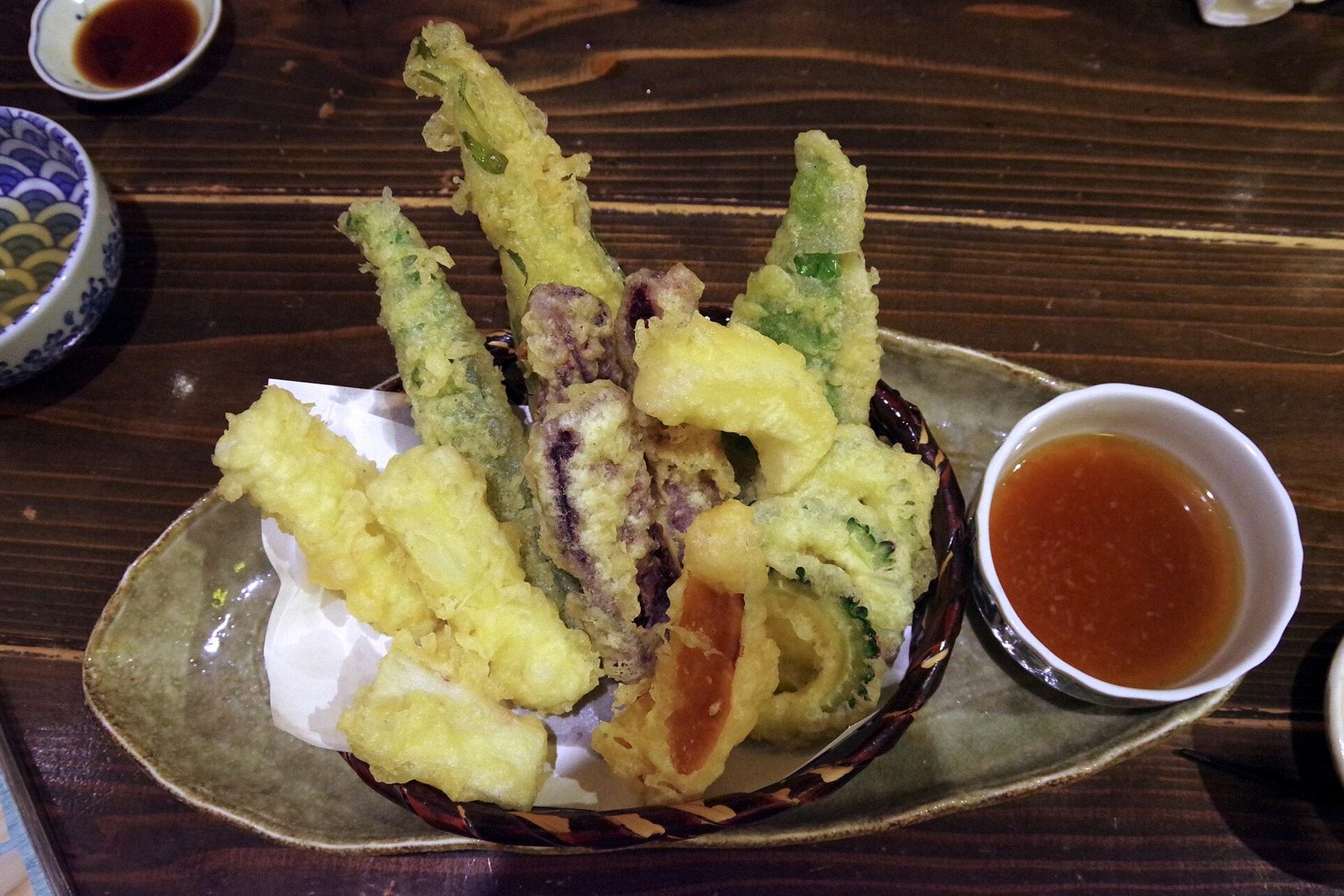
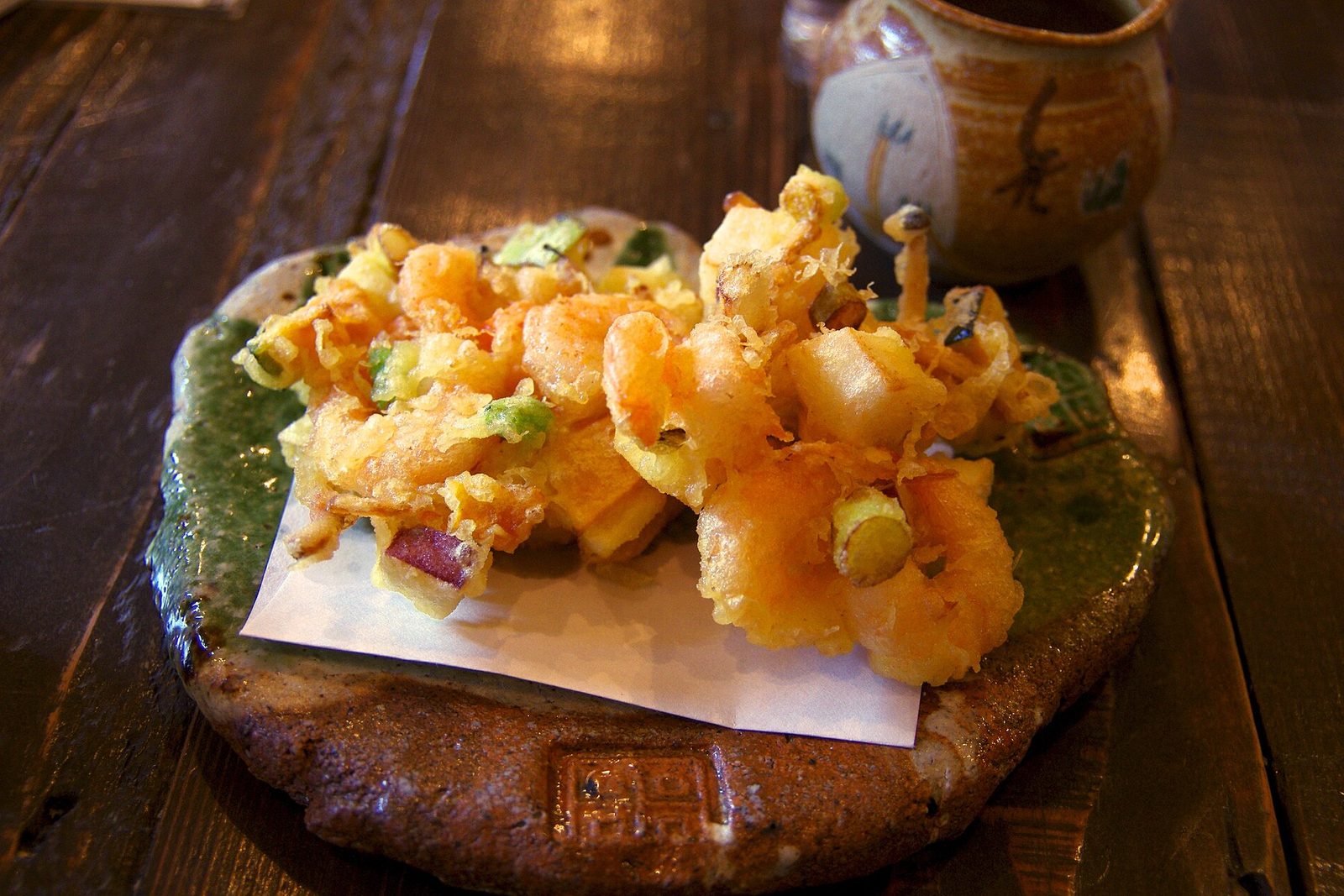
For something different, try ice-cream tempura, said to have been invented at Tsunahachi in Shinjuku. The batter is fried for just a moment, so the outside is hot and the inside stays cold.
Tendon and tempura soba
Paired with rice or noodles, tempura became an everyday meal.
Tendon is tempura dipped in a sweet soy-based sauce and laid over rice. It is said to have been born in Kanda in the early Meiji era, and by the end of Meiji a magazine listed it among the dishes “everyone knows”. Sauce-soaked batter over sauce-soaked rice is a different pleasure from tempura straight from the oil.
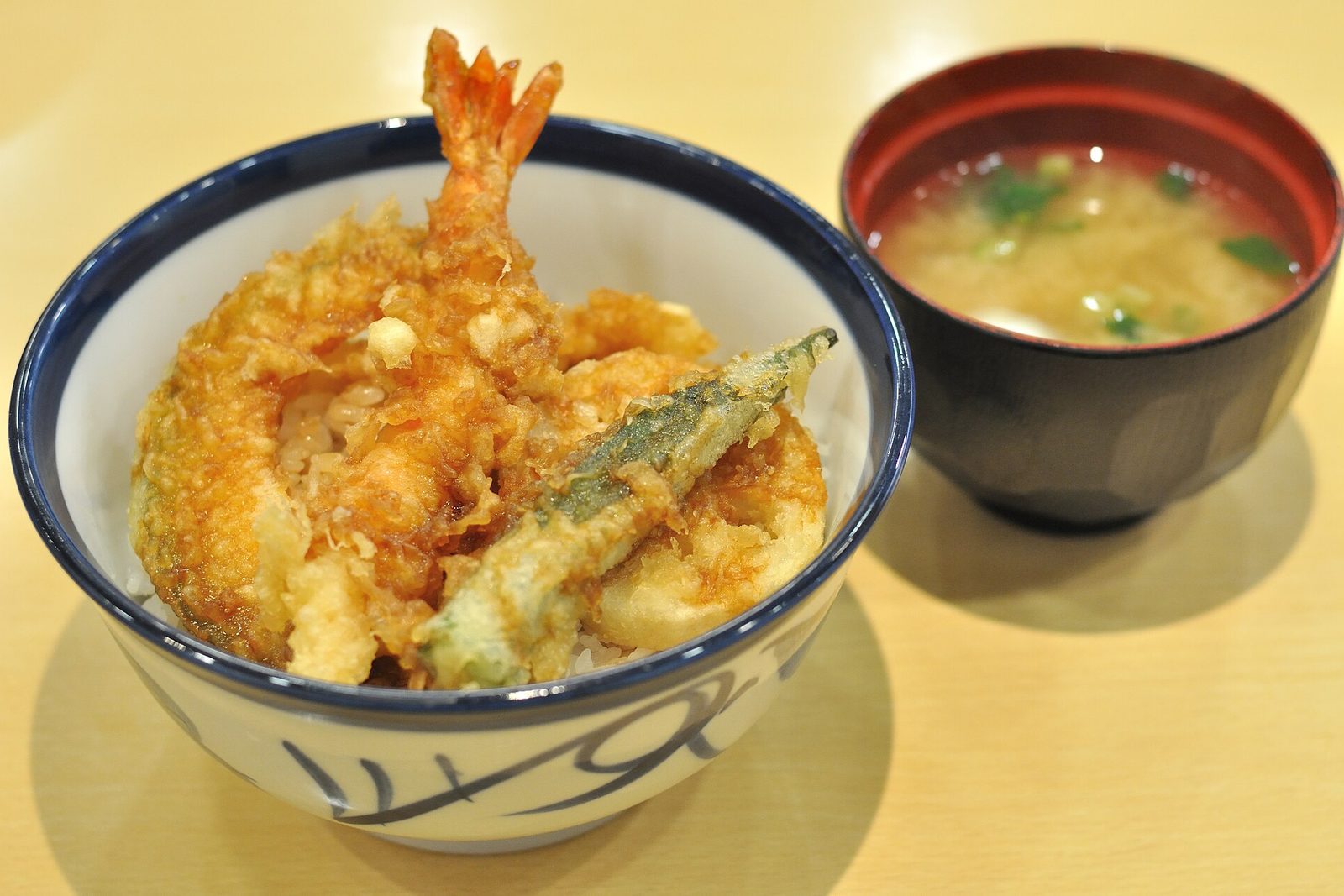
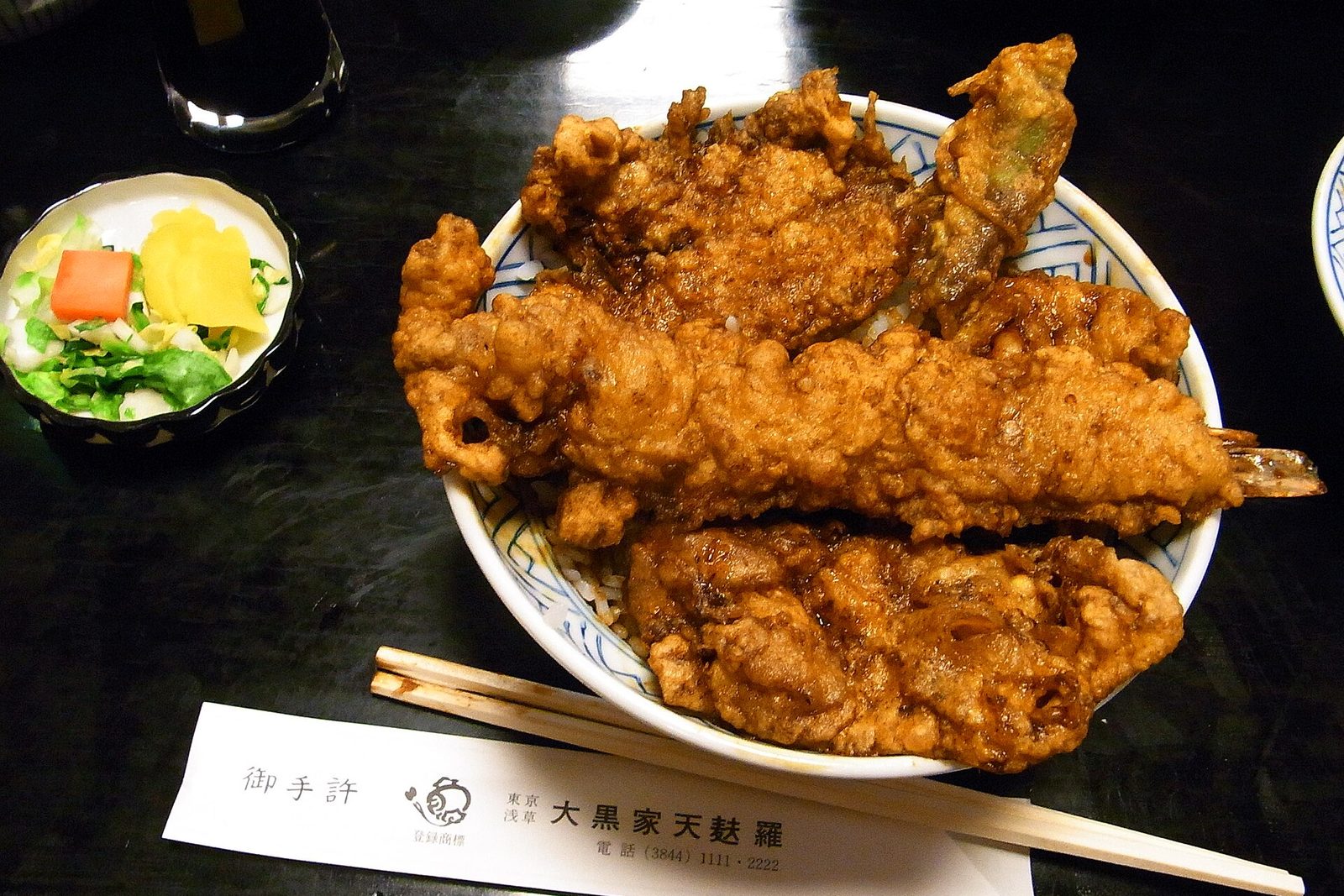
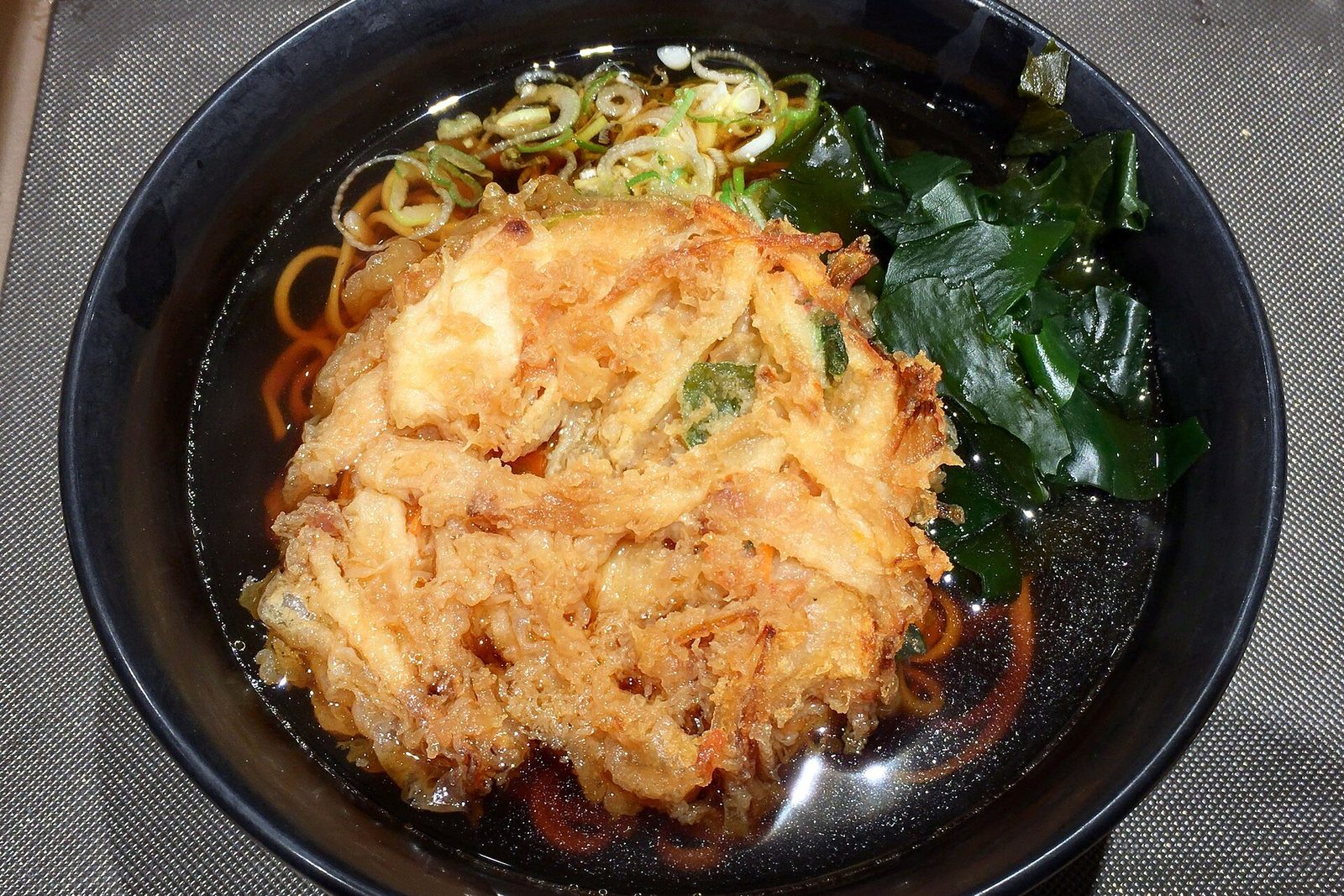
Tempura soba goes back to the late Edo period. Today, kakiage soba at standing noodle bars and prawn tempura on soba or udon are staples. Batter softened by the broth has its own appeal next to the crisp kind.
What makes it crisp
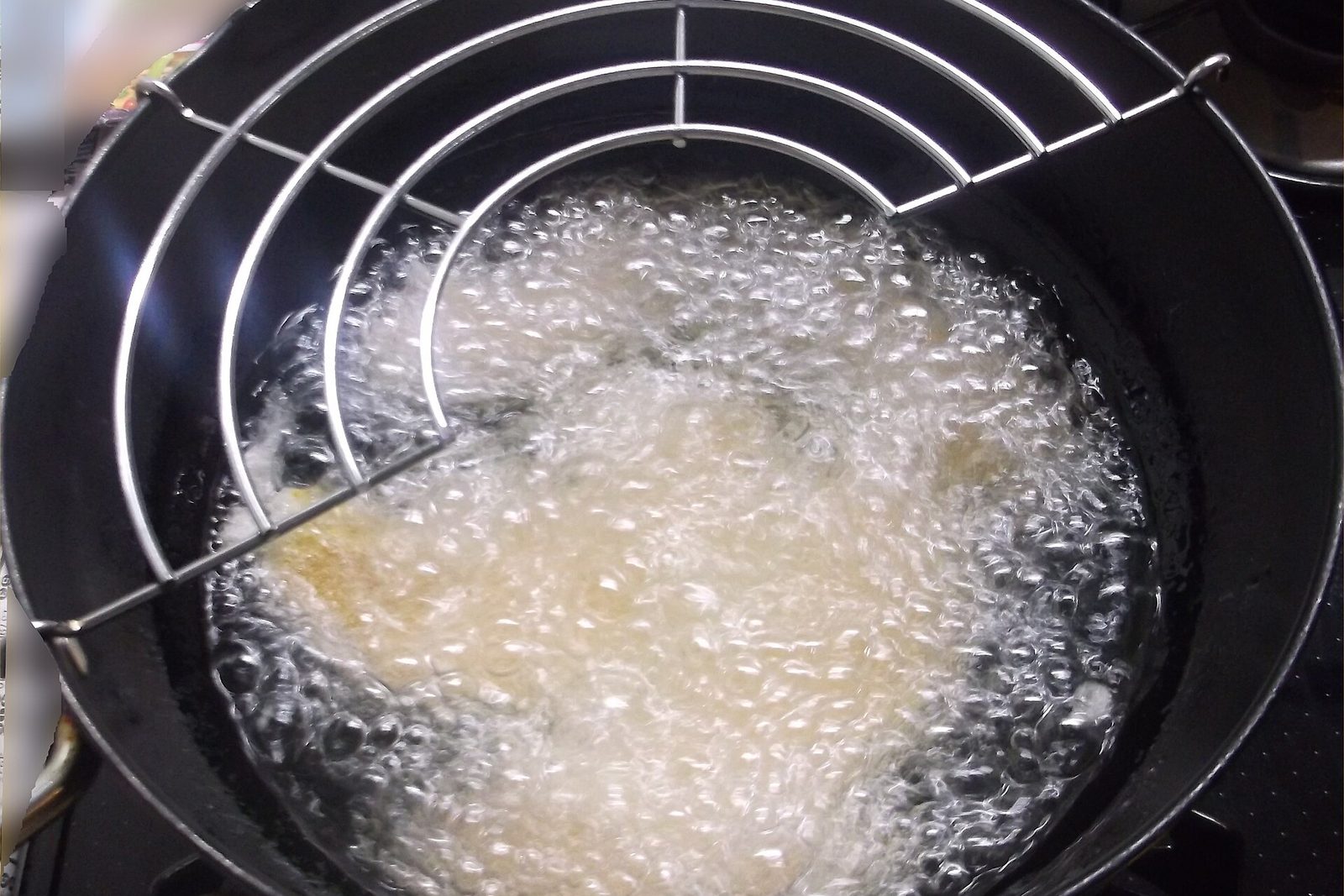
Tempura turns out light and crisp because the water in the batter boils off in an instant, leaving tiny pockets behind. The fine bubbles you see while frying are that water leaving as steam. Three tips do most of the work:
- Keep the batter cold and do not overmix. Use ice water and chilled flour, and stir lightly just before frying. Overmixing or warmth lets the gluten in the flour turn sticky, making a heavy coat. A few lumps are fine.
- Aim for 170–180 °C. A little lower for vegetables, a little higher for prawns and other seafood.
- Do not crowd the pot. Too many pieces at once cool the oil and make tempura greasy.
Read the oil with a drop of batter
Famous old tempura houses
Tokyo, tempura's home ground, still has houses that go back to the Edo and Meiji eras. Here are some of the best known, oldest first.
| Shop | Founded | Area | In a word |
|---|---|---|---|
| Sansada | 1837 | Asakusa (Kaminarimon) | An Edo-born house dating from the Tenpō era, right by Kaminarimon gate |
| Tenkuni | 1885 | Ginza | Known for Edomae tendon and kakiage packed tight and fried in one go |
| Funabashiya | 1886 | Shinjuku | Fries in specially ordered sesame oil; try it with seaweed salt. Records show it selling tendon in the early 1910s |
| Daikokuya Tempura | 1887 | Asakusa | Golden tempura fried only in sesame oil, and tendon with a rich, sweet and salty sauce |
| Tsunahachi | 1924 | Shinjuku | Said to have invented ice-cream tempura; popular with overseas visitors |
| Ten-ichi | 1930 | Ginza | Long loved by dignitaries; US President Bill Clinton visited in 1998 |
Founding years are from each shop's website and from articles and TV programmes. Hours, closing days and branch locations change, so check each shop's official information before you go.
In Asakusa, Sansada and Daikokuya are a short walk from Kaminarimon, and the scent of sesame oil drifts into the street. In Ginza, treat yourself to a counter seat, watch the chef at work and eat each piece as it comes out of the oil. In Shinjuku, Funabashiya and Tsunahachi are easy to drop into between shops.
How to eat it
- Eat it hot, right away. The longer tempura sits, the more moisture the batter picks up. Eat it as soon as it arrives.
- Sauce and daikon. Stir grated daikon into the tentsuyu dipping sauce and dip just the tip of the piece. The daikon refreshes your palate.
- Salt for the ingredient. Delicate pieces such as kisu, vegetables and squid are lovely with salt. There is no rule; switch between sauce and salt as you like.
- At the counter, eat as it comes. Chefs often serve one piece at a time. Do not let it sit: eating it straight away is what the cook will appreciate most.
Summary
- Tempura's roots are in 16th-century Portuguese-influenced cooking. The tale that tempura killed Ieyasu is folklore.
- In the late 18th century, skewered tempura took off at Edo street stalls; shops followed, then tendon and ozashiki tempura.
- Kantō leans to sesame oil and dipping sauce, Kansai to a light batter and salt. In parts of western Japan, “tempura” means fried fish cake.
- The classics: prawn, kisu, anago, squid, vegetables and kakiage. Try tendon and tempura soba too.
- For crispness: cold batter, 170–180 °C, a pot that is not crowded. And always eat it hot.
References
- MICHELIN Guide: the history of tempura and Kantō vs Kansai (Japanese)
- Kotobank: 天麩羅 (encyclopedia and dictionary entries, Japanese)
- Ryokō Yomiuri: did Ieyasu really die of sea bream tempura? (Japanese)
- Mitsubishi Electric: Japanese food culture, the history of tendon (Japanese)
- Mainichi Kotoba: “tempura” in western Japan (Japanese)
- LIVE JAPAN: types of tempura and how to eat them (Japanese)
- All About: frying tempura, batter and oil temperature (Japanese)
- Ginza Tenkuni official website (Japanese)
- GLTJP: Daikokuya Tempura (Japanese)
- TV Tokyo “Ad-machikku Tengoku”: Asakusa Kaminarimon (Sansada, Daikokuya; Japanese)
- TV Tokyo “Ad-machikku Tengoku”: Shinjuku (Funabashiya, Tsunahachi; Japanese)
- TV Tokyo “Ad-machikku Tengoku”: Ginza (Ten-ichi; Japanese)
Dates and the origin of the word are debated, and the Kantō–Kansai differences are general tendencies. Photos are from Wikimedia Commons under licences that allow reuse; photographers and licences are credited under each photo. The woodblock print is in the collection of The Metropolitan Museum of Art (CC0). Diagrams and illustrations are my own.
Food Notes No. 3 — The story of tempura / 2026.10