Food Notes / 2026 ・ No.04
The story of yakiniku
From post-war street stalls to Japan's favourite feast
Published
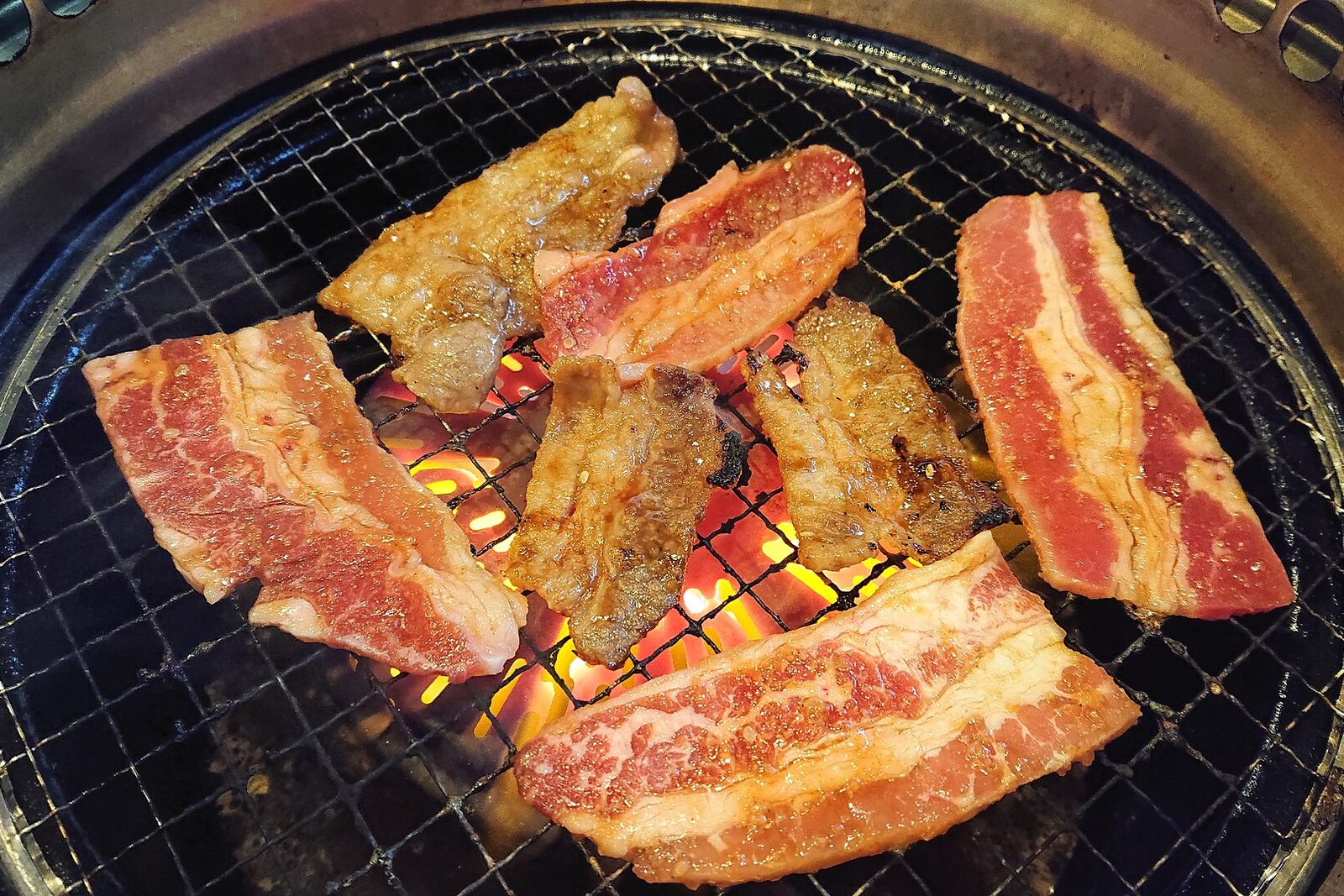
Meat sizzling on the grill, smoke rising, the scent of sweet soy sauce.
For a celebration or a treat after a hard week, yakiniku is a special kind of feast in Japan.
Yet this is a country where eating meat was frowned on for centuries. So when, and how, was yakiniku born?
This post follows its history with a timeline, then covers the cuts, the grills, a map of regional yakiniku, famous shops, and how to eat it well and safely.
What is yakiniku?
Yakiniku is beef or pork, and offal (horumon), that you grill yourself on a grate or hotplate at the table and eat with a dipping sauce or salt. Its roots lie in Korean meat dishes, which were originally cooked by the restaurant. The style of grilling at your own table and dipping in sauce is said to have taken shape in Japan.
The word yakiniku, “grilled meat”, is old: it appears in an 1872 book on Western cooking as a translation for roast meat. But yakiniku as we know it spread only after the Second World War.
Yakiniku in a land without meat
Twelve centuries of meat bans
In 675, Emperor Tenmu, following Buddhist teaching, issued an edict banning the eating of cattle, horses, dogs, chickens and monkeys. In one form or another the ban lasted some 1,200 years, and officially, at least, the Japanese ate almost no meat from animals.
That changed in the Meiji era. In 1872 Emperor Meiji lifted the ban and ate meat himself. Gyunabe, beef hotpot, became the taste of modernisation; by 1877 Tokyo alone is said to have had more than 550 gyunabe restaurants. Even so, meat was mostly simmered, stir-fried or deep-fried. Grilling it came much later.
“Horumon” and the first yakiniku restaurants
Offal dishes were known before the war as “horumon cooking”; in the 1930s, Tokyo restaurants were advertising it in newspapers. A popular story says the word comes from Osaka dialect hōru mon, “stuff you throw away”, but language researchers call this a folk etymology. It more likely borrows the medical word “hormone” to suggest food that gives you energy.
In the ruins after the war, stalls grilling cheap beef and pork offal over open flames appeared, and Korean residents of Japan are widely said to have played a major part. In 1946, Meigetsukan opened in Shinjuku, Tokyo, and Shokudoen in Sennichimae, Osaka; the two are known as the original yakiniku restaurants. Shokudoen is said to have started with just two items: karubi (meat from around the ribs) and rosu (everything else).
In 1954, Choshunkan in Shinjuku let customers grill for themselves on a shichirin charcoal brazier, and is said to have pioneered today's grill-it-yourself style.
Into homes and onto every street
One thing that brought yakiniku home was bottled sauce. Ebara Foods launched its Yakiniku no Tare in 1968 to huge success, followed in 1978 by Ogon no Aji, sweetened with fruit. With electric hotplates spreading too, yakiniku became a family feast around the table.
What changed the restaurants was the smokeless roaster, which pulls smoke down beneath the grill; one was on sale by 1980. With less smoke and smell, stylish yakiniku restaurants multiplied.
In 1991 Japan liberalised beef imports, and consumption of imported beef rose. Restaurants at every price spread through the cities, from the upmarket Jojoen, opened in Roppongi in 1976, to the chain Gyu-Kaku, which opened its first shop in 1996.
Setbacks and new styles
In 2001 BSE (mad cow disease) was found in Japan, and beef consumption fell sharply. In 2011 food poisoning from raw meat broke out in Toyama and Fukui; from that October strict standards for raw beef applied, and from July 2012 serving raw beef liver was banned. Yakiniku grew up as food you cook through, with safety ever more in mind.
Then, in 2018, Yakiniku Like opened in Shinbashi, Tokyo: a fast-food style shop for solo yakiniku. Yakiniku is still a feast to share, but it has also become an everyday meal for one.
Yakiniku through the years
The origins of yakiniku are debated. Even the post-war street-stall story is not backed by firm records
A guide to cuts and offal
A yakiniku menu is split into meat cuts and horumon (offal). Start with the cuts, mapped onto the animal.
The cow and its yakiniku cuts
| Menu | Part | What it is like |
|---|---|---|
| Tan | Tongue | Crisp bite. Thin slices with salt and lemon; thick cuts are popular too |
| Rosu | Back meat from shoulder to loin (chuck, rib, sirloin) | Fine-grained and tender; often well marbled |
| Karubi | Belly meat around the ribs | Layers of lean and fat; rich. With sauce and rice |
| Harami, sagari | Diaphragm | Looks lean and is tender; officially offal |
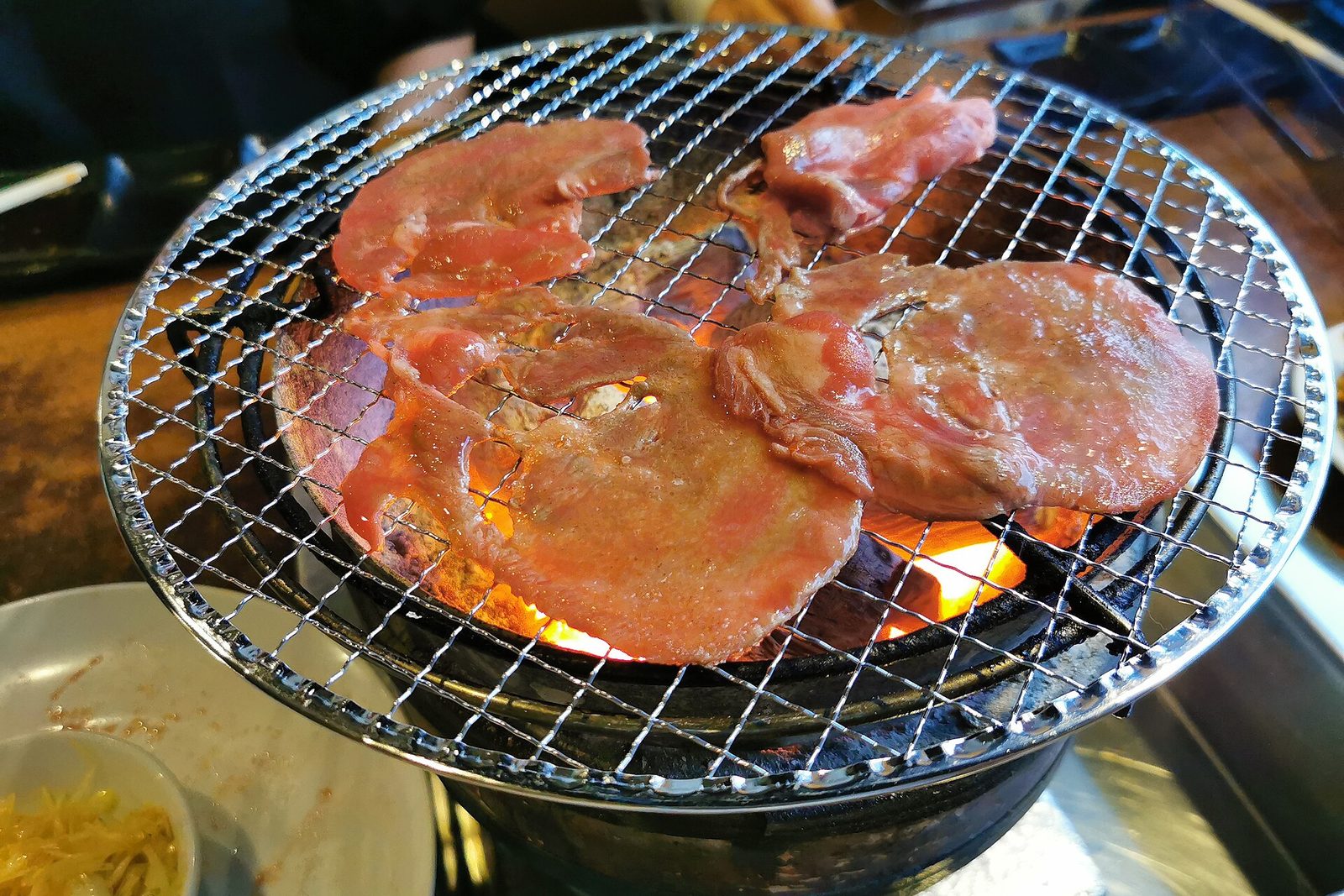
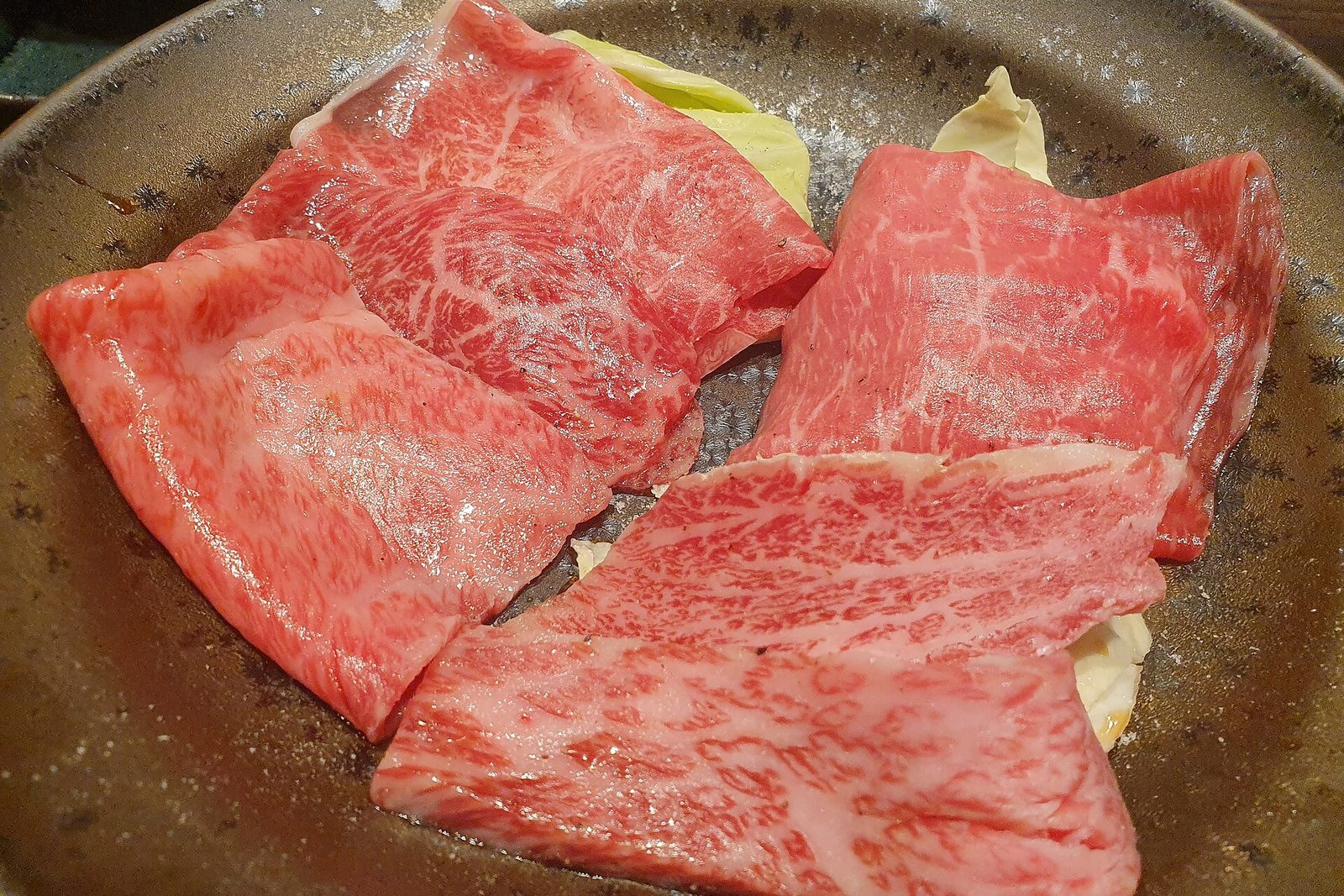
Karubi comes from the Korean word for “ribs” and matches what butchers call belly. Harami and sagari are both diaphragm muscle: the part near the lumbar spine is sagari and the rest harami (in Hokkaido and elsewhere, harami is sometimes simply called sagari).
An offal field guide
A cow has four stomachs, each with its own name and texture. Here they are with the intestines, liver and heart.
The horumon line-up
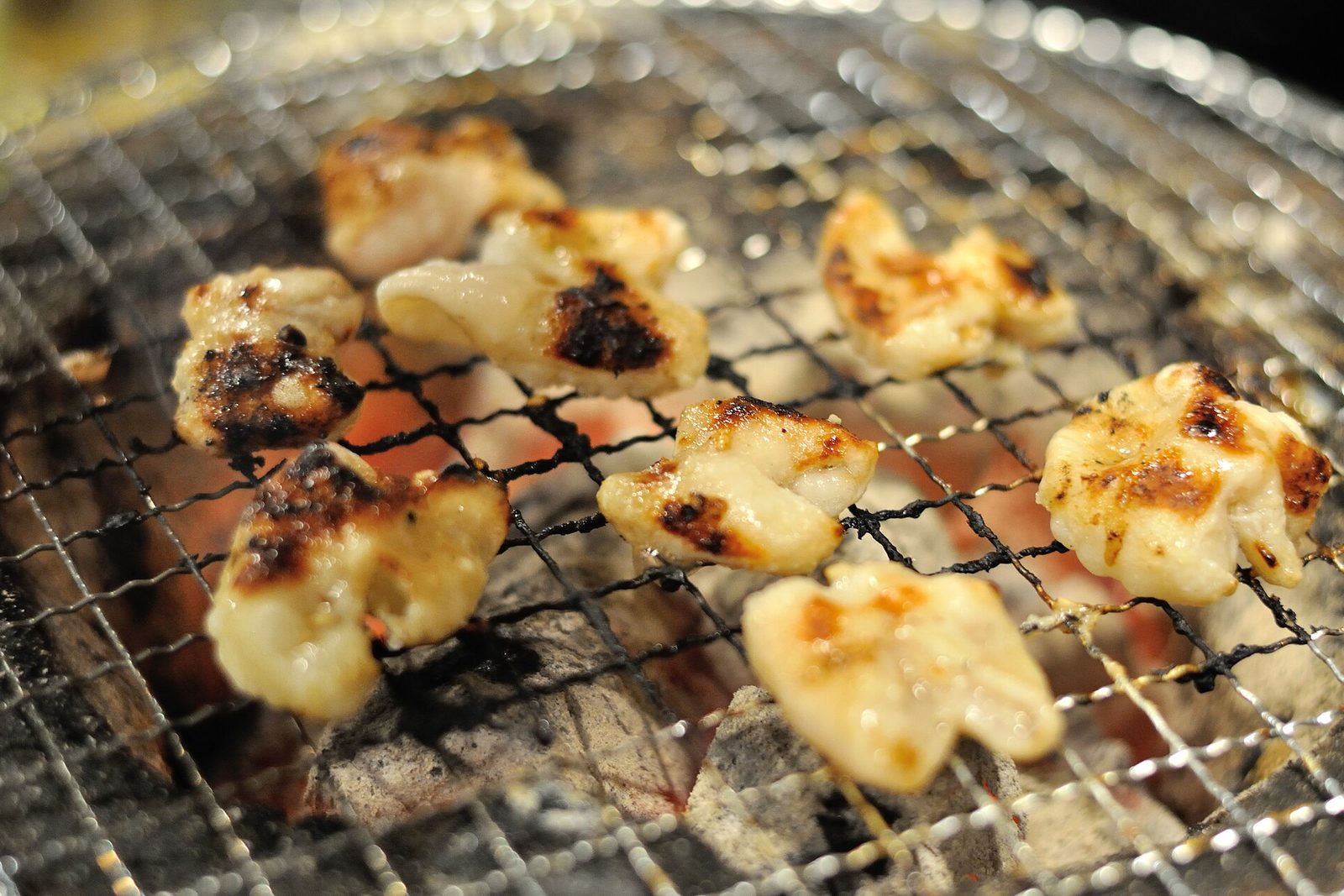
In the Kansai region, small intestine left whole is called maruchō, and opened up, kotetchan
What you grill on
The same meat tastes different depending on what you cook it on. Here are three things you will meet at yakiniku restaurants.
Shichirin, smokeless roaster, Jingisukan pan
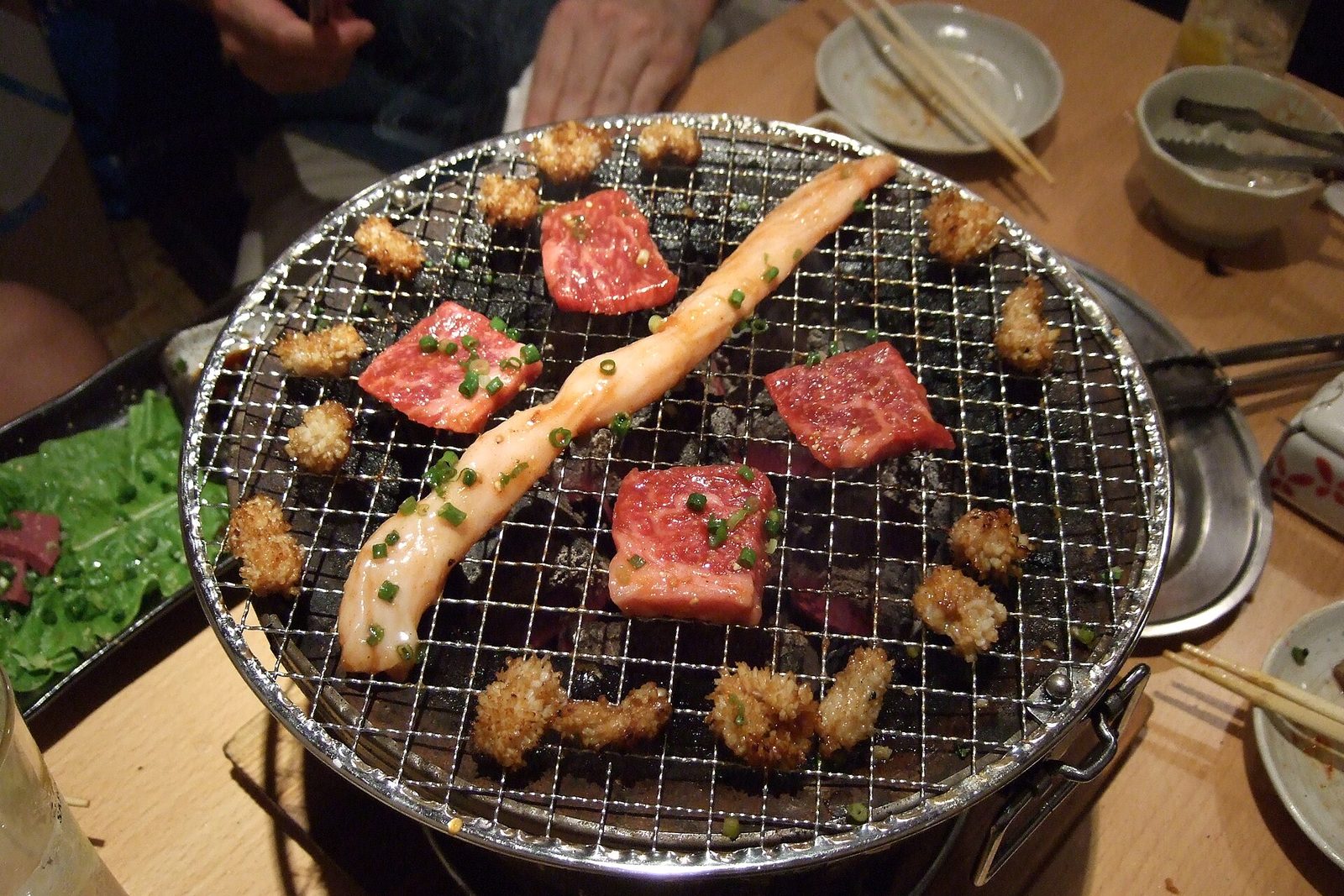
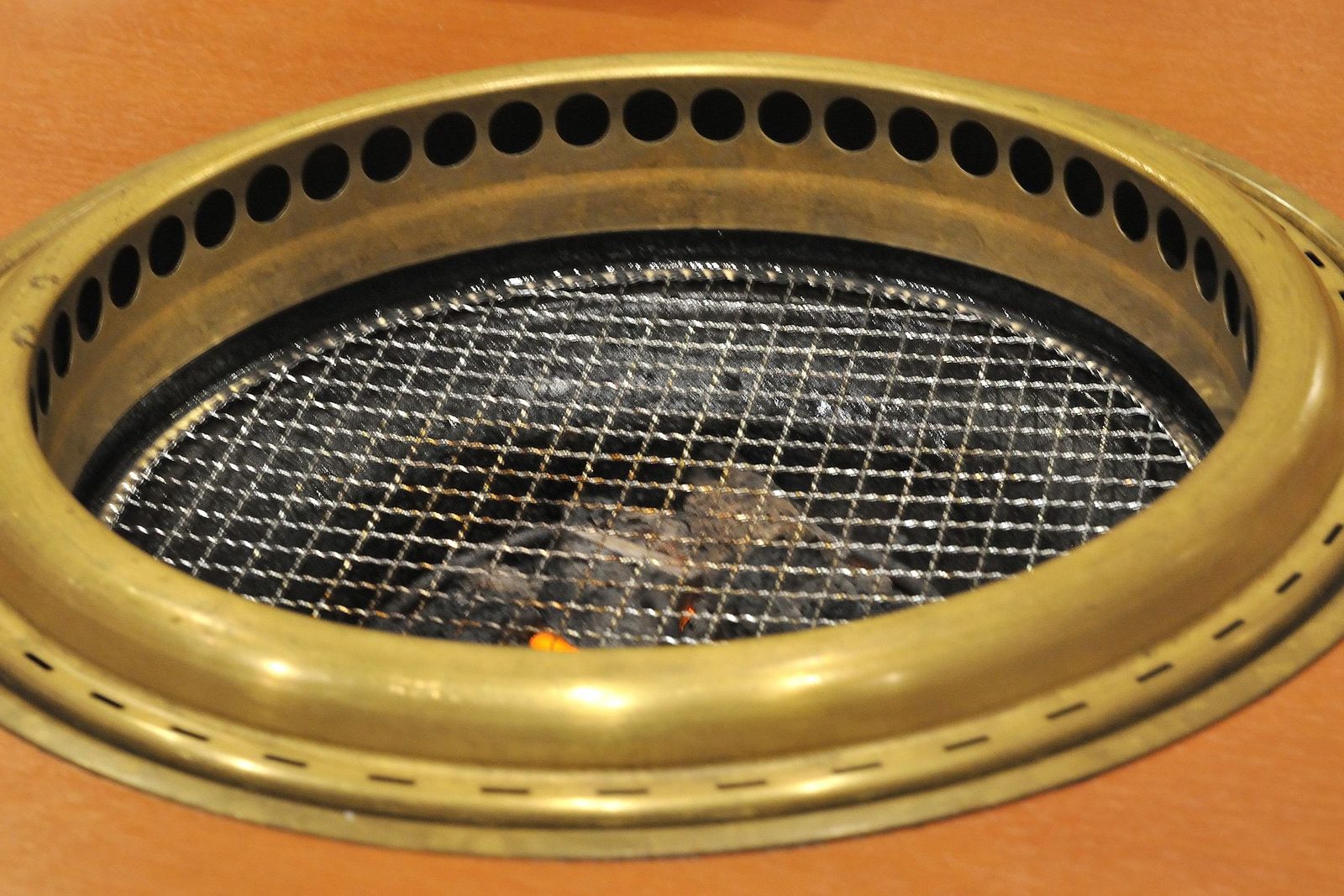
Some regional dishes, such as Towada barayaki and Tsuyama horumon udon, are cooked on a hotplate instead.
Regional yakiniku
You can eat yakiniku anywhere in Japan, but many places have their own local dishes and yakiniku towns. Tap a number on the map to jump to it.
A map of regional yakiniku, north to south
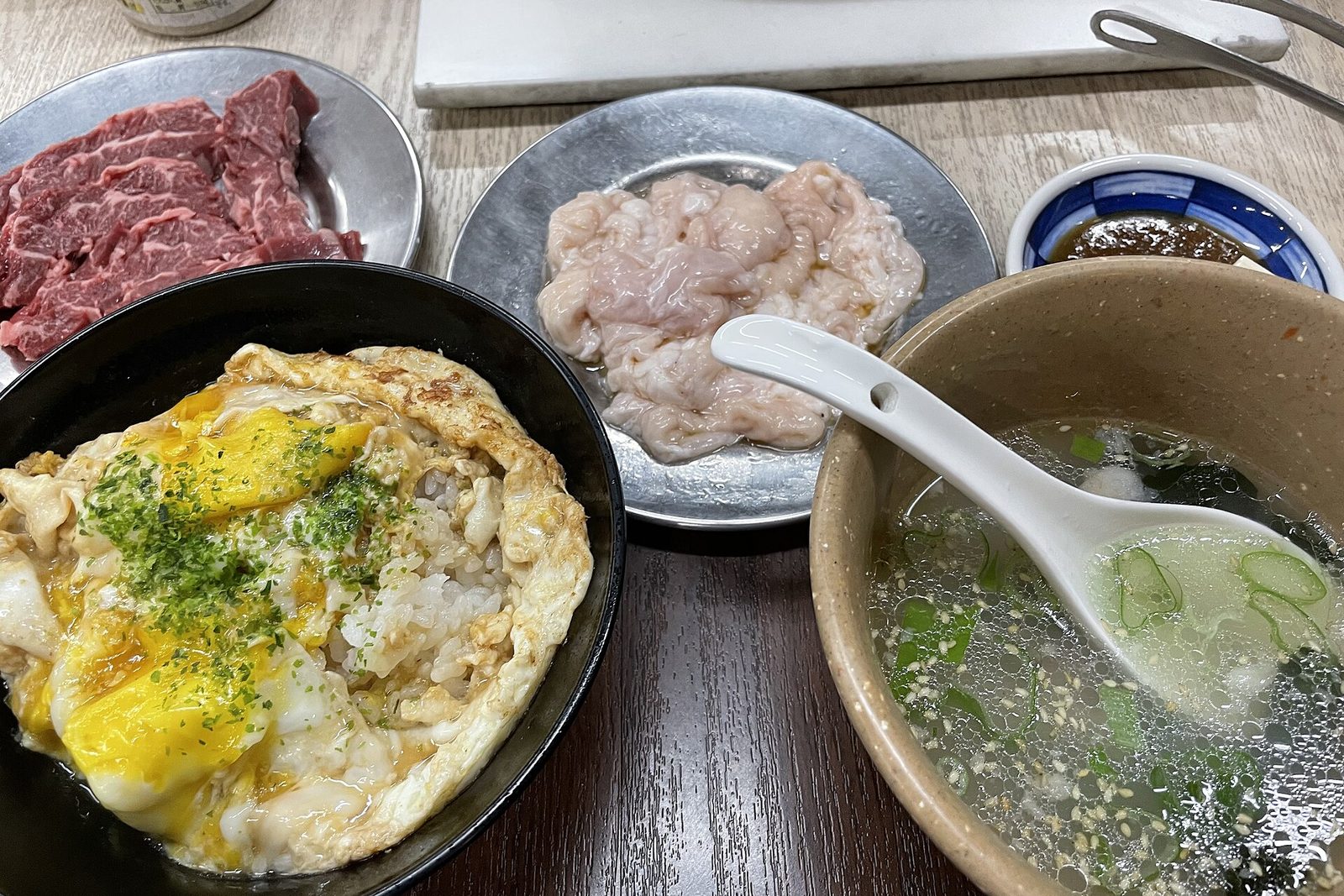
1. Kitami, Hokkaido: a yakiniku town on charcoal
Kitami, in the Okhotsk region, is said to have more yakiniku restaurants per person than anywhere else in Hokkaido, with over 70 in the city. Its yakiniku culture began with street stalls around 1950. The Kitami way is to grill beef sagari and pork offal on a shichirin and dip it in a fresh sauce sweetened with onion and apple. In winter, the Kitami Midwinter Yakiniku Festival sets out more than 1,000 shichirin outdoors in sub-zero cold.
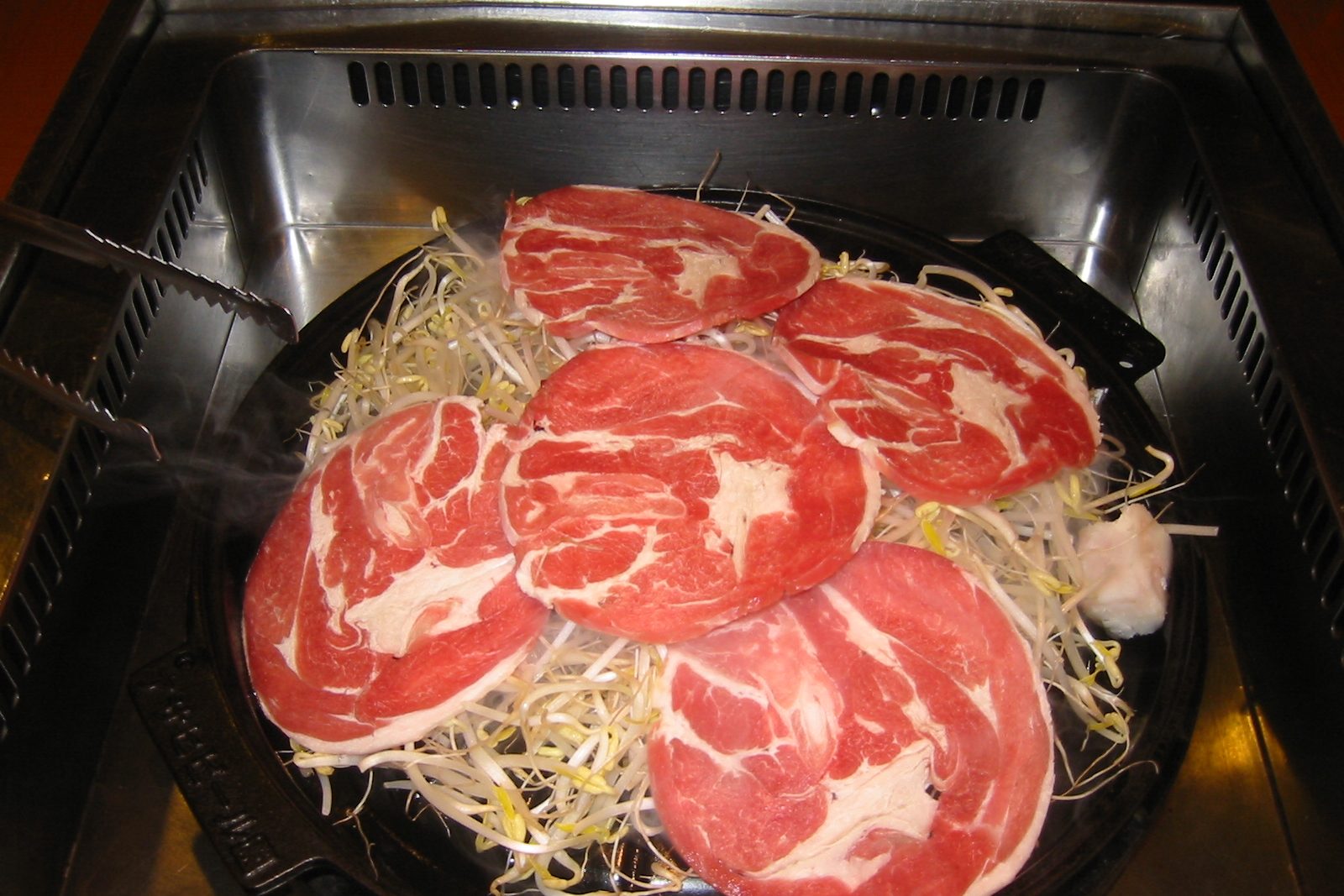
2. Hokkaido: Jingisukan
Thin slices of lamb are grilled with onions, bean sprouts and other vegetables on a domed pan. The name, “Genghis Khan”, suggests Mongolia, but the dish was created in Hokkaido in the early Showa era to help people enjoy the mutton then being produced in quantity. The juices from the meat run down into the vegetables.
3. Towada, Aomori: barayaki
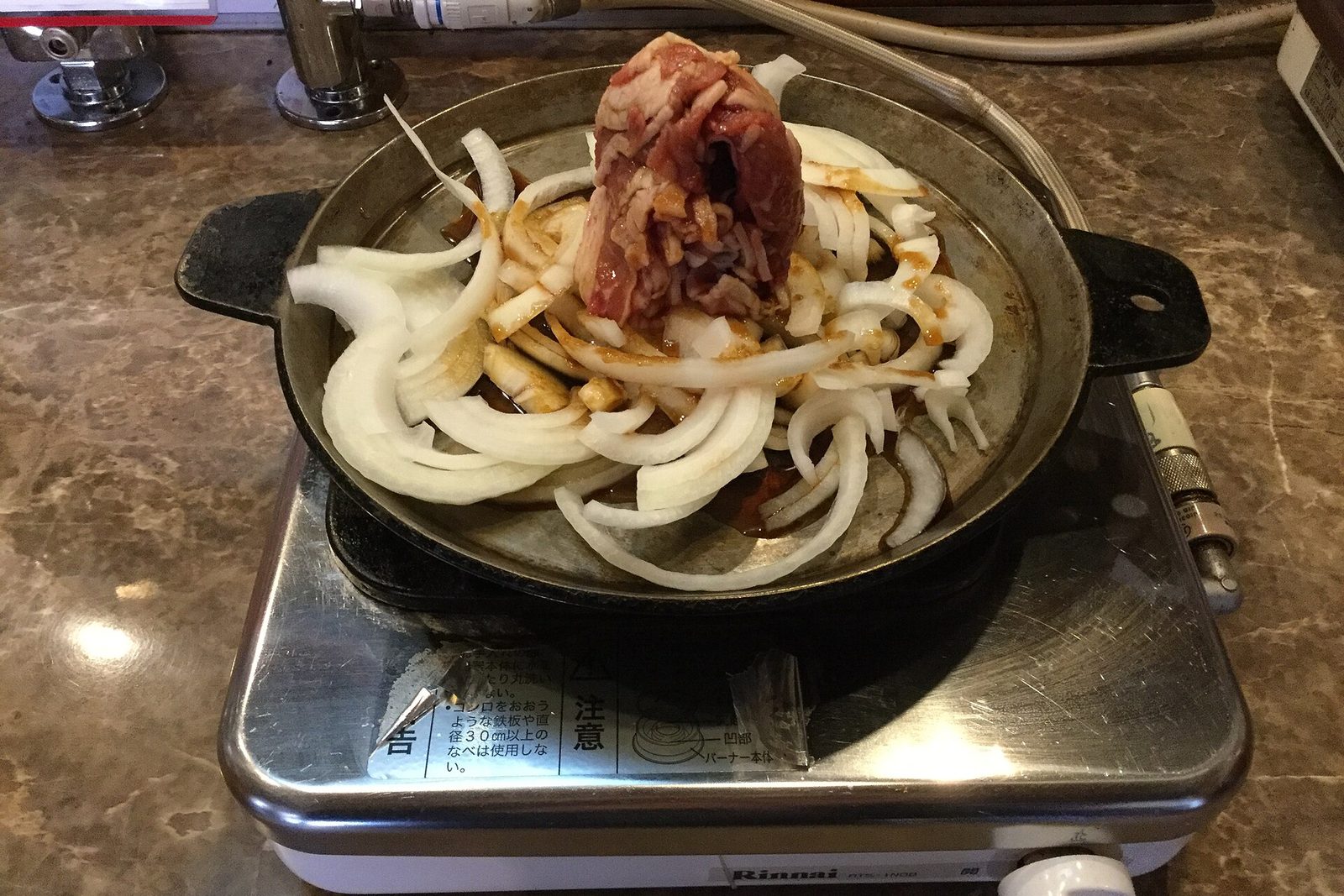
Beef belly and onions in a sweet soy sauce made with local garlic and apples, cooked on a hotplate. Towada barayaki is said to date from the late 1950s: US forces at nearby Misawa Air Base ate only the lean beef, so locals could buy the fatty cuts and offal cheaply. Its trademark is the “tower”, meat piled on onions, and it took second place in the 2013 B-1 Grand Prix for local food.
4. Morioka, Iwate: reimen at the yakiniku shop
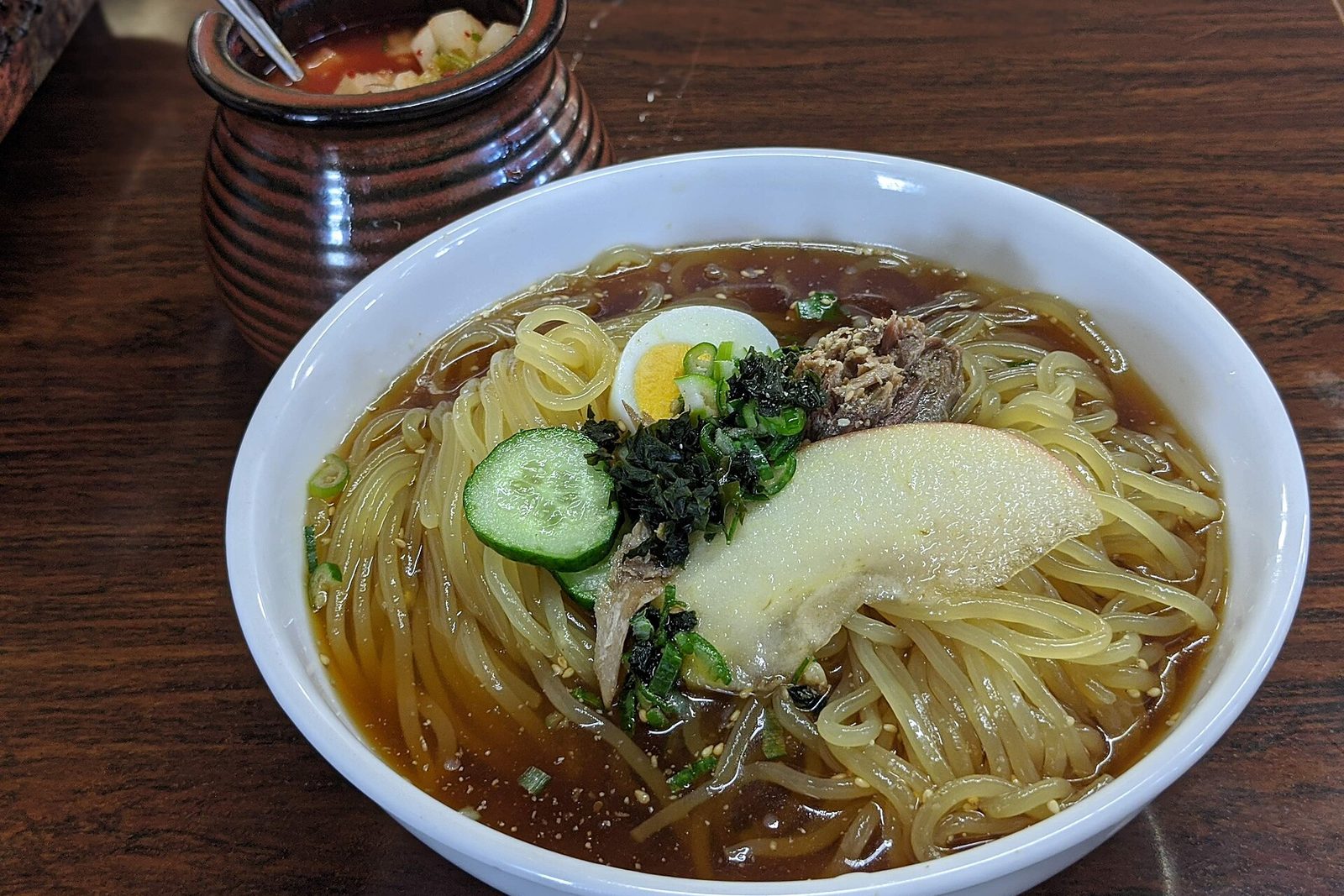
In Morioka, yakiniku ends with reimen, cold noodles. They are traced to 1954 and a yakiniku restaurant called Shokudoen in Morioka. Its founder combined the mellow beef broth of Pyongyang-style noodles with the kimchi heat of Hamhung-style ones, and switched to chewy, translucent noodles made mainly from wheat. Today it is one of Morioka's three great noodle dishes.
5. Shinjuku, Tokyo: the originals
Shinjuku is home to Meigetsukan, founded in 1946 and said to be Tokyo's first proper yakiniku restaurant, and Choshunkan, founded in 1954 and said to have pioneered customers grilling on a shichirin. Both date from the years just after the war, a chance to taste the start of the story.
6. Tsuruhashi, Osaka: yakiniku and horumon
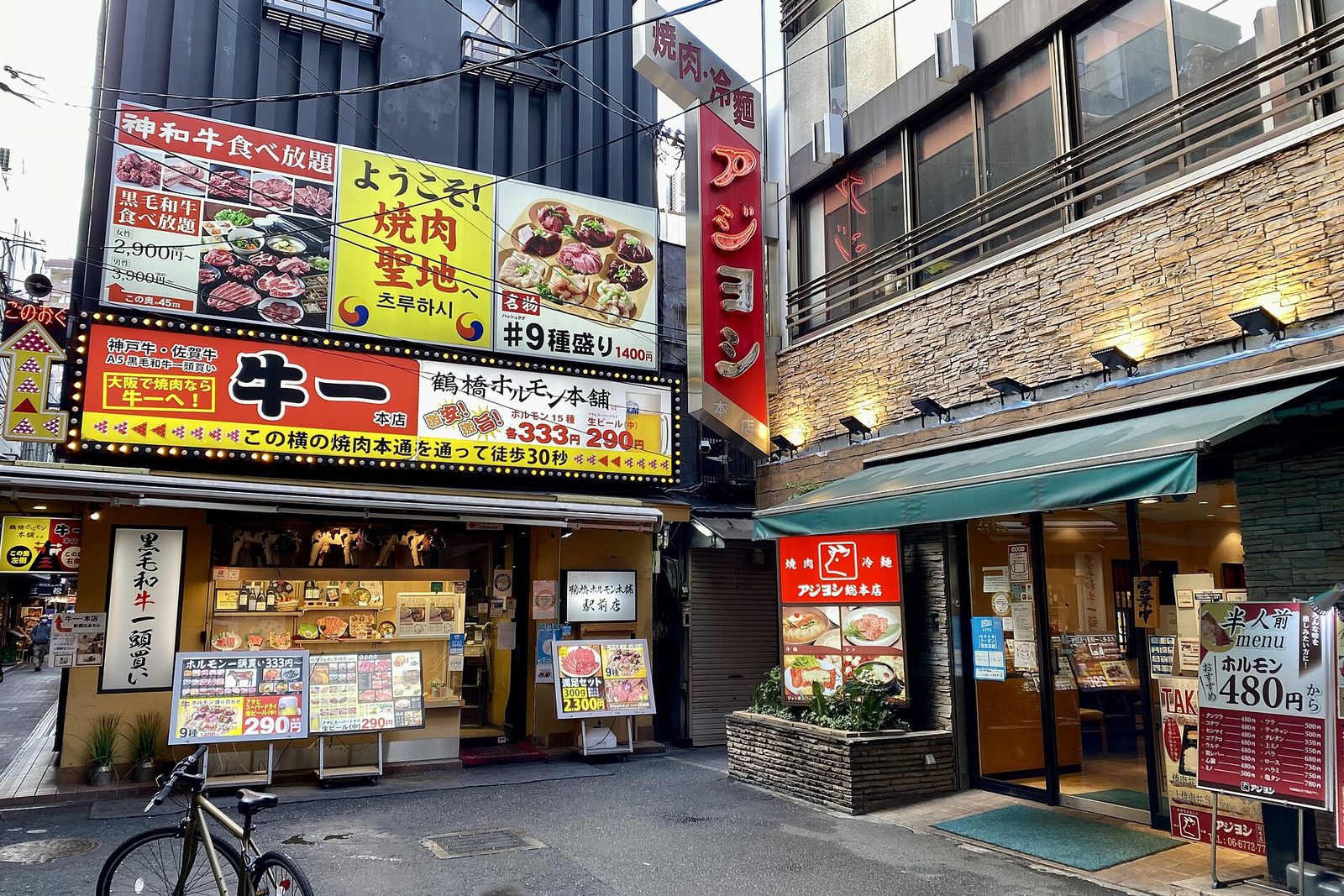
Osaka is famous for its many yakiniku restaurants, and Tsuruhashi is the biggest Koreatown in the Kansai region. After the war, street traders gathered around the station and formed a market; today Korean grocers and yakiniku restaurants still crowd the streets. Step off the train and the smell of grilling meat greets you.
7. Tsuyama (Okayama) and Sayo (Hyogo): horumon udon
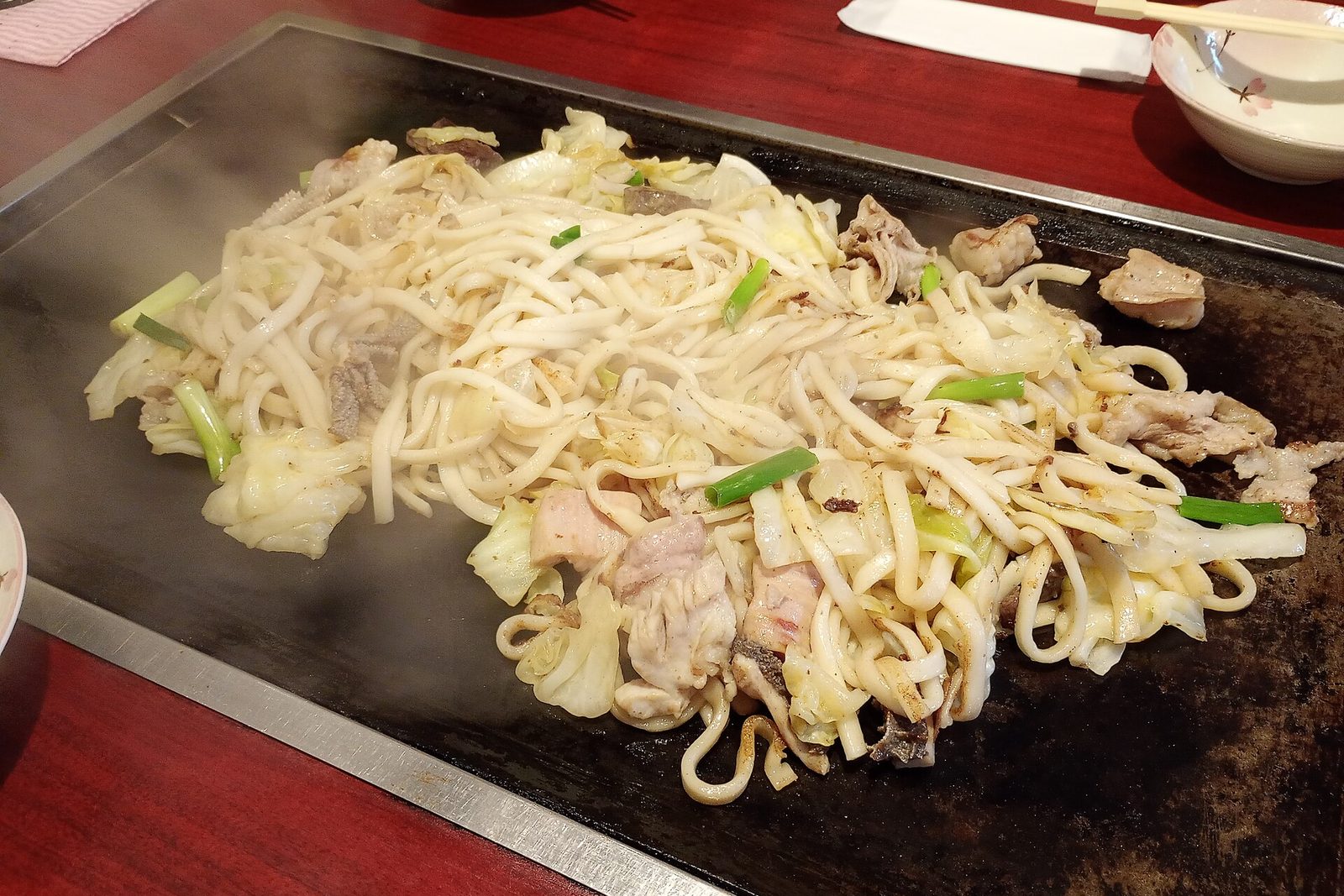
Offal and vegetables are fried on a hotplate, udon goes in, and everything is tossed in a sweet and savoury sauce. In Tsuyama, the story goes that teppanyaki shops added udon to the offal served with drinks as a way to finish, and regulars spread the word. A local slaughterhouse made fresh offal easy to get. The dish is also a specialty of Sayo in Hyogo.
Famous old shops
Here, oldest first, are shops that made yakiniku history and shops that changed how we eat it.
| Shop | Opened | Where | In a word |
|---|---|---|---|
| Meigetsukan | 1946 | Nishi-Shinjuku, Tokyo | Said to be Tokyo's first proper yakiniku restaurant |
| Shokudoen | 1946 | Soemoncho, Osaka | One of the originals; began with karubi and rosu. Known for cold noodles too |
| Choshunkan | 1954 | Shinjuku, Tokyo | Said to have pioneered grill-it-yourself on a shichirin |
| Shokudoen (Morioka) | 1954 | Morioka, Iwate | The yakiniku restaurant credited with Morioka reimen |
| Jojoen | 1976 | Roppongi, Tokyo (first shop) | Upmarket, all company-run, in major cities nationwide |
| Gyu-Kaku | 1996 | Tokyo (first shop) | One of Japan's largest yakiniku chains, also overseas |
| Yakiniku Like | 2018 | Shinbashi, Tokyo (first shop) | Fast-food style solo yakiniku; order by touch screen |
Opening years are from company profiles, news reports and TV Tokyo's “Ad-machikku Tengoku”. Hours and locations change, so check each shop's official information before you go.
Eating it well and safely
There are no rules, but moving from light to rich keeps everything tasting good to the end. Salted tongue often comes first: it is light, eaten with salt, and less likely to char the grill.
A rough order for grilling and eating
- Cook it through. Raw meat and offal can carry food-poisoning bacteria such as E. coli O157 and Campylobacter. Marinated meat and liver in particular can have bacteria inside, so leave nothing undercooked.
- Use separate tongs and chopsticks. Keep the tongs for raw meat apart from the chopsticks you eat with, at a restaurant, at home or at a barbecue.
- Don't overdo it either. Turn thin tongue or rosu as soon as the surface changes colour and finish quickly for tender results.
- Ask for a new grill. A charred grill makes meat stick and taste bitter. Staff are happy to swap it.
In Japan, raw beef liver has been banned for sale or serving since 2012, and raw pork and pork liver are banned too. Children, older people and others with weaker immunity should be especially careful to avoid raw meat. If you have symptoms that might be food poisoning, see a doctor promptly.
By the way, 29 August is Yakiniku Day, set by the All Japan Yakiniku Association: 8-2-9 can be read ya-ki-niku.
Summary
- Japan avoided meat for about 1,200 years. Meat dishes spread after the ban was lifted in 1872.
- The first yakiniku restaurants opened in 1946: Meigetsukan in Tokyo and Shokudoen in Osaka. Grilling at your own table and dipping in sauce took shape in Japan.
- Bottled sauce, smokeless roasters and beef imports took yakiniku into homes and onto every street.
- Cuts: tongue, rosu, karubi, harami. Offal: four stomachs, intestines, liver and heart.
- Regional styles abound, from Kitami and Jingisukan to Towada barayaki, Morioka reimen, Tsuruhashi and horumon udon. And always cook it through and keep tongs and chopsticks apart.
References
- nippon.com: a history of meat eating in Japan (Japanese)
- Kotobank: 焼肉 (dictionary entries, Japanese)
- Kangaeru Hito (Shinchosha): Hiroaki Iima on “horumon yaki” (Japanese)
- PRESIDENT Online: Shokudoen and the “all-rosu era” (Japanese)
- Gurunavi: Shokudoen main shop, Soemoncho (Japanese)
- TV Tokyo “Ad-machikku Tengoku”: Showa-era Shinjuku (Meigetsukan, Choshunkan; Japanese)
- Osaka Convention & Tourism Bureau: yakiniku and horumon (Japanese)
- Ebara Foods: 35 years of Ogon no Aji (Japanese)
- Shinpo Co. history: smokeless roasters (Japanese)
- ALIC: beef import liberalisation and BSE (Japanese)
- Shimane Prefecture: standards for raw meat (Japanese)
- Ministry of Health: ban on serving raw beef liver (Japanese)
- DELISH KITCHEN: beef cuts (Japanese)
- MAFF “aff”: beef offal cuts (Japanese)
- MAFF “aff”: eating yakiniku and offal safely (Japanese)
- Hokkaido official tourism site: Kitami yakiniku (Japanese)
- MAFF: regional dishes, Jingisukan (Japanese)
- Hoshino Resorts: Towada barayaki (Japanese)
- @DIME: the history of Morioka reimen (Japanese)
- Osaka Convention & Tourism Bureau: Tsuruhashi (Japanese)
- Okayama tourism: Tsuyama horumon udon (Japanese)
- Mynavi: Jojoen company profile (Japanese)
- KADOKAWA: the Gyu-Kaku book, founded 1996 (Japanese)
- Nihon Shokuryo Shimbun: Yakiniku Like (Japanese)
- Nihon Shokuryo Shimbun: Yakiniku Day (Japanese)
Dates and the origins of words are debated. Photos are from Wikimedia Commons under licences that allow reuse; photographers and licences are credited under each photo. Diagrams, illustrations and the map are my own (the map uses data based on the Geospatial Information Authority of Japan's Global Map Japan).
Food Notes No. 4 — The story of yakiniku / 2026.10