Food Notes / 2026 ・ No.05
The story of yakitori
From wild birds on skewers to the red lanterns of every street
Published
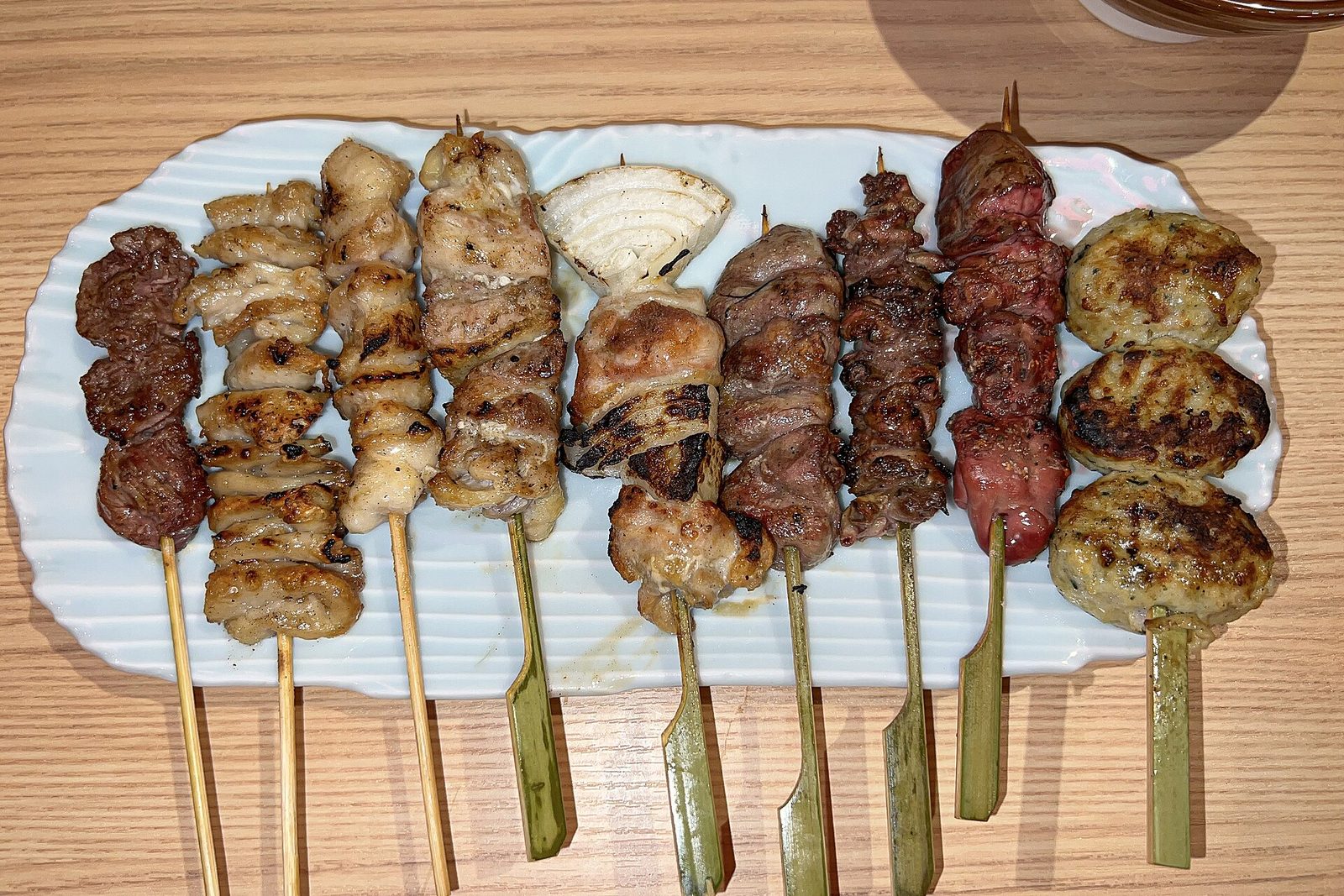
Fat crackles over charcoal and the sweet, smoky scent of sauce drifts down the street.
After work with a drink, or for a family dinner, yakitori may be Japan's most everyday treat.
Yet chicken on a skewer, as we know it, is a surprisingly recent dish.
This post follows its history with a timeline, then covers the cuts and skewers, salt versus sauce, the grill, a map of regional yakitori, and famous shops.
What is yakitori?
Yakitori is chicken, its offal and skin, cut into bite-sized pieces, threaded on skewers, grilled over charcoal and eaten with salt or a sweet soy sauce called tare. You can order one skewer at a time, and every cut tastes and feels different.
What counts as yakitori has changed over time and varies by region. Until the early twentieth century, yakitori meant wild birds such as sparrows and thrushes, grilled whole. And in some places, skewers of pork or beef and their offal are still called yakitori today. It is a broader dish than it looks.
From wild birds to chicken
When yakitori meant wild birds
Chickens are thought to have reached Japan in the Yayoi period, but for a long time they were kept mainly for eggs, and the meat ban of 675 forbade eating them along with cattle and horses. Wild birds such as pheasant, duck and small songbirds, however, were eaten as “medicinal food”.
A 1643 cookbook, the Ryōri Monogatari, has an entry for “skewer-grilling” that lists swan, goose and duck. Incidentally, negima, now a yakitori classic, is said to have been the Edo-period name for skewered leek and tuna.
Meiji street stalls and offal skewers
When the meat ban was lifted in the Meiji era, chicken was still more expensive than beef, a luxury eaten in gamecock hotpots. The yakitori stalls that appeared around the 1890s grilled the scraps and offal that restaurants did not use, glazed with sauce, and sold beef and pork offal as “yakitori” too. That is said to be why some non-chicken skewers still carry the name.
In 1921, Isehiro opened in Kyobashi, Tokyo. It used gamecock before the war, and it still tops up a sauce of nothing but soy sauce and mirin handed down since the post-war years. Even so, in the early Showa era chicken yakitori was still something for a few upmarket shops.
Post-war alleys and the broiler age
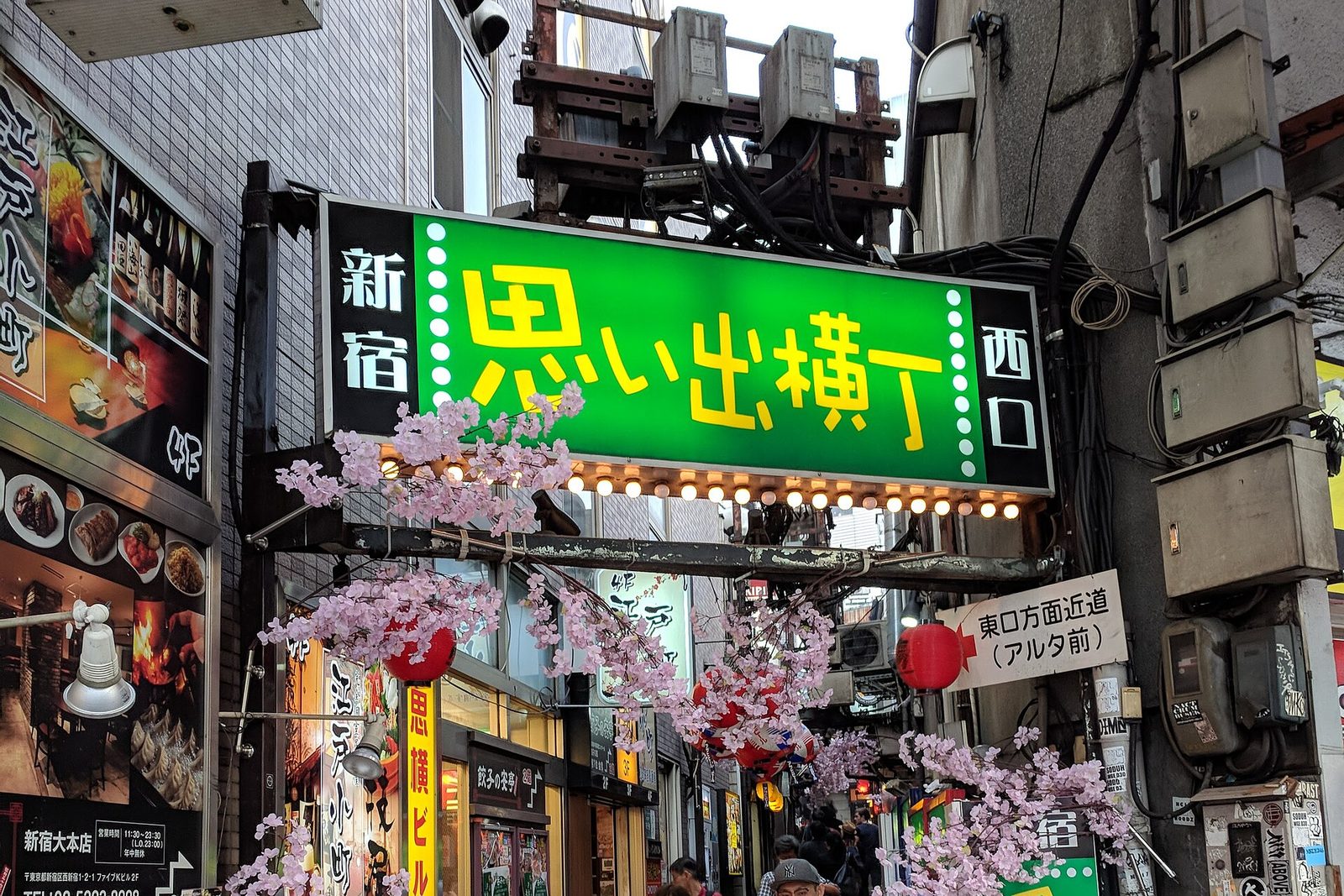
Around 1946, in the ruins after the war, street traders gathered at Shinjuku Station's west exit and a black market grew up. Someone began selling pork offal on skewers, it sold like hot cakes, and yakitori stalls multiplied. That is the origin of today's Omoide Yokocho.
Yakitori truly became everyone's food with the broiler, a fast-growing meat chicken. Introduced from the US in the early 1960s, broilers went from about 100 million birds shipped in 1965 to about 400 million in 1974. Cheap, tasty chicken was suddenly everywhere, and yakitori went mass-market in the 1960s.
In 1985 Torikizoku opened in Osaka selling everything at a flat ¥250, and chains spread. At the same time, from the 1980s, branded and jidori (heritage) chickens were developed for flavour and character, and specialist shops built their reputations on them. Some paired yakitori with wine or served courses using the whole bird, and yakitori earned a place in the Michelin Guide.
Yakitori through the centuries
Some dates are approximate or disputed
A guide to cuts and skewers
The joy of yakitori is tasting your way around the whole bird. First, see which part becomes which skewer.
The chicken and its yakitori cuts
Ten skewers to know
| Skewer | Part | What it is like |
|---|---|---|
| Momo, negima | Thigh and leg | A hard-working muscle: thick, juicy and full of flavour |
| Mune, sasami | Breast and the tenderloin inside it | Lean, light and tender; sasami is especially delicate |
| Seseri | Neck | A busy muscle: springy, and juicier the more you chew |
| Kawa, bonjiri | Skin; base of the tail | All about rich fat. A bird yields only a little bonjiri |
| Tebasaki | Wing tip | The meat around skin and bone is the best part |
| Sunagimo | Gizzard (part of the stomach) | Firm muscle: crunchy and mild |
| Rebā, hatsu | Liver, heart | Liver is rich and creamy; heart is springy with a clean bite |
| Nankotsu | Breastbone tip (yagen) or knee | Crunchy cartilage |
| Tsukune | Minced meat | Balls or sticks; every shop has its own recipe |
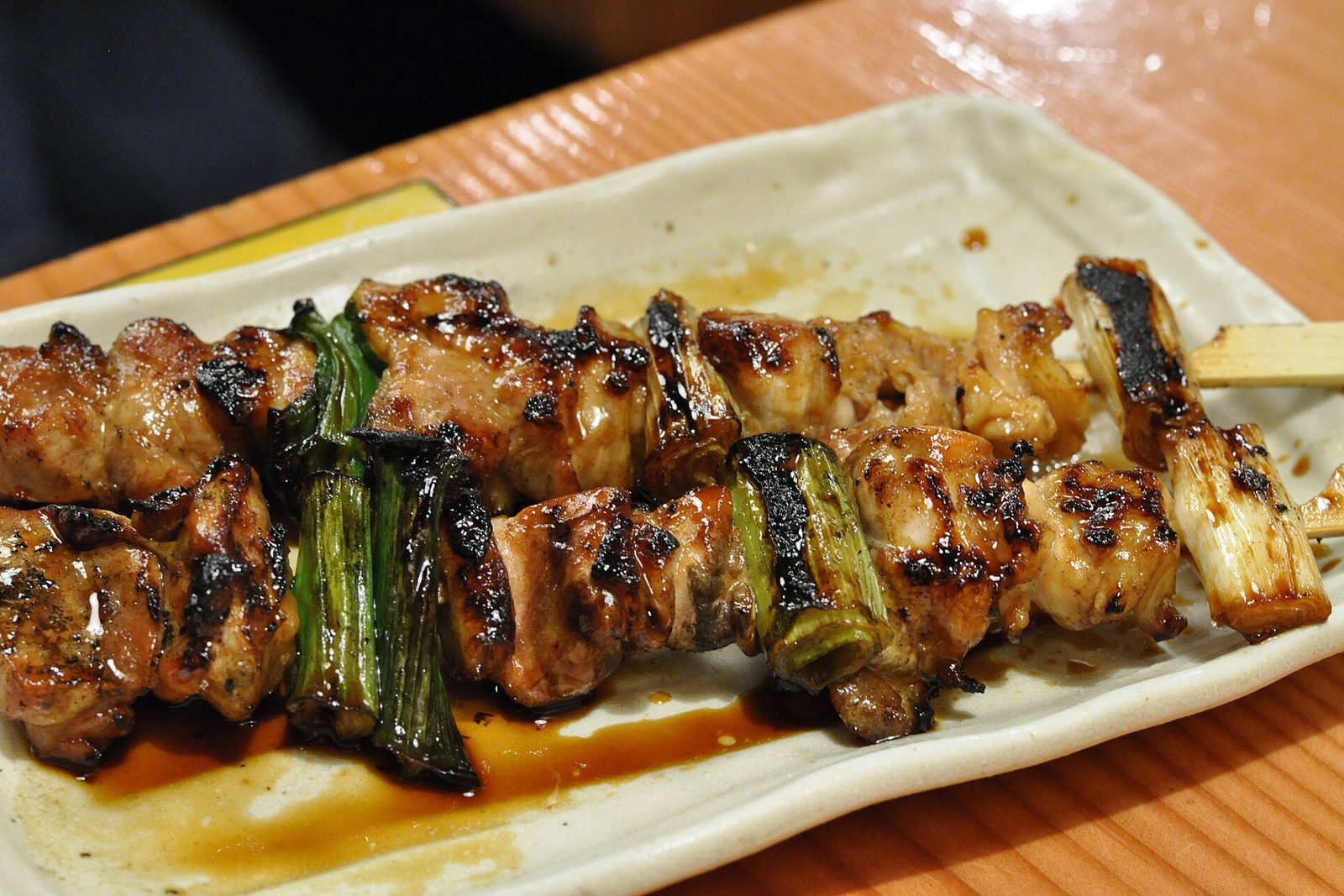
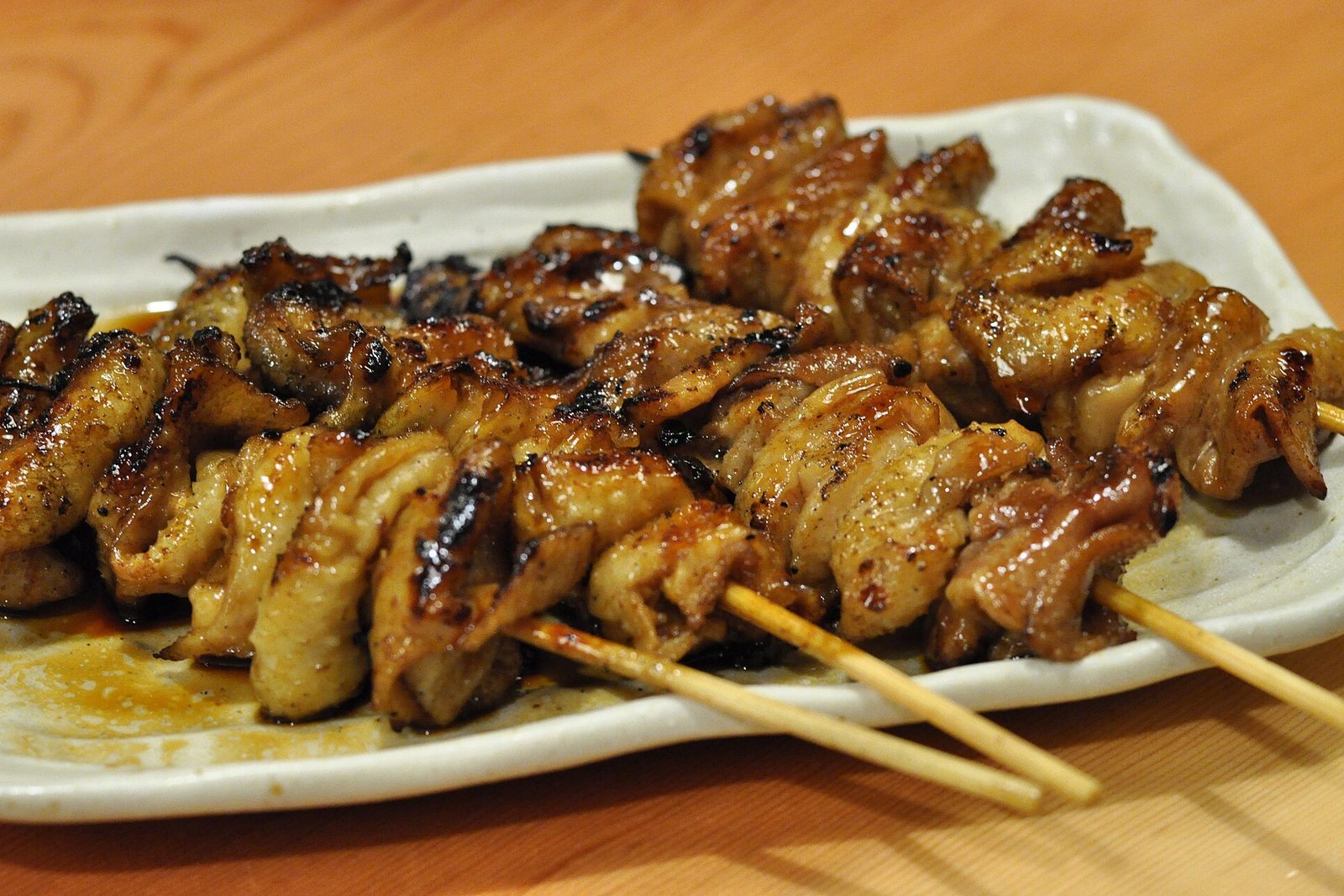
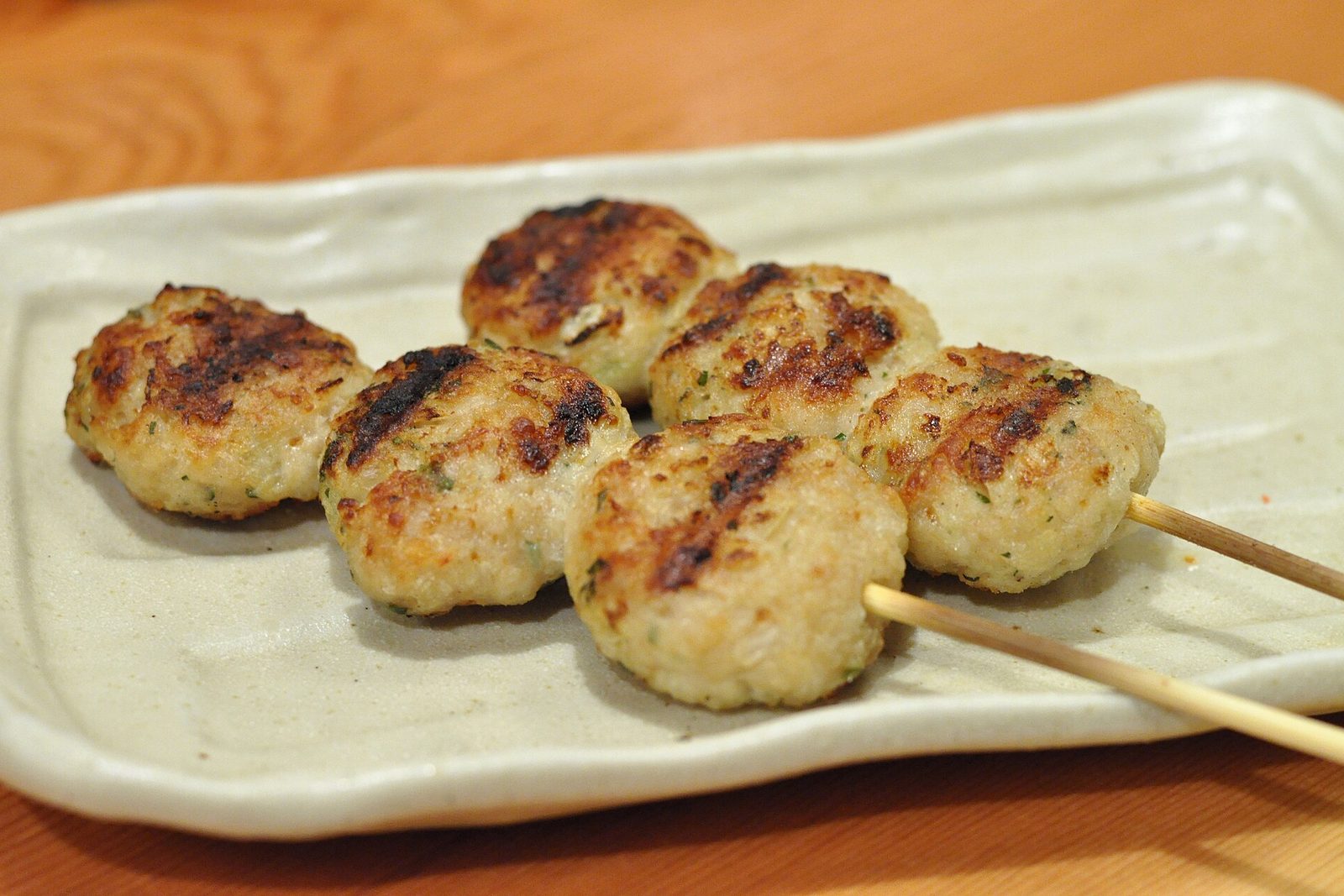
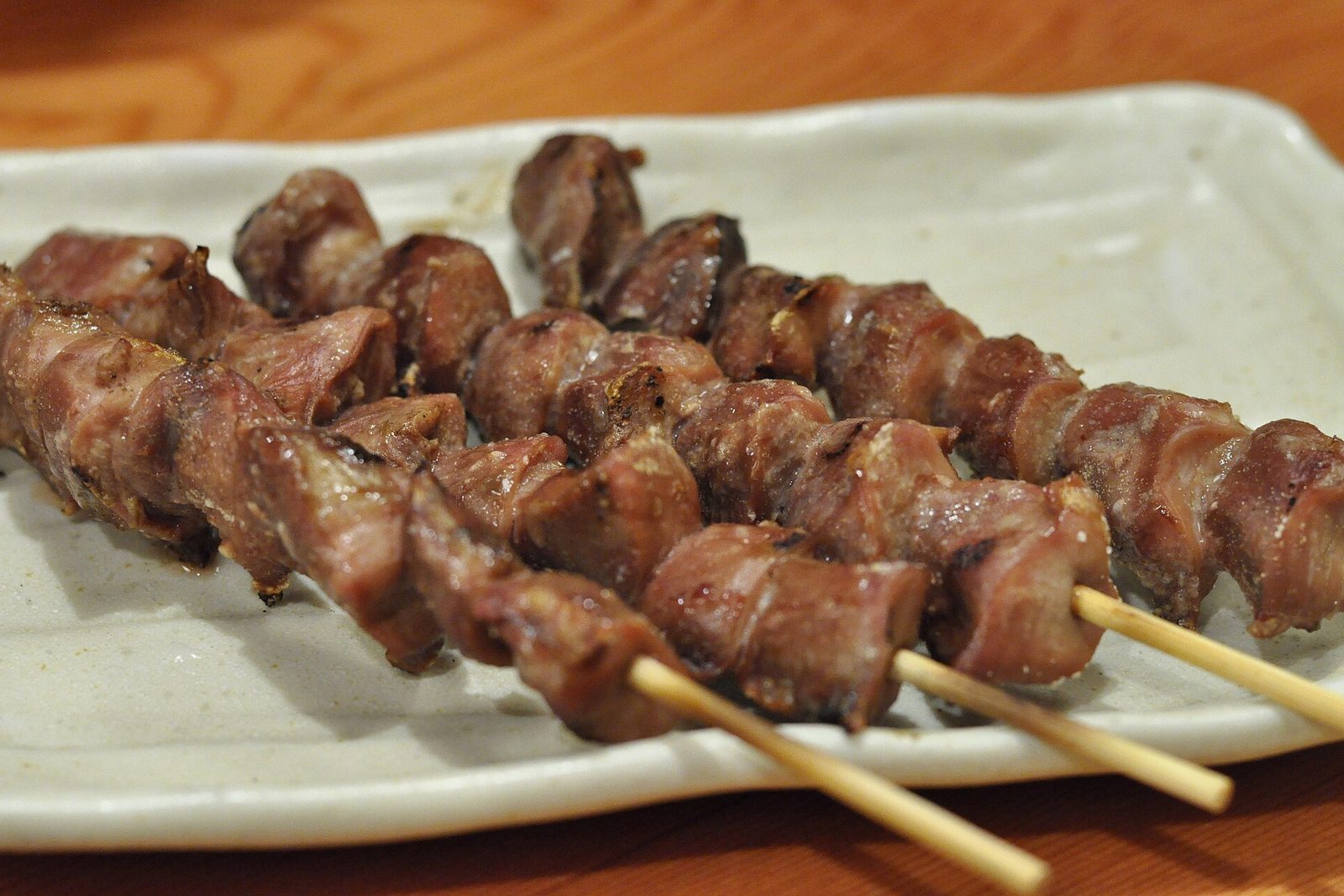
Hatsu comes from the English “hearts”. The rare cut sori, near the top of the thigh, is said to come from the French sot-l'y-laisse (“only a fool leaves it”), a name first used at Bird Land in Ginza.
Salt or sauce?
At any yakitori shop you will be asked: “Salt or sauce?”
- Salt (shio) lets the ingredient speak. It suits cuts you eat for their texture, quality or fat: sasami, seseri, sunagimo, bonjiri, tebasaki.
- Sauce (tare) is a sweet-savoury mix of soy sauce, mirin and the like. Dipped and grilled again and again, it turns glossy and fragrant. Liver and tsukune go especially well with it. Some old shops guard a sauce they have topped up for generations.
Thigh, negima and skin are good either way; if you can't decide, order both and compare. Condiments such as shichimi chilli, sansho pepper and wasabi add variety.
The grill and binchotan
Behind the counter of a yakitori shop is a long, narrow grill. Charcoal lines the trough, and skewers rest across its edges, turned again and again until done.
How the grill works
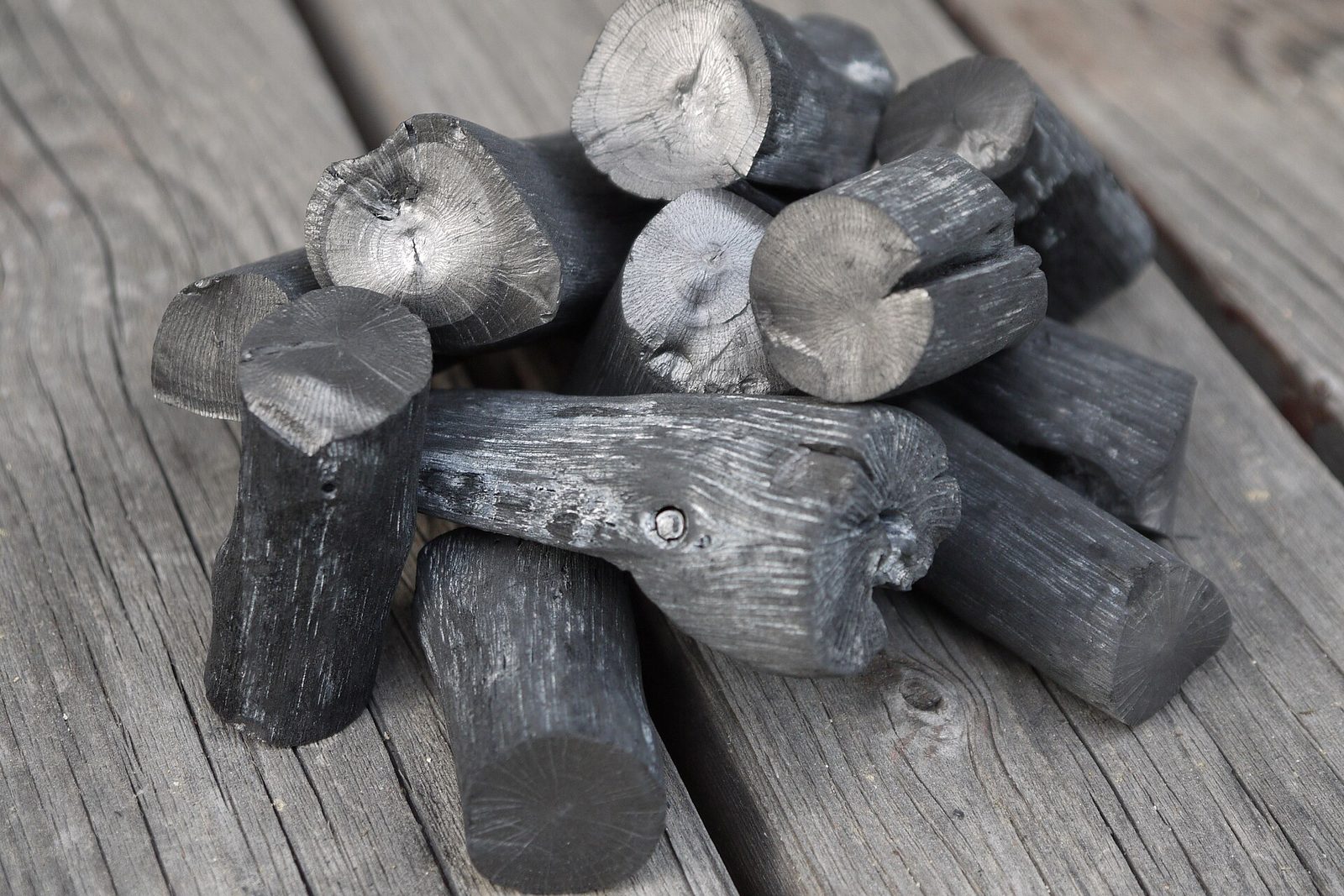
Many specialists use binchotan charcoal. It burns at over 1,000 °C without flames, so food chars less, and it gives off no smell, sealing in flavour without masking it.
Regional yakitori
Yakitori is everywhere in Japan, but the meat and the method change from place to place. Muroran, Higashimatsuyama and Imabari are called Japan's “big three” yakitori towns; add Bibai, Fukushima, Nagato and Kurume and you have the “big seven”. Tap a number on the map to jump to it.
A map of regional yakitori, north to south
1. Bibai, Hokkaido: a whole bird on one skewer
Born around 1955 in Bibai, once a coal-mining town. Liver, heart, gizzard and kinkan (unlaid eggs) go on a single skewer with thigh and skin, separated not by leek but by local onion. The idea is to waste nothing from the bird, and people usually order in tens.
2. Muroran, Hokkaido: pork, onion and mustard
Said to have begun at stalls in the 1930s in Muroran, a steel town. Pork and offal were easier to get than chicken, and today Muroran yakitori is still pork shoulder and onion, grilled with sweet sauce and served with mustard.
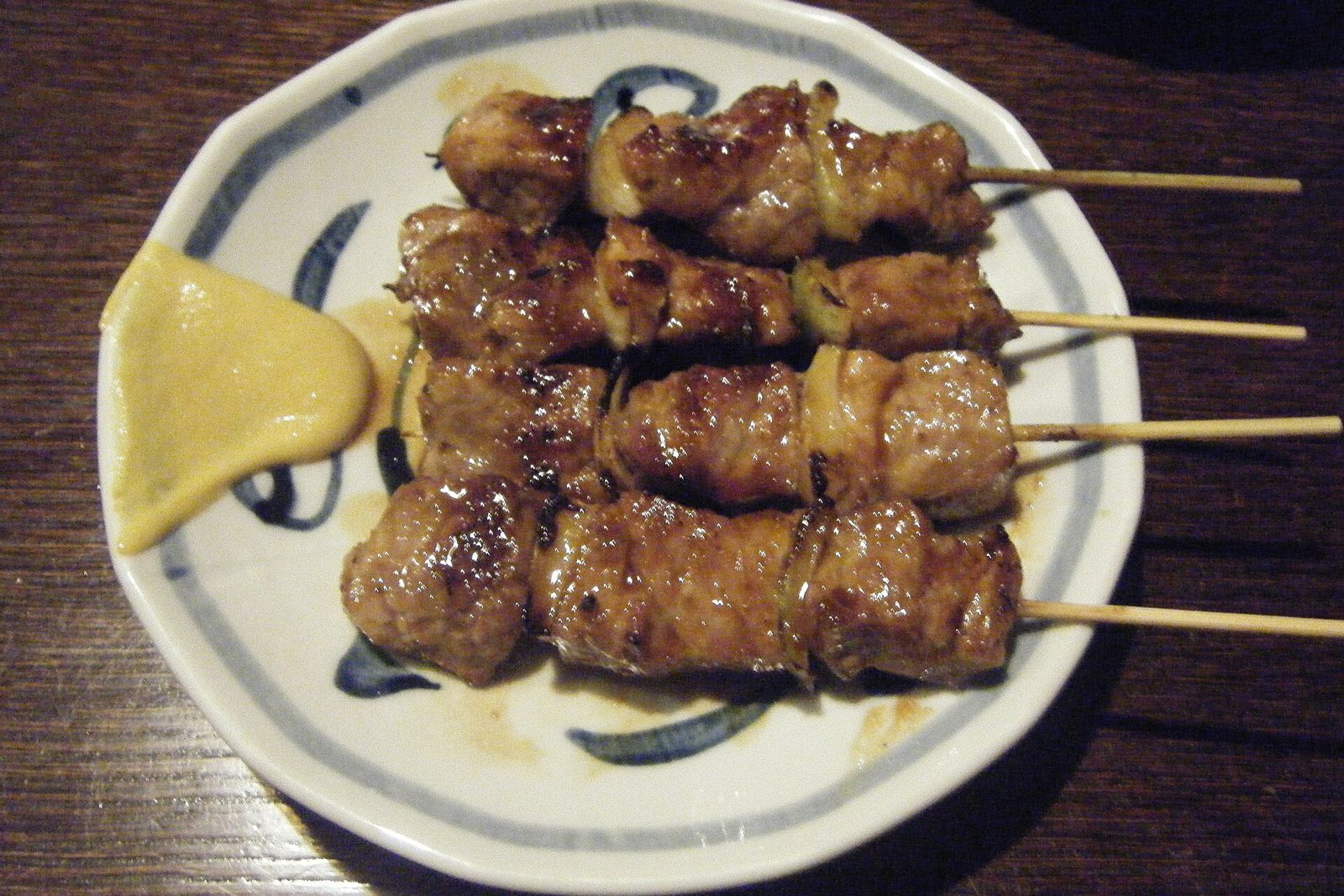
3. Higashimatsuyama, Saitama: pork cheek and spicy miso
The local standard is pork kashira (head meat) with leek, slathered in a spicy miso sauce. The city has over 40 shops; at Tokunoya, open since 1969, two kashira skewers arrive as soon as you sit down.
4. Tokyo: old shops and alleys
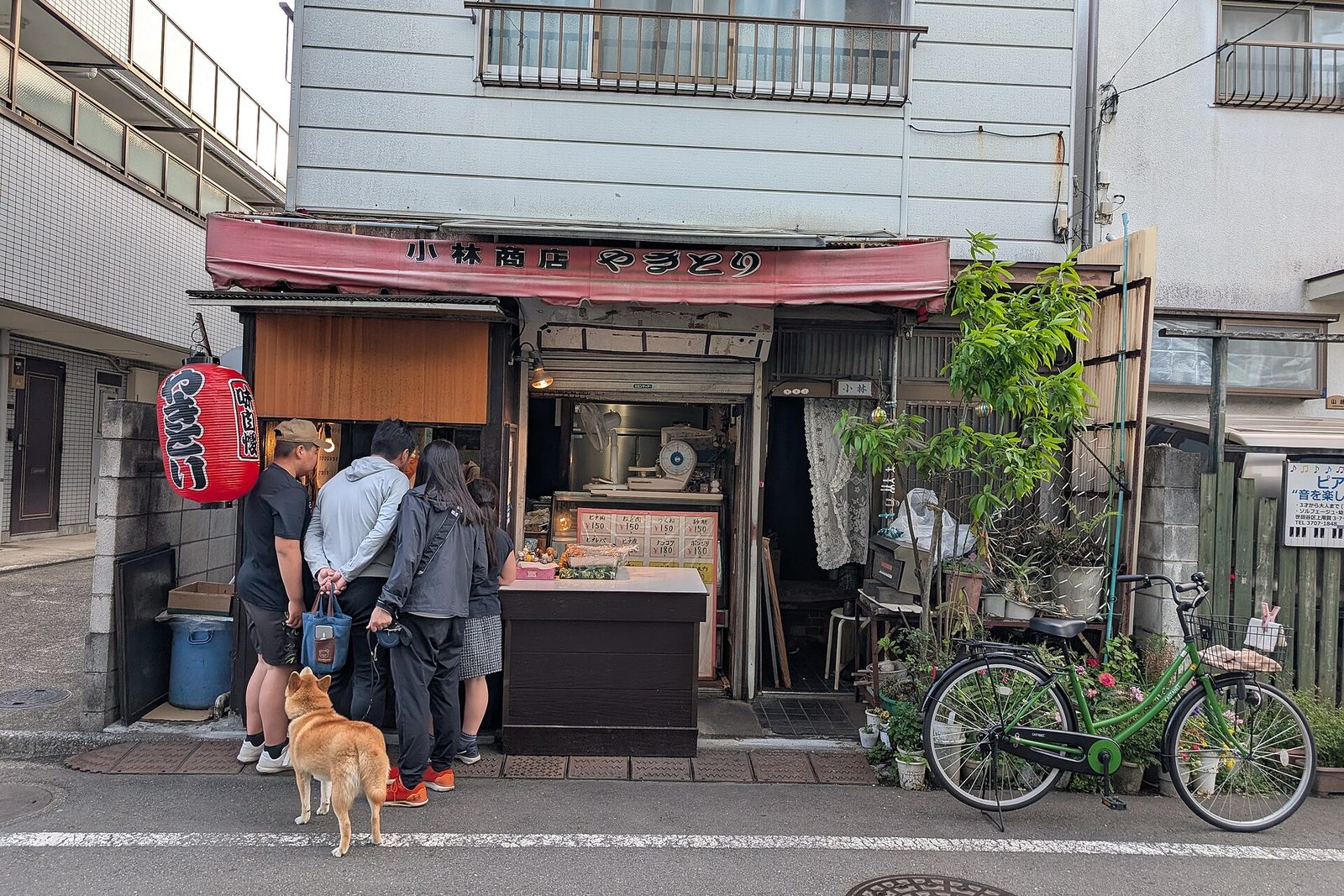
Tokyo packs in the whole story, from old shops like Isehiro in Kyobashi, founded in 1921, to red-lantern alleys like Omoide Yokocho and counter restaurants serving branded chicken.
5. Imabari, Ehime: skewer-free yakitori on a hotplate
Imabari yakitori is cooked on a thick hotplate, without skewers. It appeared about 50 years ago and suited a merchant town that hates to wait; at one time there were over 100 hotplate yakitori shops. The signature is skin, pressed under a small iron weight so it fries in its own fat, then served with sweet sauce. Locals start with skin and finish with senzanki, fried chicken.
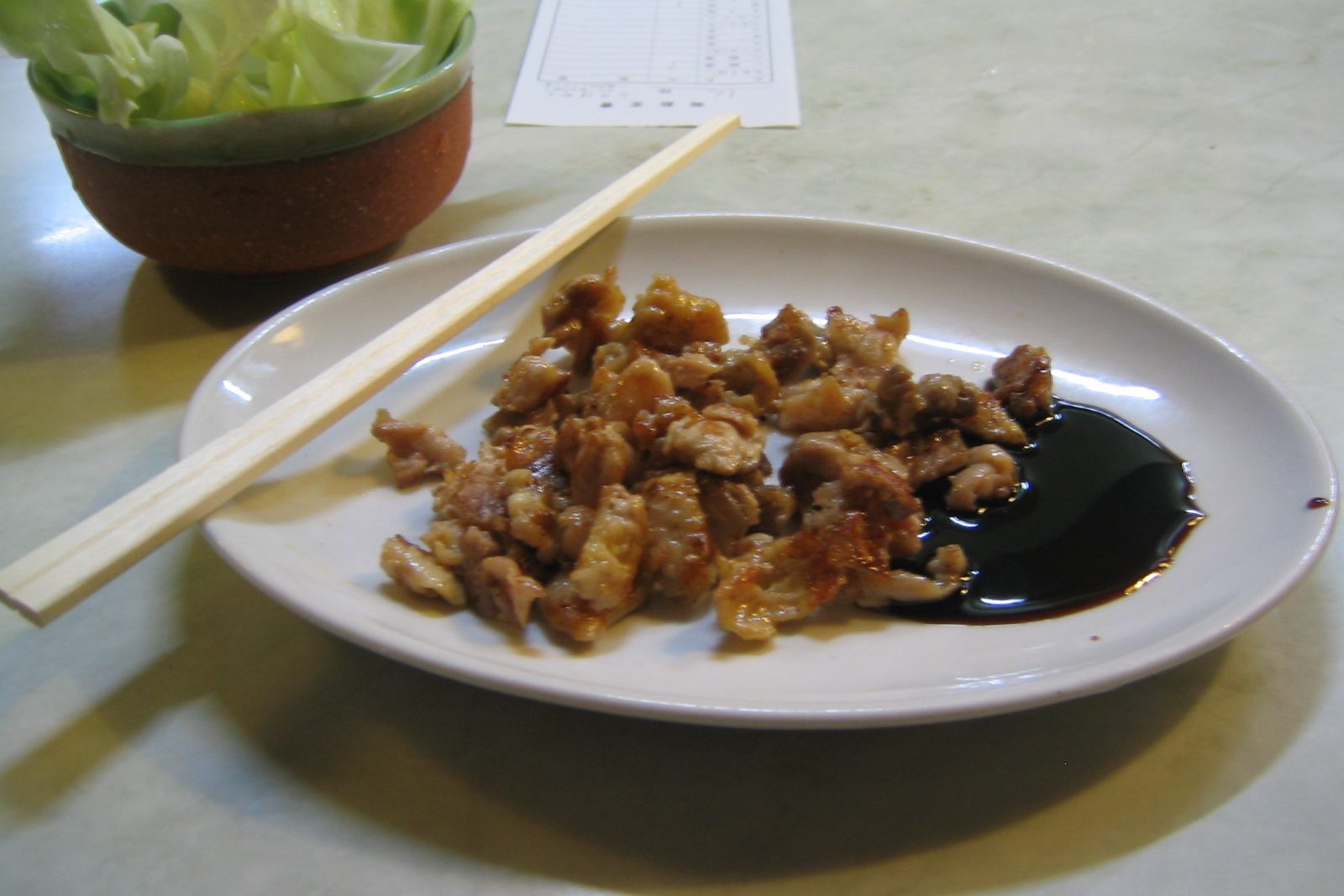
6. Nagato, Yamaguchi: a shake of garlic powder
In Nagato, chicken, beef and pork skewers get a sprinkle of garlic powder, sometimes with chilli as well, for a punchy, fragrant bite.
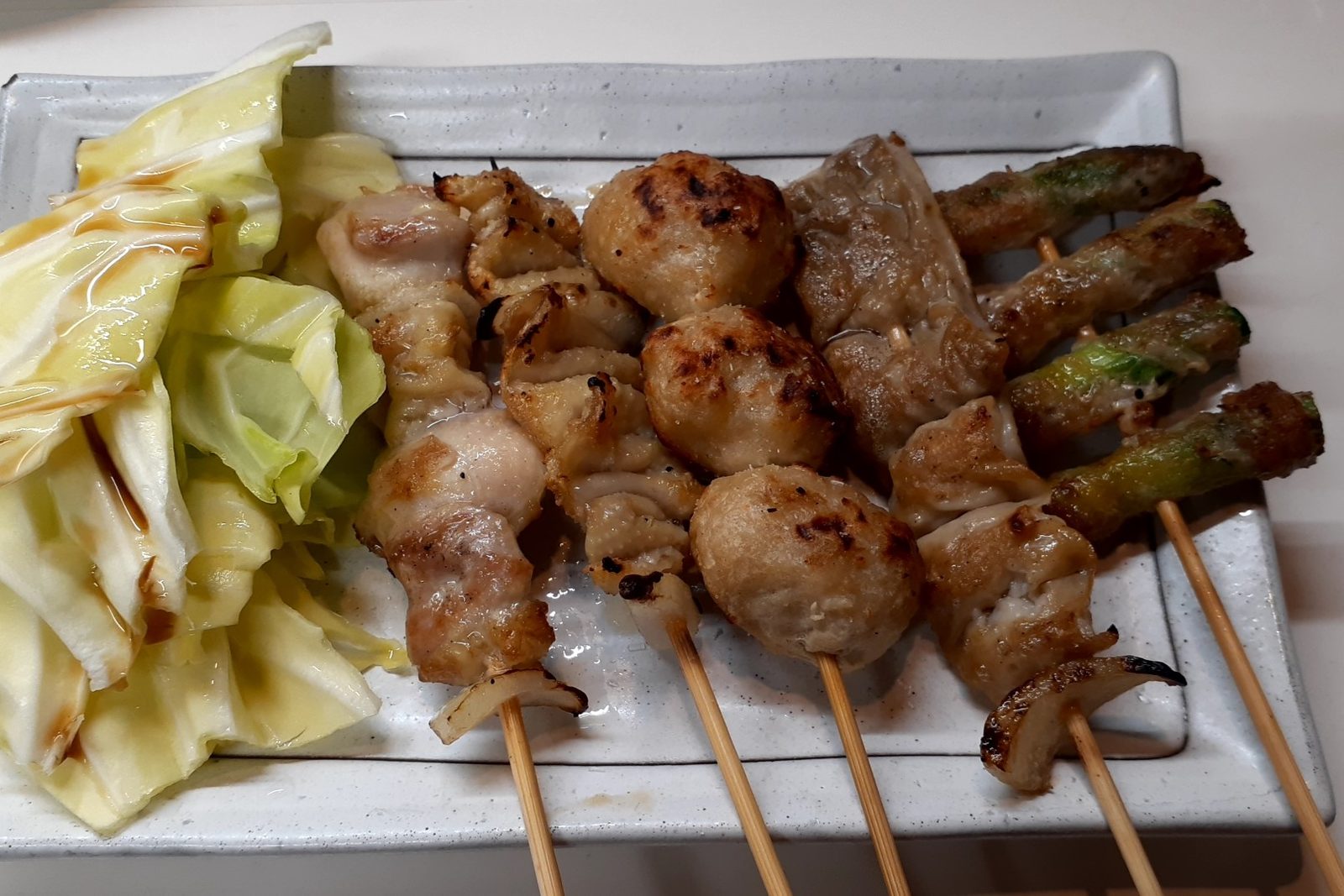
7. Kurume, Fukuoka: darumu, herutsu and everything on a stick
Kurume is said to have one of the highest numbers of yakitori shops per person in Japan. Anything on a skewer is “yakitori” here, chicken, pork, beef and even horse. With many medical schools and hospitals, some cuts go by German names: intestine is darumu (Darm) and heart herutsu (Herz).
Famous shops
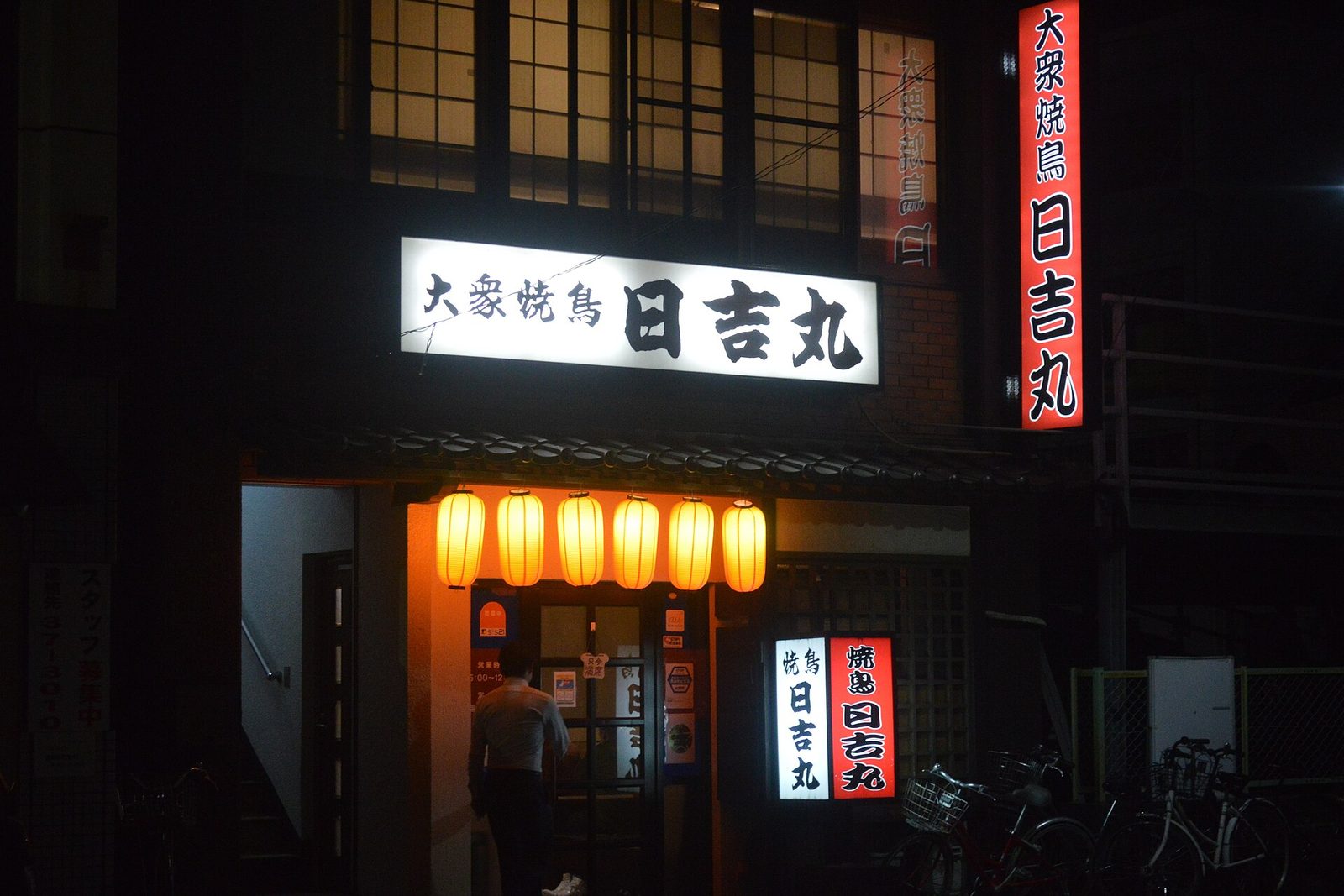
Here are old shops that made yakitori history and restaurants that changed how we enjoy it.
| Shop | Opened | Where | In a word |
|---|---|---|---|
| Isehiro | 1921 | Kyobashi, Tokyo | Guards a topped-up sauce of only soy and mirin; binchotan-grilled courses |
| Horaiya | Just after the war | Omoide Yokocho, Shinjuku | Began selling pork offal skewers at the black market; said to be the alley's original yakitori shop |
| Tokunoya | 1969 | Higashimatsuyama, Saitama | Two kashira skewers to start, plenty of spicy miso |
| Torikizoku | 1985 | Osaka (first shop) | A one-price yakitori chain; everything was ¥250 at first |
| Bird Land | — | Ginza, Tokyo | Okukuji gamecock, a pioneer of yakitori with wine, and whole-bird courses |
| Torishiki | 2007 | Meguro, Tokyo | Twelve counter seats and a Michelin star held for over ten years |
Opening years are from articles about each shop, news reports and TV Tokyo's “Ad-machikku Tengoku”. Hours and booking methods change, so check each shop's official information before you go.
Eating it well and safely
- Eat it hot. As yakitori cools the fat sets and the meat stiffens. Eat it as soon as it arrives.
- Go from light to rich. Start with salted sasami or gizzard and move on to tsukune and liver in sauce.
- Use condiments. A shake of shichimi or sansho lightens fatty skewers.
- Cook it through. When grilling at home or at a barbecue, make sure chicken is hot all the way through, and keep tongs for raw meat apart from the chopsticks you eat with.
Chicken can carry food-poisoning bacteria such as Campylobacter. Avoid raw or undercooked chicken; children, older people and others with weaker immunity should take particular care. If you have symptoms that might be food poisoning, see a doctor promptly.
Summary
- Yakitori began with skewered wild birds; until the early twentieth century, it meant sparrows and the like.
- Meiji-era stalls skewered scraps and offal; after the war, black markets grew into yakitori alleys.
- The broiler made yakitori everyday food in the 1960s; branded chicken and Michelin-starred counters followed.
- Cuts include thigh, breast, sasami, neck, skin, tail, gizzard and liver. Salt for the ingredient, sauce for that glaze.
- From the big three of Muroran, Higashimatsuyama and Imabari to pork skewers and hotplates, regional yakitori is wonderfully varied.
References
- MICHELIN Guide: the history of yakitori and binchotan (Japanese)
- Preco Foods “Yakitori-gaku”: the history of yakitori (Japanese)
- Kotobank: 焼き鳥 (Japanese)
- JR East: Shinjuku's Omoide Yokocho (Japanese)
- FUN! JAPAN: yakitori types and cuts (Japanese)
- All About: Japan's seven great yakitori towns (Japanese)
- Hokkaido official tourism site: Muroran yakitori (Japanese)
- Hokkaido official tourism site: Bibai yakitori (Japanese)
- TV Tokyo “Ad-machikku Tengoku”: Higashimatsuyama (Japanese)
- MAFF: regional dishes, Imabari yakitori (Japanese)
- TV Tokyo “Ad-machikku Tengoku”: Kurume (Japanese)
- Serai.jp: Isehiro, Kyobashi (Japanese)
- PR TIMES: Torikizoku's recreated first shop (Japanese)
- MICHELIN Guide: Bird Land (Japanese)
- GLTJP: Torishiki (Japanese)
- MAFF “aff”: eating meat safely (Japanese)
Dates are debated in places. Photos are from Wikimedia Commons under licences that allow reuse; photographers and licences are credited under each photo. Diagrams, illustrations and the map are my own (the map uses data based on the Geospatial Information Authority of Japan's Global Map Japan).
Food Notes No. 5 — The story of yakitori / 2026.10