Food Notes / 2026 ・ No.06
The story of Wagyu
From farm partner to the world's favourite beef
Published
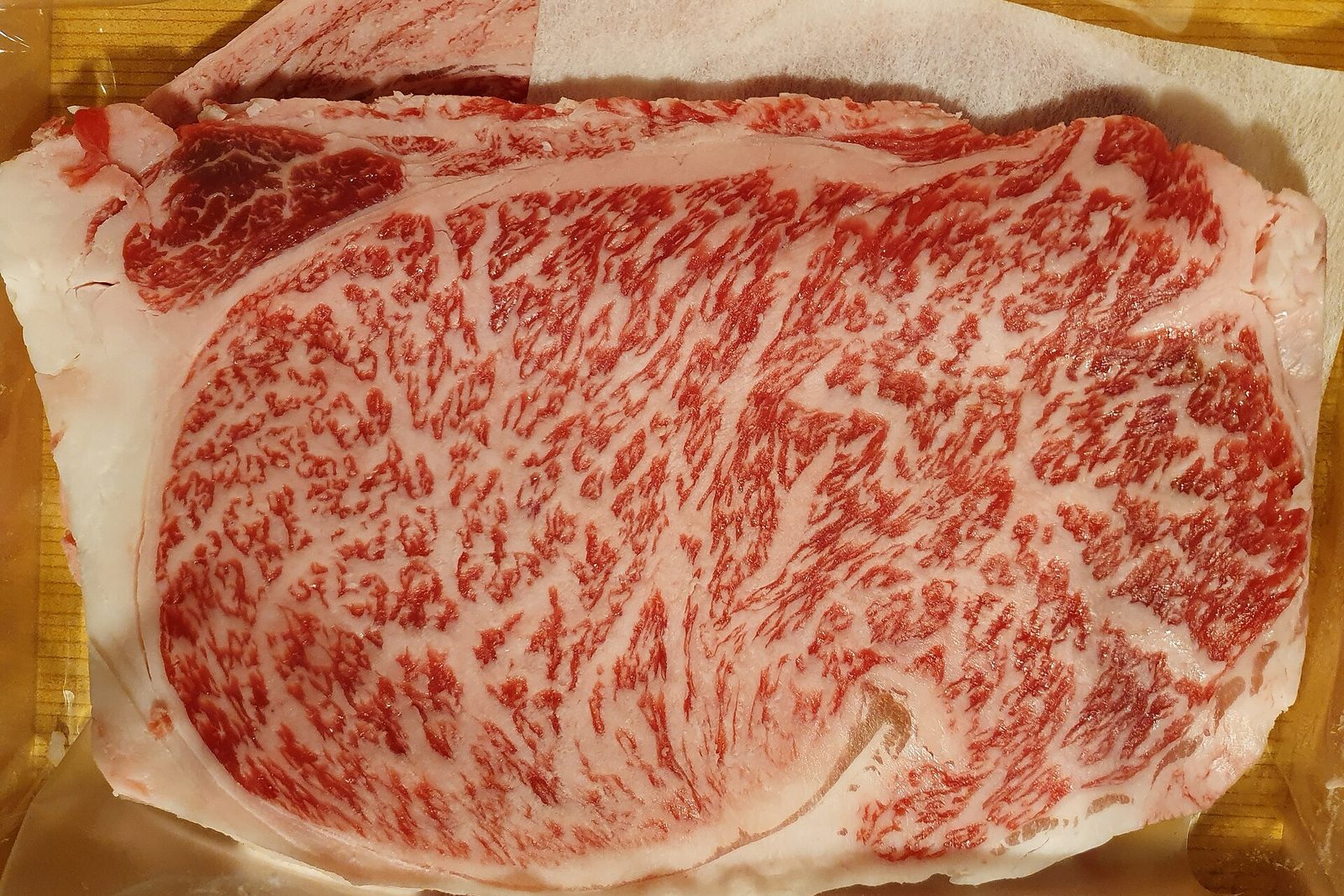
A sweet aroma the moment it touches your tongue, and fat that simply melts away.
That melt-in-the-mouth quality is no accident: people and cattle have shaped it together over centuries.
How did animals that once ploughed rice fields become a delicacy the whole world wants?
This post follows the story through four breeds, one legendary bull, the science of marbling and the regions that raise it.
Wagyu is not just “Japanese beef”
In a Japanese supermarket you will see beef labelled wagyu and beef labelled kokusangyu (“domestic beef”). They sound alike but mean very different things.
- Wagyu is a breed label. Only four breeds (Japanese Black, Japanese Brown, Japanese Shorthorn and Japanese Polled) and crosses between them qualify. Since 2007, the breed must be confirmed through the livestock registry, and the traceability system must show the animal was born and raised in Japan.
- Kokusangyu is an origin label. Any breed counts, including Holstein dairy cattle and crossbreds, and even an animal born abroad can be labelled domestic if it spent longer in Japan than overseas.
Wagyu, in short, is “cattle of four Japanese breeds, born and raised in Japan”. That is our subject here.
Only four breeds
All four breeds were created by crossing Japan's native cattle with foreign breeds and refining them over a long time. Each differs in looks, in meat and in the land it comes from.
The four Wagyu breeds
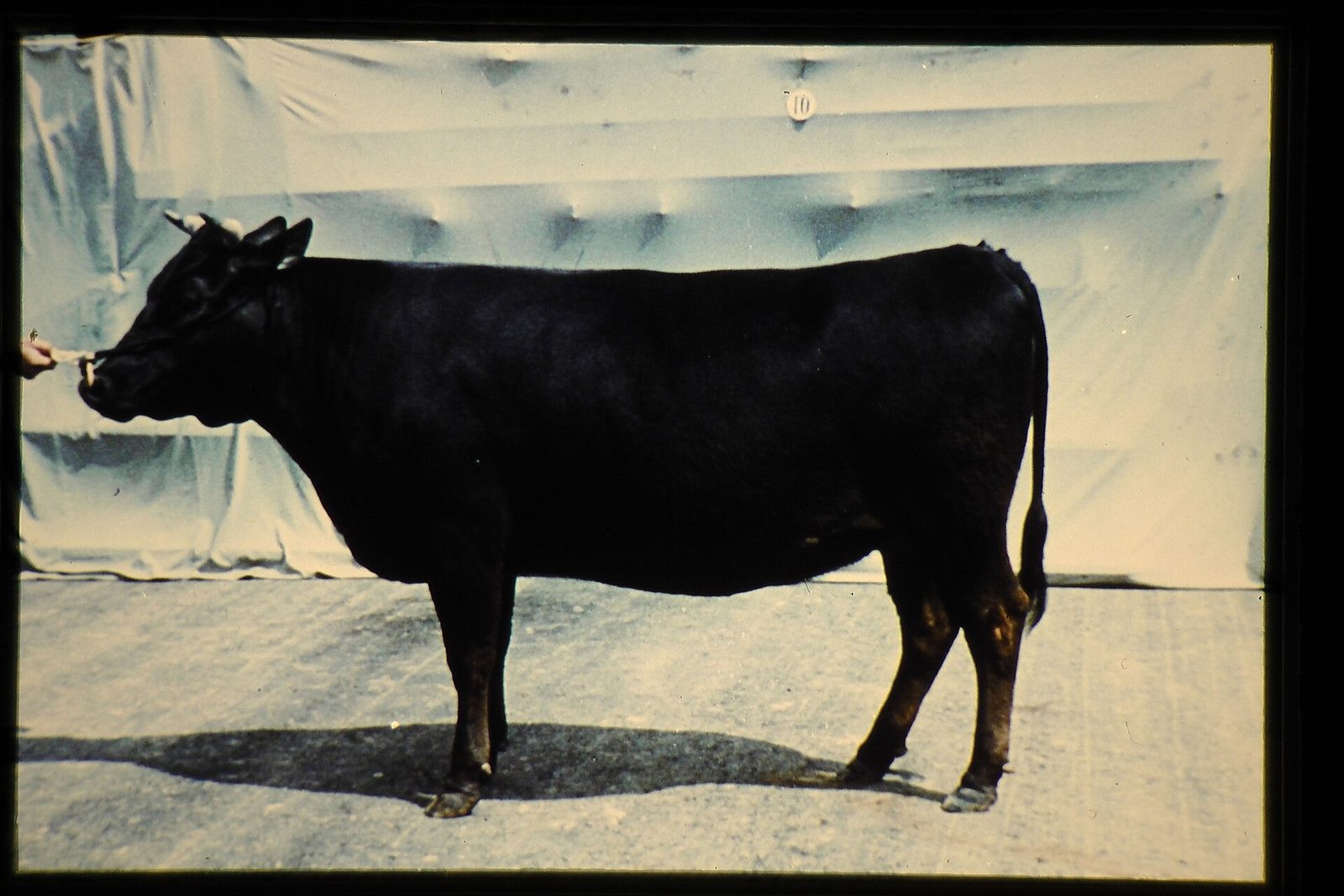
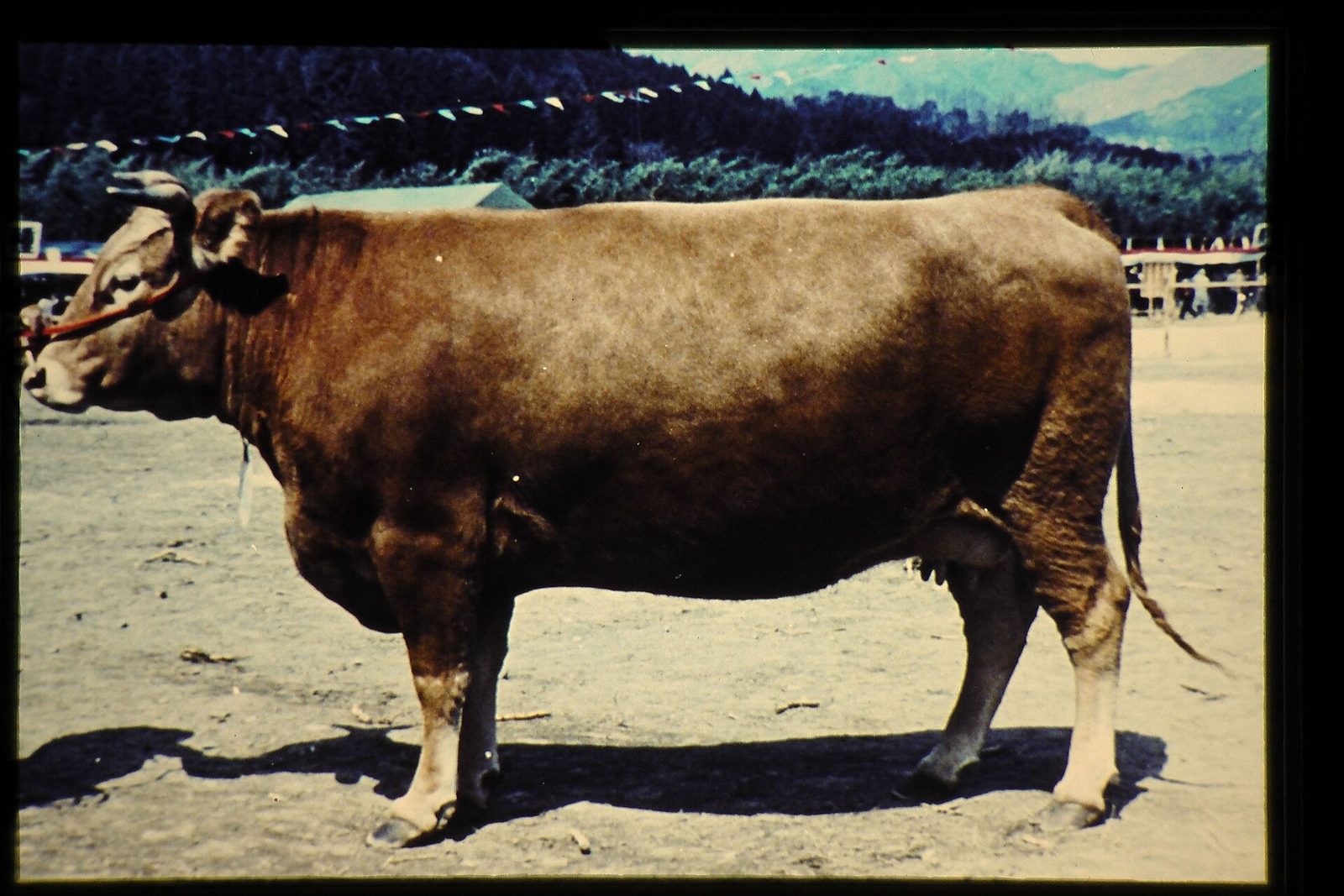
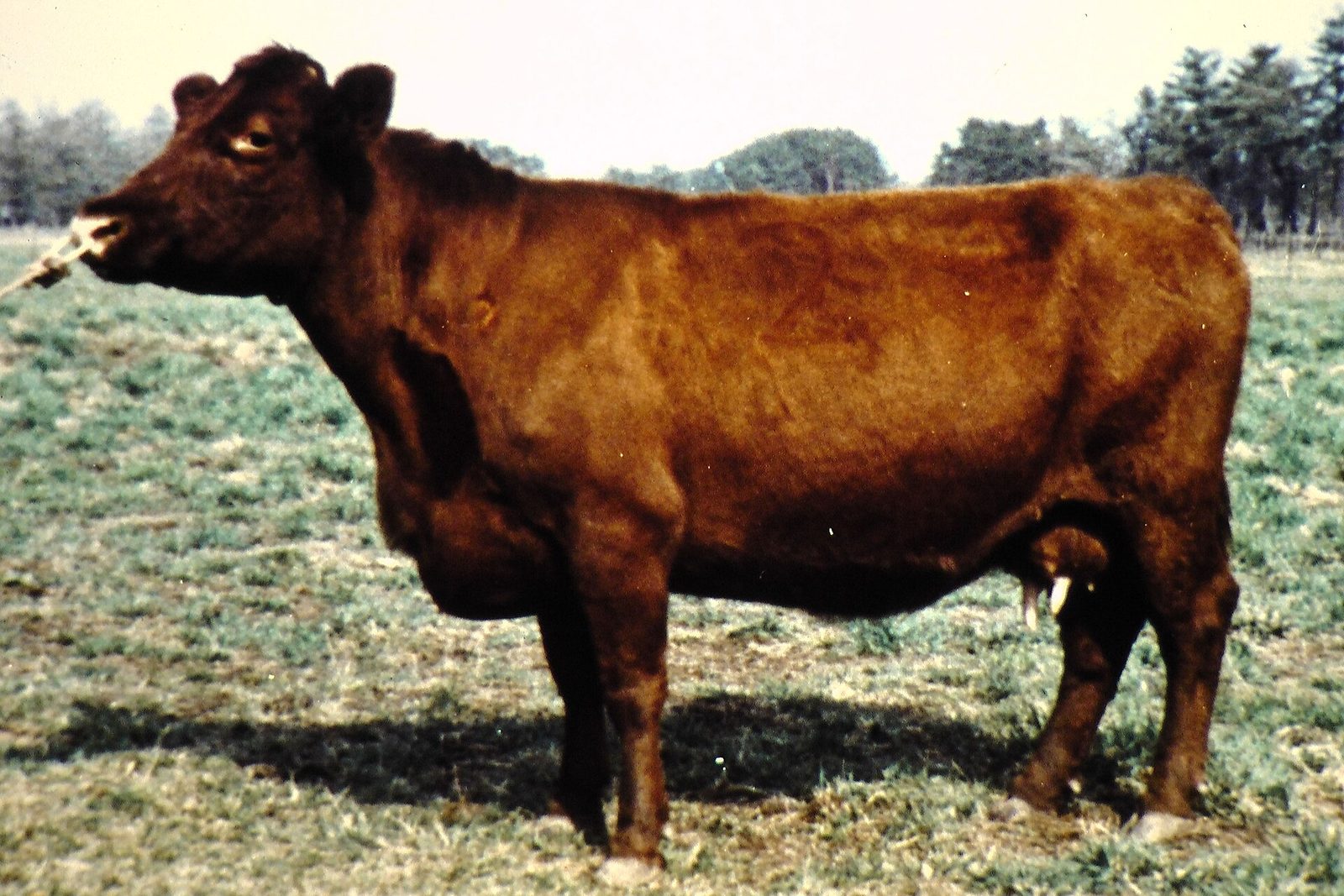
The overwhelming majority is Japanese Black, over 90% of all Wagyu, prized above all for fine marbling. Japanese Brown is the “red cattle”, with a good balance of lean and fat; Japanese Shorthorn is a lean breed that spends summers grazing in the mountains; and Japanese Polled, as the name says, has no horns, and only about 200 remain, all in Yamaguchi.
From farm partner to feast
Not cattle for eating
Until the Edo period, Wagyu were not raised for meat but as working animals that ploughed fields and hauled loads. Even so, some regions were famous for their cattle: a late-Kamakura text with an entry dated 1310, the Kokugyū Jūzu, describes celebrated cattle from many provinces. Tajima's are “fine-boned, firm-fleshed and thin-skinned”, a hint of the Wagyu to come.
Even when eating meat was frowned upon, there were ways around it. In 1687 Hanaki Den'emon of the Hikone domain created a miso-cured beef called henpongan, sold it as medicine for good health, and presented it to the shogun's household. That is where Omi beef's long history begins.
Modernisation and a century of breeding
When Emperor Meiji lifted the meat ban in 1872, cattle gradually became food. In Yonezawa, Yamagata, an English teacher named Charles Henry Dallas took local cattle with him to the foreign settlement in Yokohama when his contract ended in 1875. The beef caused a stir, and the name “Yonezawa beef” spread across Japan.
In the Meiji era, cattle were crossed with foreign breeds to make them bigger. Breeding then went on to settle their Japanese character: in 1944 Japanese Black, Brown and Polled were fixed as breeds, and in 1957 the Japanese Shorthorn registry was unified, completing today's four.
Beef cattle, and the world
From the 1950s, Wagyu shifted from working animals to beef cattle. When Japan liberalised beef imports in 1991, Wagyu answered cheap imports by competing on quality. BSE in 2001 and foot-and-mouth disease in 2010 halted exports for a time, but in 2007 a shared Wagyu logo was created for exports, and the push overseas began in earnest. In 2025 Japan's beef exports hit a record high.
Meanwhile, “WAGYU” lives abroad too. Breeding bulls were exported alive to the US in 1976, and commercial exports followed in the 1990s, with 247 head reaching the US by 1998. Today WAGYU is raised in the US, Australia and Europe. The Japanese logo also helps set the original apart from these overseas cousins.
Wagyu through the centuries
Tajiri, the legendary bull
The biggest star in Wagyu history may be a single bull. Tajiri was born in 1939 on a farm in the Ojiro district of Kami, in northern Hyogo. High in the mountains, Ojiro had kept pure Tajima cattle that had escaped crossing with foreign and other breeds.
Tajiri's offspring were prized because his fine marbling passed down reliably, and over his 15 years he sired 1,463 calves. His sons and grandsons became breeding bulls all over Japan, and when the Wagyu Registry Association checked in 2012, it found that 99.9% of Japanese Black breeding cows in Japan descend from Tajiri.
From one bull to a whole breed
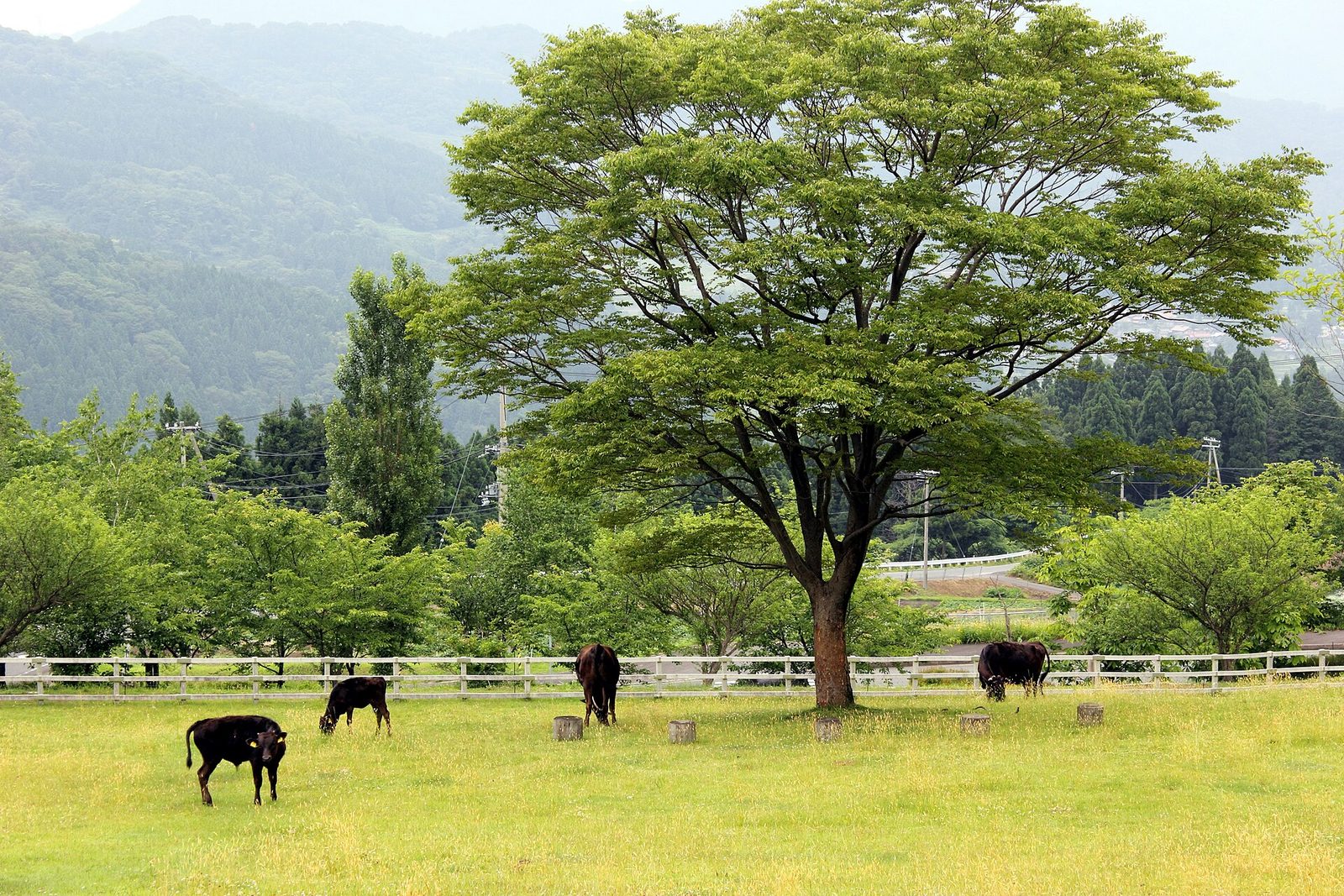
The secret of marbling
What does “A5” mean?
Wagyu is famous for being “A5”. This is the carcass grade given by the Japan Meat Grading Association, a letter plus a number.
- A to C (yield grade): how much meat a carcass yields; A is the most.
- 5 to 1 (quality grade): four items (marbling, meat colour and sheen, firmness and texture, fat colour and quality) are each scored from 5 to 1, and the lowest score becomes the grade.
Marbling is measured on the BMS (Beef Marbling Standard), from No. 1 to 12; No. 8 and above earns the top marbling grade of 5. So A5 means “high yield, and top marks for marbling, colour, firmness and fat alike”.
Fifteen grades and the marbling scale
With so much breeding progress, A5 is no longer a rare exception. In 2025, A5 made up 36.6% of all graded cattle, and 71.7% of Wagyu steers. That is why attention is turning beyond the amount of marbling to the flavour of the lean and the quality of the fat.
Why the fat melts
The melt-in-the-mouth feel comes from what the fat is made of. Japanese Black fat contains more oleic acid and other monounsaturated fats than Holstein or imported beef. Oleic acid melts at just 13.4 °C, far below saturated fats such as palmitic (62.9 °C) and stearic acid (69.6 °C), so it slips into liquid at body temperature.
Melting points of fatty acids
There is also that sweet aroma, known as wagyu-kō (“Wagyu scent”). It is thought to involve lactones, compounds with a sweet, coconut-like smell. It is the gentle sweetness that rises as Wagyu cooks.
A tour of the regions
Japan has some 300 Wagyu brands, large and small. The “big three” are usually given as Matsusaka, Kobe and Omi, though some swap Omi for Yonezawa; all are superb. Tap a number on the map to jump to it.
A map of Wagyu, north to south
1. Iwate and the north: Shorthorns that roam the hills
Raised mainly in Iwate, Aomori, Akita and Hokkaido, the Japanese Shorthorn comes from crossing Nanbu cattle, native to northern Tohoku, with Shorthorns. The cattle spend summer on mountain pasture and winter in village barns, and the old practice of letting bulls breed naturally on the pasture lives on. The meat is lean and gets tastier the more you chew.
2. Yonezawa (Yamagata): discovered by an Englishman
Yonezawa beef comes from Japanese Black heifers raised in the Okitama area, at least 33 months old and of quality grade 3 or above. The story starts with Dallas in 1875; when the Ou Line railway opened in 1899, Yonezawa Station began selling Yonezawa beef bento.
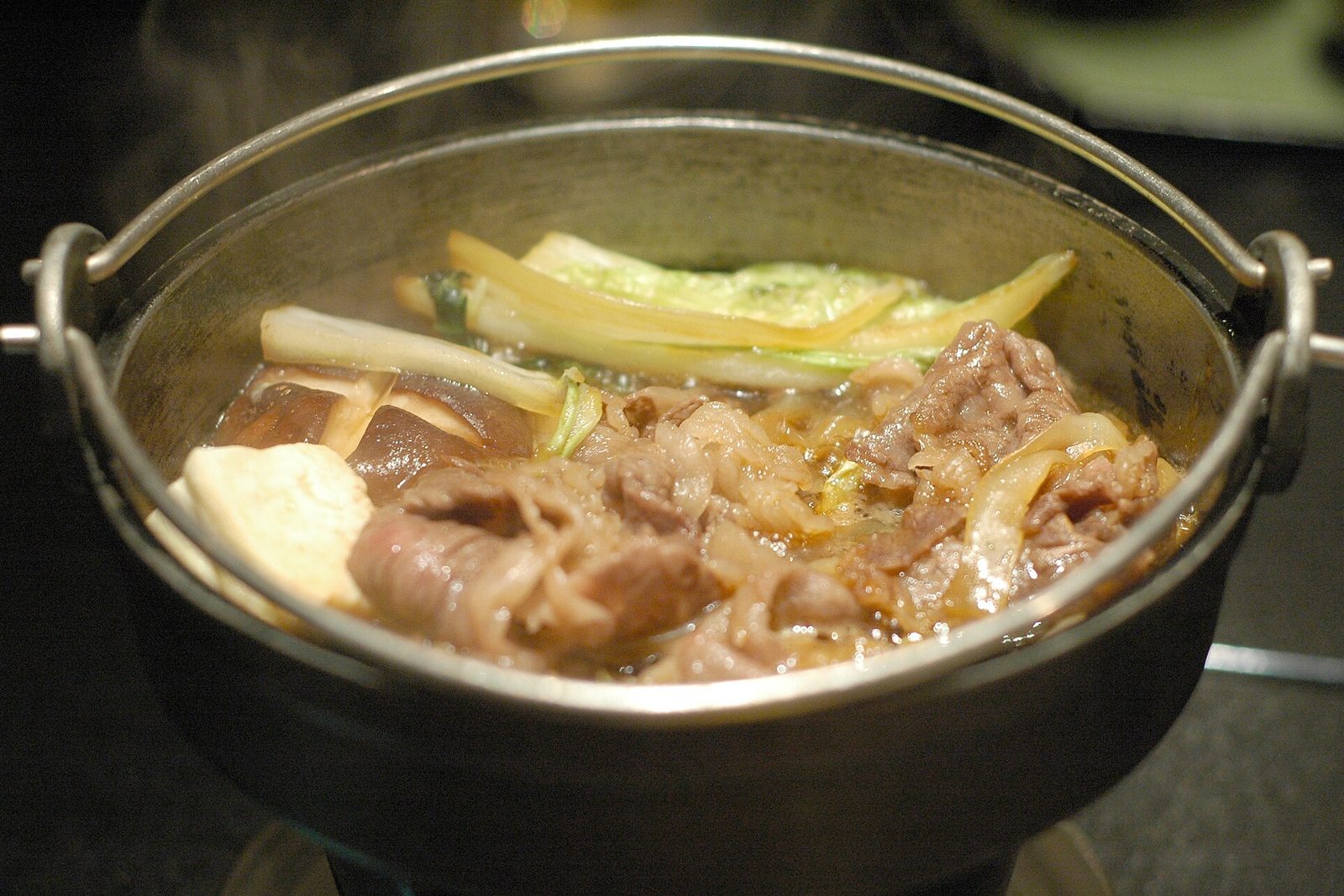
3. Matsusaka (Mie): tracked animal by animal
Matsusaka beef comes from Japanese Black heifers registered in a dedicated tracking system that follows each animal from arrival to shipment. The rarest, tokusan Matsusaka beef, comes from Hyogo-born calves fattened in the Matsusaka area for over 900 days, and makes up only 3–4% of the total. Its fat is said to melt at a low temperature, with a refined, sweet aroma.
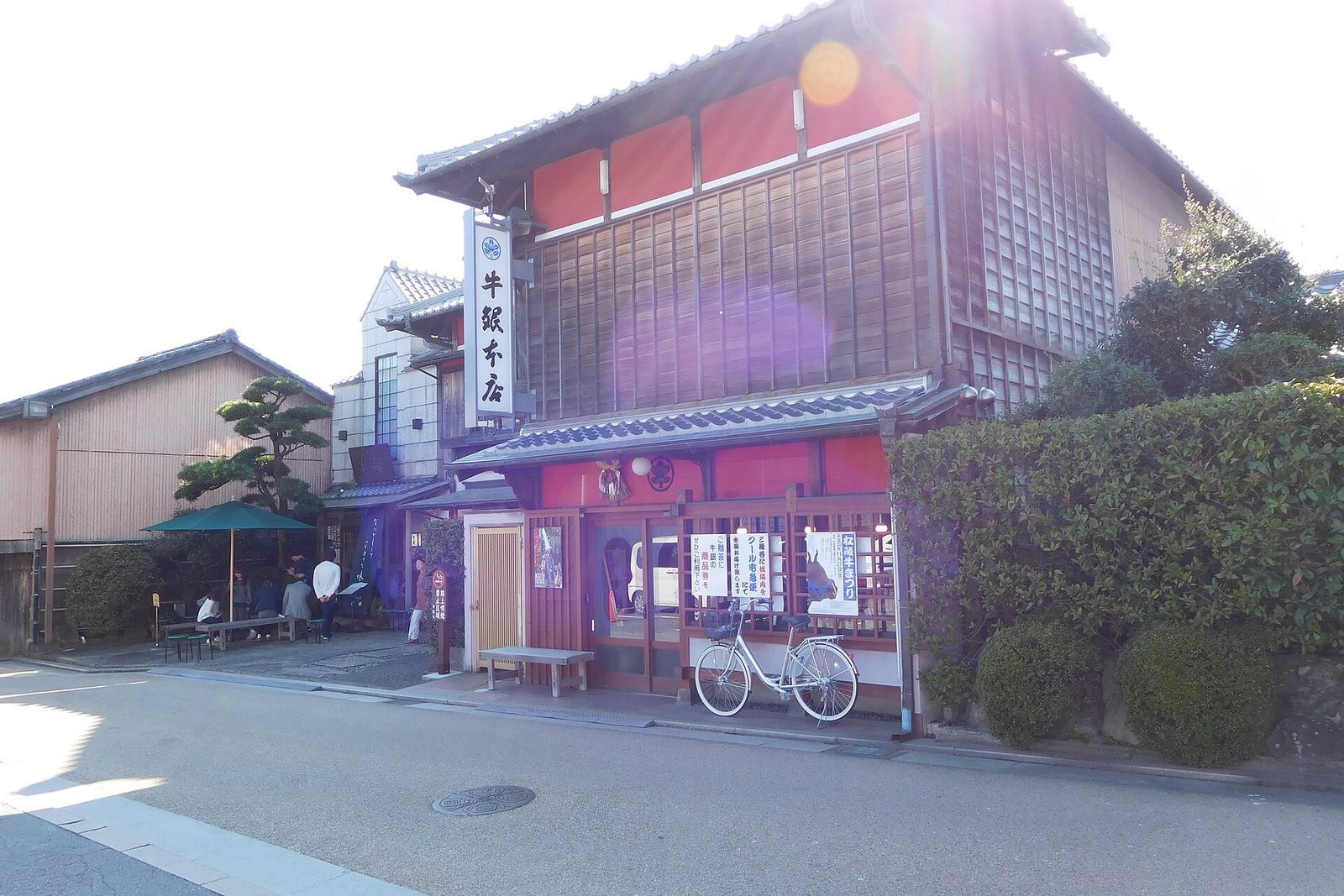
4. Omi (Shiga): history since the Edo period
Omi beef's story begins with the henpongan of 1687. In the Meiji era it was shipped from Kobe to Tokyo and sold as “Kobe beef”; only after the Tokaido Line opened in 1889 and cattle were shipped by rail from Omi-Hachiman did the name “Omi beef” spread. Carcasses graded A4 or B4 and above can be certified as Omi beef.
5. Tajima and Kobe (Hyogo): where Wagyu began
Northern Hyogo's Tajima region is said to be the roots of Wagyu. Tajima cattle are bred only from the prefecture's own line of bulls, preserving a pure bloodline. Only Tajima cattle that meet strict standards, including quality grade 4 or above and BMS No. 6 or above, may be sold as Kobe beef. Especially popular with Americans, it may be the most famous Wagyu brand in the world.
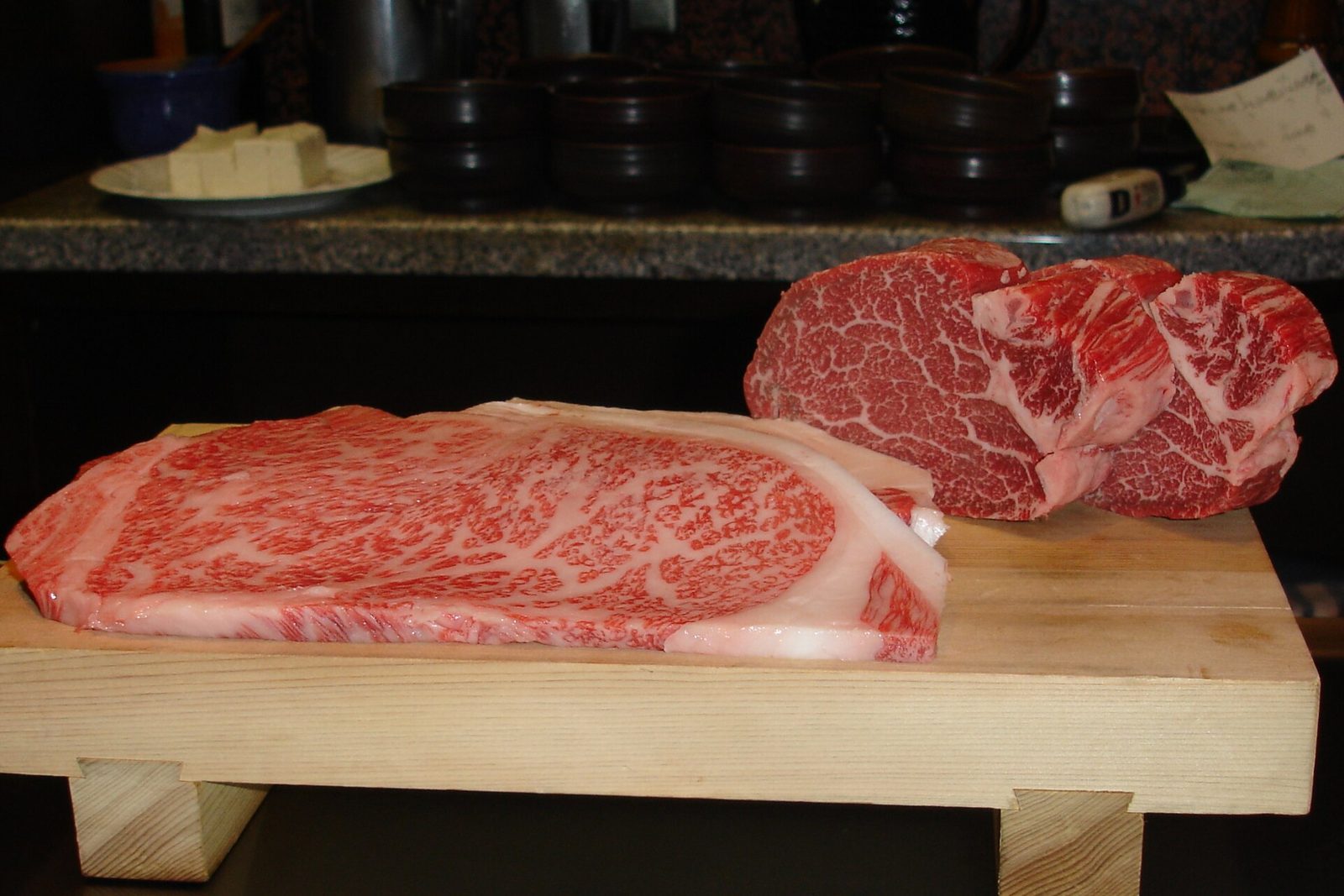
6. Japanese Polled (Yamaguchi): about 200 head
The breed began in 1920 in Abu, Yamaguchi, with a bull named Kogara bred from native cattle and an Aberdeen Angus, and became the Japanese Polled breed in 1944. Hornless and stocky, it gives lean meat that rarely marbles. Only about 200 remain, roughly 0.01% of all Wagyu.
7. Kochi: Japanese Brown country
Kochi is the other main home of Japanese Brown, known for a good balance of lean and fat and a rich, deep flavour.
8. Kumamoto: home of the akaushi
Kumamoto is a main home of Japanese Brown. Its line has had its own registry since 1952, now the Japan Akaushi Registry Association, and Kumamoto akaushi is protected as a geographical indication.
9. Miyazaki: a regular at the “Wagyu Olympics”
Every five years, Japan holds the National Wagyu Competition, a contest of breeding results often called the Wagyu Olympics. At the 2022 event in Kagoshima, about 440 cattle from 41 prefectures competed, and the top honour, the Prime Minister's Award, went to Miyazaki and Kagoshima. Miyazaki also came through the hard blow of the 2010 foot-and-mouth outbreak.
10. Kagoshima: Japan's biggest herd
Kagoshima has more beef cattle than any other prefecture: about 350,000 head as of February 2025, roughly 19% of Japan's total. It hosted the 2022 National Wagyu Competition and placed high in many divisions.
How to enjoy Wagyu
Wagyu shows a different side in every dish.
- Sukiyaki: the marbled fat melts into a sweet soy broth; one of the best ways to catch the Wagyu aroma.
- Shabu-shabu: a quick swish through hot water sheds excess fat, so even marbled beef feels light.
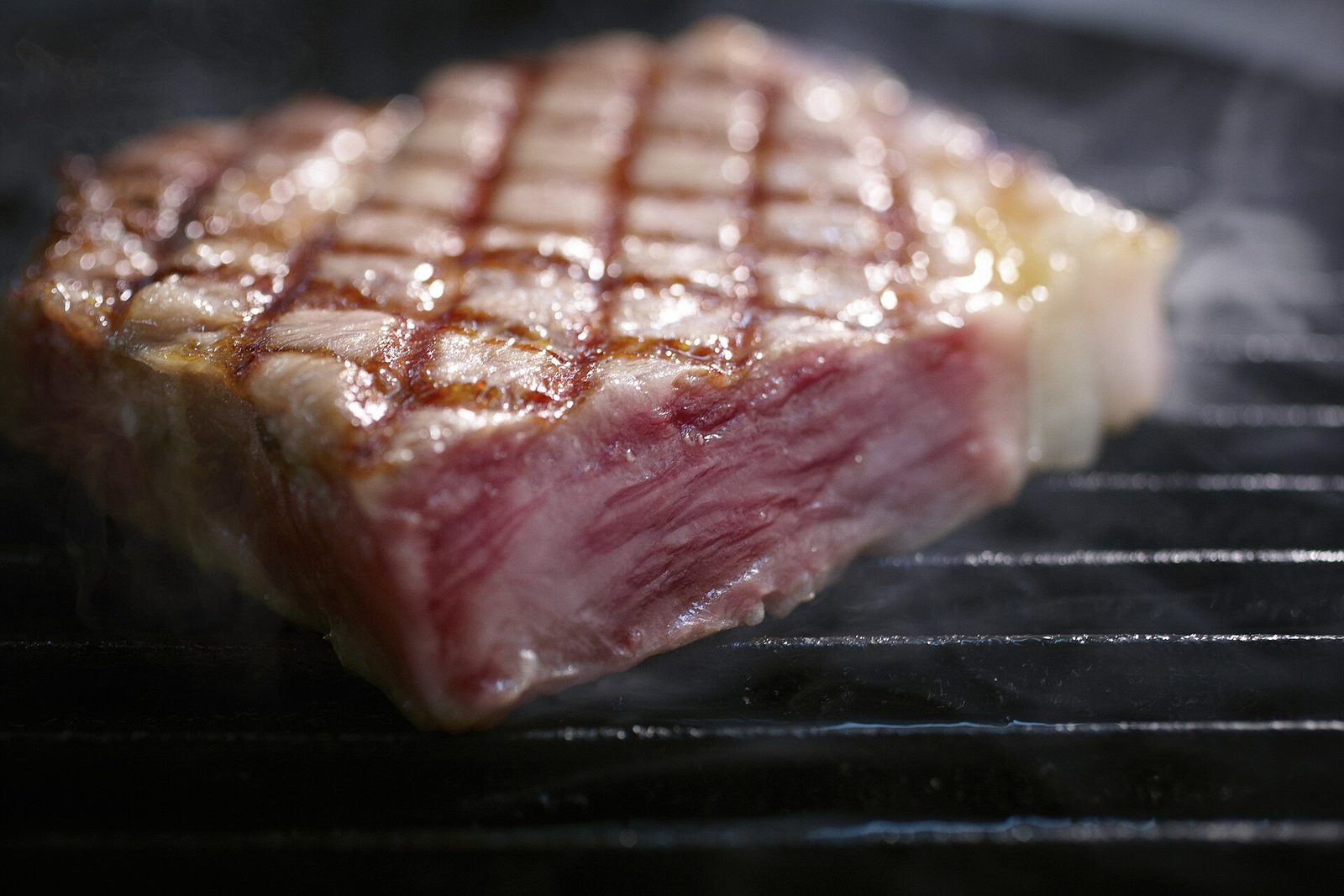
- Steak: crisp outside, tender inside. With heavily marbled beef, a small portion goes a long way.
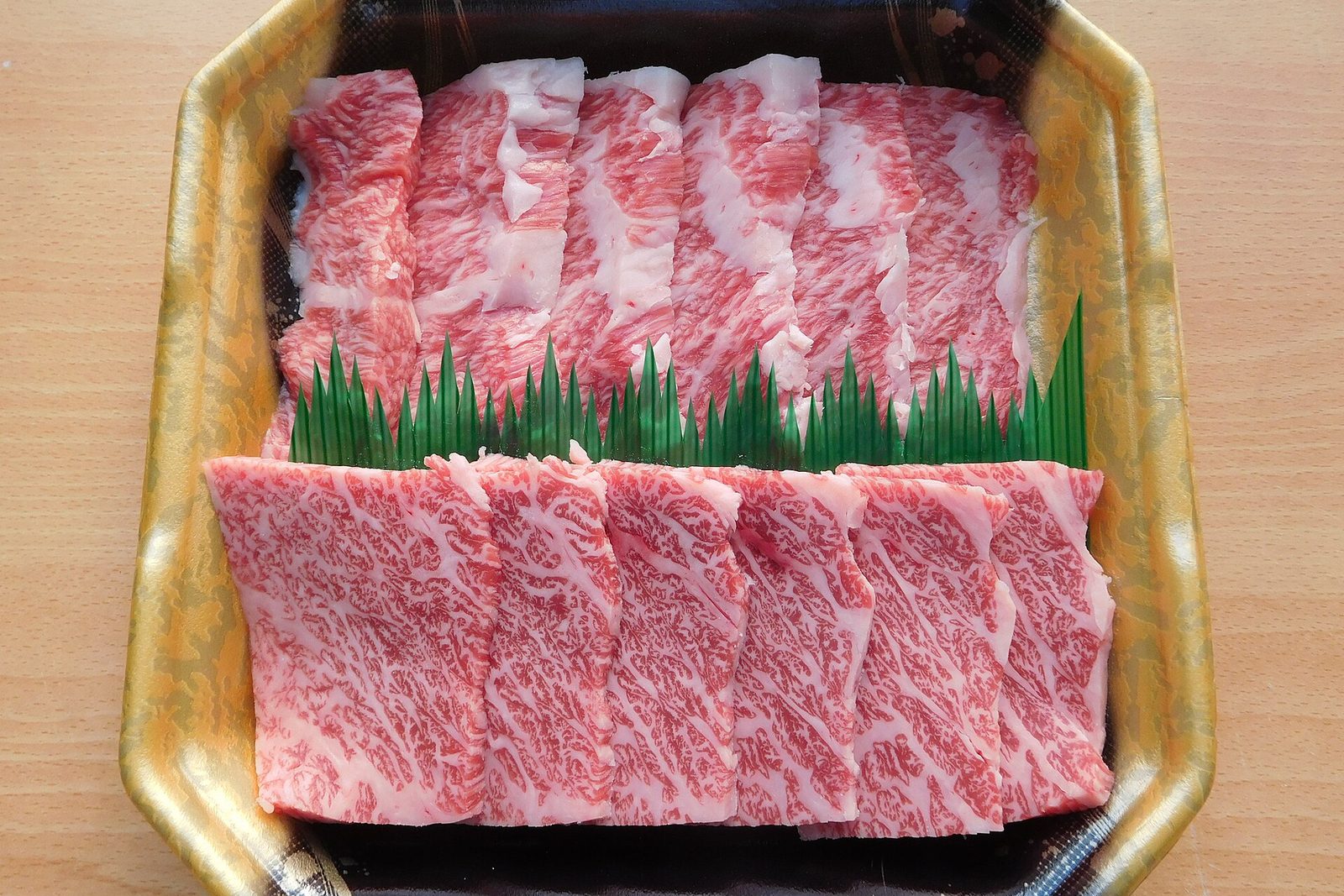
- Yakiniku: the best way to compare cuts. See “The story of yakiniku” for more.
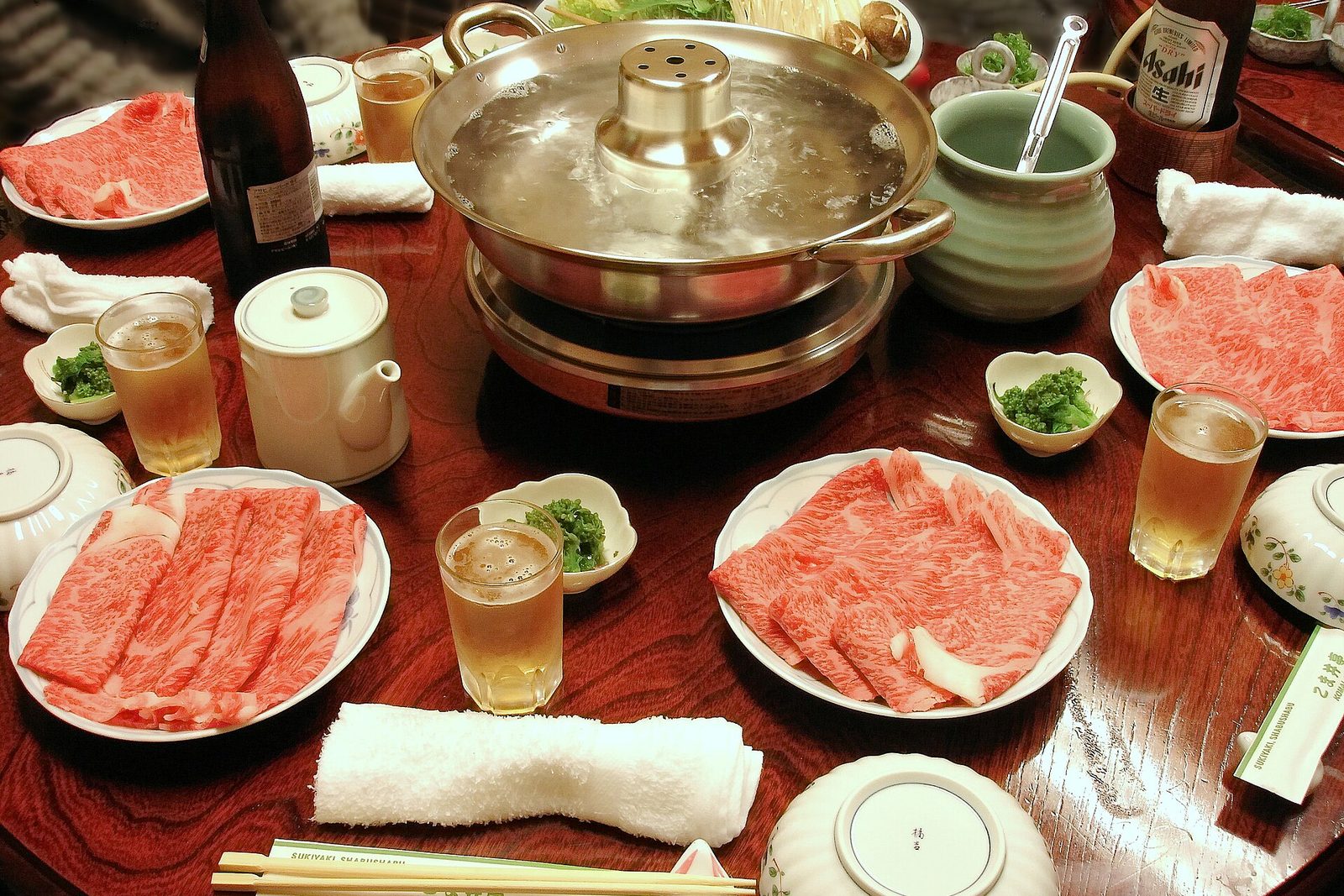
A little richly marbled A5 one day, a hearty plate of lean akaushi or Shorthorn the next: choosing by mood is part of the fun.
When cooking beef at home, cook minced or reformed meat and offal right through. Serving raw beef liver is banned in Japan. Keep tongs for raw meat apart from the chopsticks you eat with.
Summary
- Wagyu is a breed label: four breeds and their crosses, born and raised in Japan. Kokusangyu is an origin label.
- Wagyu began as working animals; after Meiji-era breeding, the four breeds were set in 1944 and 1957.
- 99.9% of Japanese Black breeding cows descend from Tajiri, born in 1939.
- A5 means high yield and top quality; the melt comes from fat rich in oleic acid.
- From Matsusaka, Kobe, Omi, Yonezawa, Miyazaki and Kagoshima to akaushi, Shorthorn and Polled, every region has its own character.
References
- MAFF “aff”: special feature on Wagyu (Japanese)
- nippon.com: the four Wagyu breeds and exports (Japanese)
- JETRO: what is Wagyu? (Japanese)
- Osaka Prefecture: origin labelling of livestock products (Japanese)
- nippon.com: 99.9% of Japanese Black descend from Tajiri (Japanese)
- Cultural Heritage Online: Shungyū-zu fragment and the Kokugyū Jūzu (Japanese)
- Ryokō Yomiuri: Japan's three great Wagyu (Japanese)
- MAFF GI: Yonezawa beef specification (Japanese)
- MAFF GI: Kobe beef (Japanese)
- Kanko Mie: Matsusaka beef (Japanese)
- Japan Beef Cattle Fund Association: Japanese Shorthorn (Japanese)
- Mukaku Wagyu: roots of the Japanese Polled (Japanese)
- MAFF “aff”: beef grading (Japanese)
- macaro-ni: BMS and quality grades (Japanese)
- ALIC: carcass grading results for 2025 (Japanese)
- Livestock Improvement Association of Japan: fat quality (MUFA) (Japanese)
- Oita Industrial Research Institute: what makes Wagyu tasty (Japanese)
- Kagoshima Prefecture: livestock overview (Japanese)
- ALIC: the 2022 National Wagyu Competition (Japanese)
- Akita Sakigake Shimpo: 2025 farm exports (Japanese)
Figures are from published sources at the time of writing. Photos are from Wikimedia Commons under licences that allow reuse; photographers and licences are credited under each photo. Diagrams, illustrations and the map are my own (the map uses data based on the Geospatial Information Authority of Japan's Global Map Japan).
Food Notes No. 6 — The story of Wagyu / 2026.10